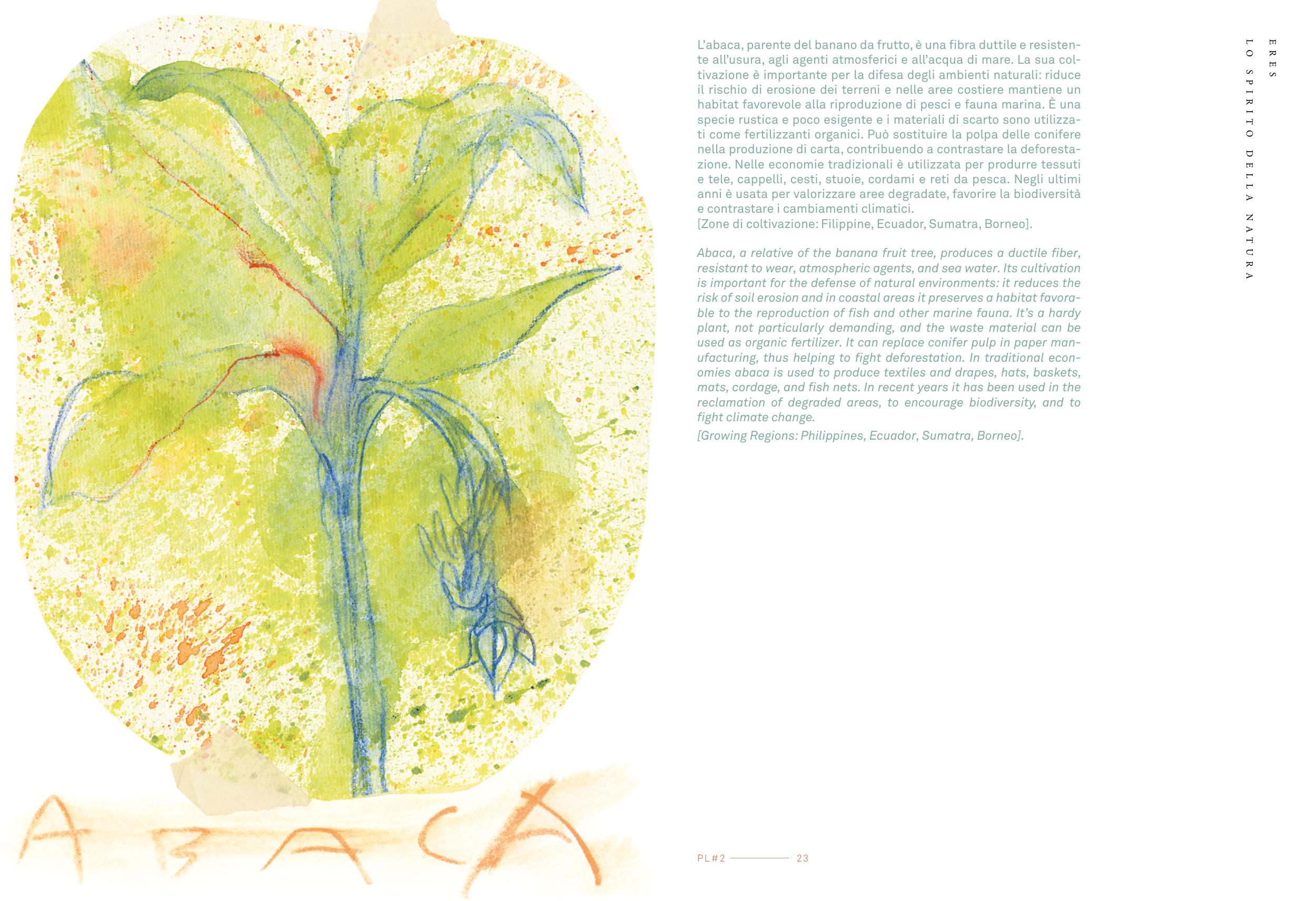
L’abaca, parente del banano da frutto, è una fibra duttile e resisten-
te all’usura, agli agenti atmosferici e all’acqua di mare. La sua col-
tivazione è importante per la difesa degli ambienti naturali: riduce
il rischio di erosione dei terreni e nelle aree costiere mantiene un
habitat favorevole alla riproduzione di pesci e fauna marina. È una
specie rustica e poco esigente e i materiali di scarto sono utilizza-
ti come fertilizzanti organici. Può sostituire la polpa delle conifere
nella produzione di carta, contribuendo a contrastare la deforesta-
zione. Nelle economie tradizionali è utilizzata per produrre tessuti
e tele, cappelli, cesti, stuoie, cordami e reti da pesca. Negli ultimi
anni è usata per valorizzare aree degradate, favorire la biodiversità
e contrastare i cambiamenti climatici.
[Zone di coltivazione: Filippine, Ecuador, Sumatra, Borneo].
Abaca, a relative of the banana fruit tree, produces a ductile fiber,
resistant to wear, atmospheric agents, and sea water. Its cultivation
is important for the defense of natural environments: it reduces the
risk of soil erosion and in coastal areas it preserves a habitat favora-
ble to the reproduction of fish and other marine fauna. It’s a hardy
plant, not particularly demanding, and the waste material can be
used as organic fertilizer. It can replace conifer pulp in paper man-
ufacturing, thus helping to fight deforestation. In traditional econ-
omies abaca is used to produce textiles and drapes, hats, baskets,
mats, cordage, and fish nets. In recent years it has been used in the
reclamation of degraded areas, to encourage biodiversity, and to
fight climate change.
[Growing Regions: Philippines, Ecuador, Sumatra, Borneo].
pl#2
23
E R E S
L O S P I R I T O D E L L A N A T U R A