686
kreon.com
687
kreon CCT
catalogue 4
Correlated Color Temperature (CCT) emerges as a
foundational metric within the realm of lighting design,
wielding profound influence over the visual and emotional
resonance of illuminated spaces. CCT quantifies the color
appearance of emitted light, making it a pivotal factor in
shaping the ambiance and functionality of environments.
This article delves into the pivotal significance of CCT,
its pragmatic implications, and its transformative role in
shaping our constructed surroundings.
CCT plays an indispensable role in lighting design by
defining the warmth or coolness of light in degrees Kelvin (K).
It dictates whether a light source exudes a warm, neutral,
or cool hue, aiding designers in achieving specific lighting
objectives. Distinct emotions and purposes are evoked by
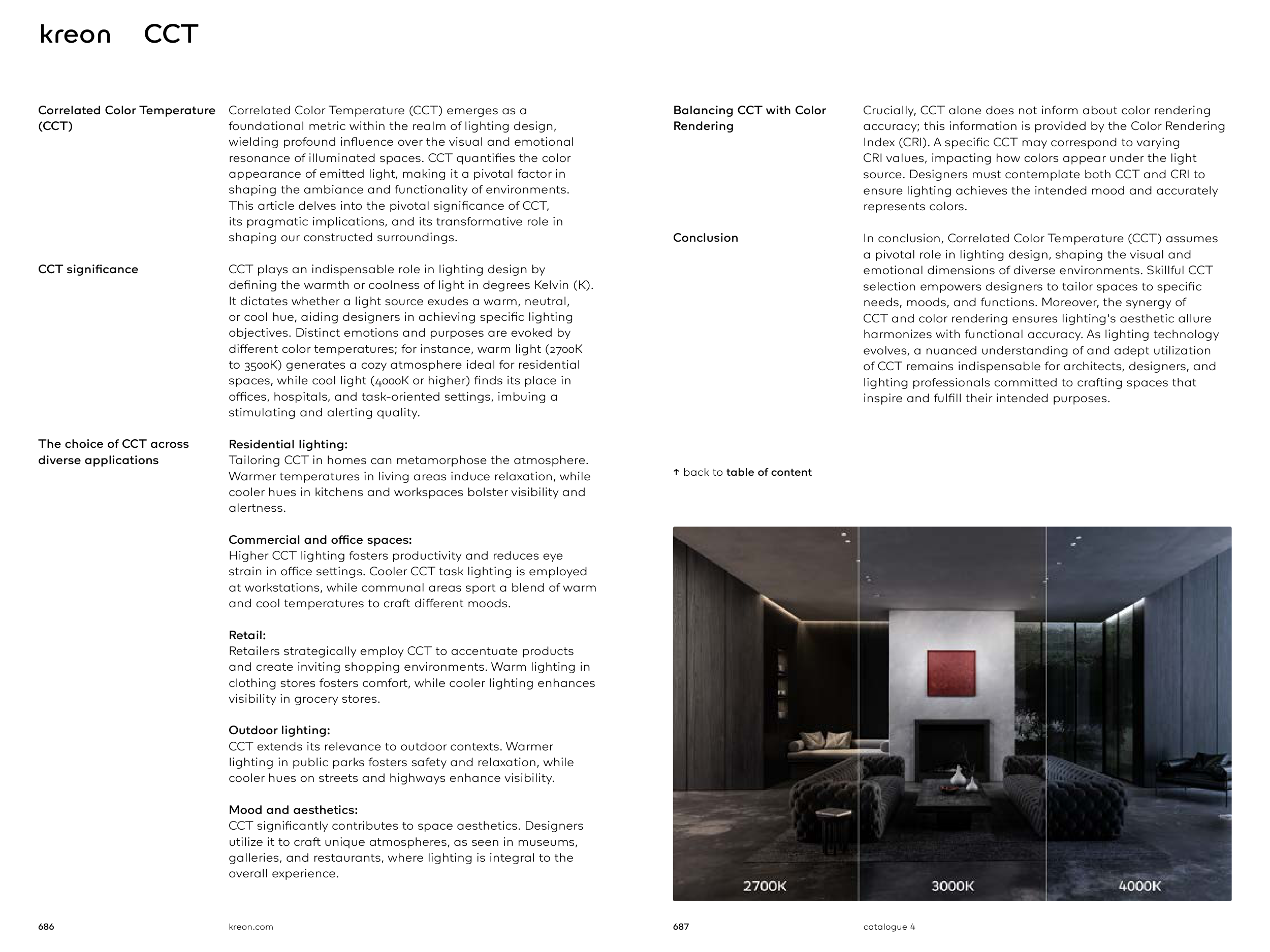
different color temperatures; for instance, warm light (2700K
to 3500K) generates a cozy atmosphere ideal for residential
spaces, while cool light (4000K or higher) finds its place in
offices, hospitals, and task-oriented settings, imbuing a
stimulating and alerting quality.
Residential lighting:
Tailoring CCT in homes can metamorphose the atmosphere.
Warmer temperatures in living areas induce relaxation, while
cooler hues in kitchens and workspaces bolster visibility and
alertness.
Commercial and office spaces:
Higher CCT lighting fosters productivity and reduces eye
strain in office settings. Cooler CCT task lighting is employed
at workstations, while communal areas sport a blend of warm
and cool temperatures to craft different moods.
Retail:
Retailers strategically employ CCT to accentuate products
and create inviting shopping environments. Warm lighting in
clothing stores fosters comfort, while cooler lighting enhances
visibility in grocery stores.
Outdoor lighting:
CCT extends its relevance to outdoor contexts. Warmer
lighting in public parks fosters safety and relaxation, while
cooler hues on streets and highways enhance visibility.
Mood and aesthetics:
CCT significantly contributes to space aesthetics. Designers
utilize it to craft unique atmospheres, as seen in museums,
galleries, and restaurants, where lighting is integral to the
overall experience.
Correlated Color Temperature
(CCT)
CCT significance
The choice of CCT across
diverse applications
Balancing CCT with Color
Rendering
Conclusion
Crucially, CCT alone does not inform about color rendering
accuracy; this information is provided by the Color Rendering
Index (CRI). A specific CCT may correspond to varying
CRI values, impacting how colors appear under the light
source. Designers must contemplate both CCT and CRI to
ensure lighting achieves the intended mood and accurately
represents colors.
In conclusion, Correlated Color Temperature (CCT) assumes
a pivotal role in lighting design, shaping the visual and
emotional dimensions of diverse environments. Skillful CCT
selection empowers designers to tailor spaces to specific
needs, moods, and functions. Moreover, the synergy of
CCT and color rendering ensures lighting's aesthetic allure
harmonizes with functional accuracy. As lighting technology
evolves, a nuanced understanding of and adept utilization
of CCT remains indispensable for architects, designers, and
lighting professionals committed to crafting spaces that
inspire and fulfill their intended purposes.
↑ back to table of content