53
con il cuore rosso), quando nel 1969 gli viene commissionato
da Olivetti il poster della Valentine, la macchina da scrivere
rossa di Ettore Sottsass. Va a recuperare dalla National Gallery
di Londra un dipinto di Piero di Cosimo del 1495, La morte di
Procri, tratto dalle Metamorfosi di Ovidio, e accanto al particolare
del cane che veglia il padrone inserisce lei, la
Valentine. Il massimo della classicità e il massimo
dell’innovazione: nel passato classico irrompe
la modernità. E potremmo ancora parlare del
celebre specchio Milo di Carlo Mollino, che
lascia che ci si specchi nella silhouette della
celebre Venere. L’eredità del Classico e anche
la sua apparente dissacrazione. Classico non
significa per forza imitazione di forme e stilemi.
Dobbiamo pensare di aspettare decenni prima
di decretare classico un progetto di arredo di
oggi? L’eleganza delle proporzioni, insieme
alla raffinatezza dei materiali, sono un tema
di classicità che non ha bisogno di attendere
decenni per avere la sua compiuta riconoscibilità.
E il marketing indistinto degli anni ‘80, che
decretava il successo degli happy few, oggi ha
altri driver: l’obsolescenza non ha valore, la
tradizione e la classe sì. Il classico, nel mondo
dell’arredo contemporaneo, è un progetto che
conquista una sua aura in tempi brevi. Trovo
centrate le considerazioni di Domitilla Dardi e
Vanni Pasca nel loro recente Manuale di Storia
del Design, laddove inseriscono i pezzi dei
fratelli Campana nell’ambito dei prodotti anti-classici: giusto,
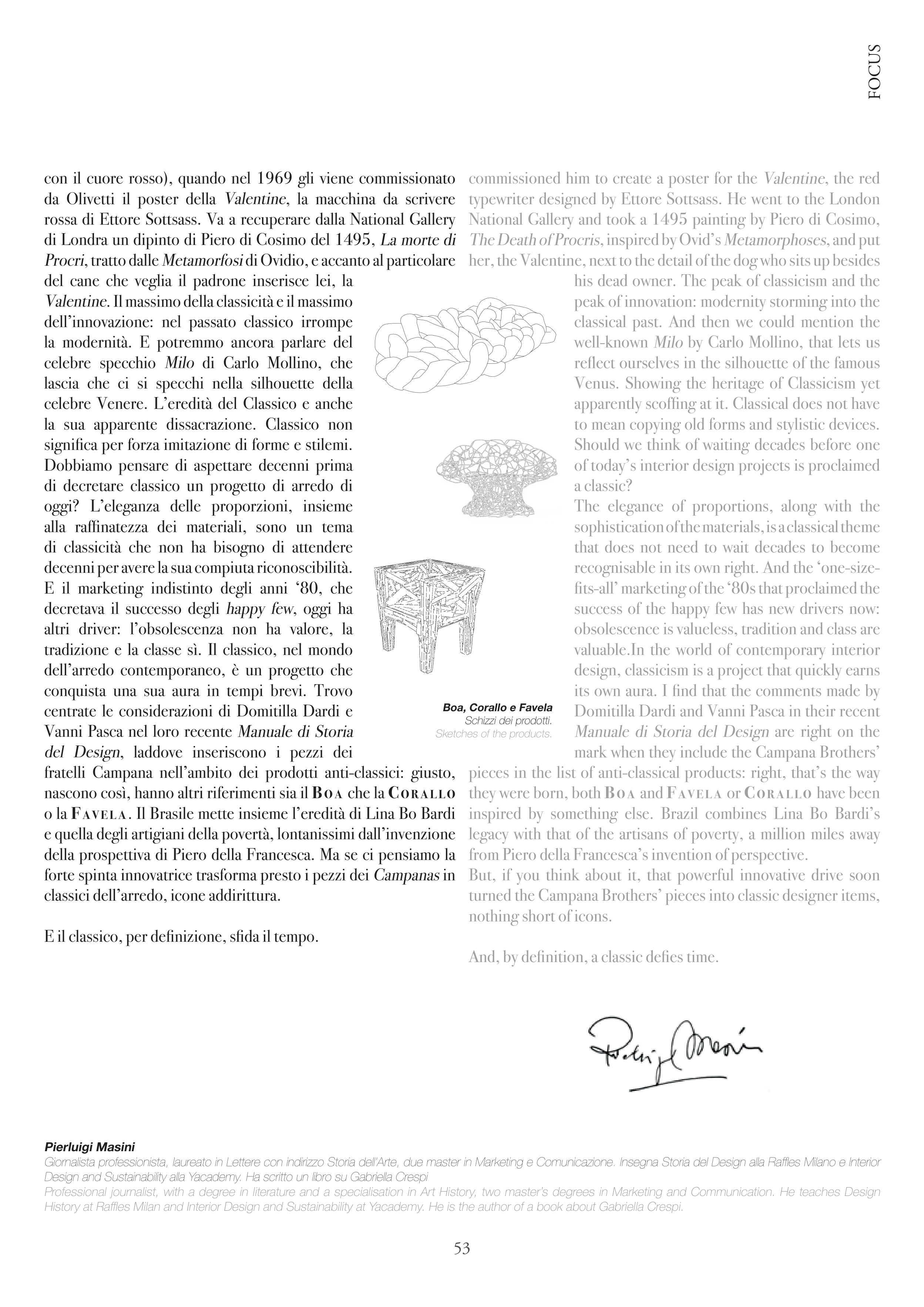
nascono così, hanno altri riferimenti sia il boa che la Corallo
o la FaVela. Il Brasile mette insieme l’eredità di Lina Bo Bardi
e quella degli artigiani della povertà, lontanissimi dall’invenzione
della prospettiva di Piero della Francesca. Ma se ci pensiamo la
forte spinta innovatrice trasforma presto i pezzi dei Campanas in
classici dell’arredo, icone addirittura.
E il classico, per definizione, sfida il tempo.
Pierluigi Masini
Giornalista professionista, laureato in Lettere con indirizzo Storia dell’Arte, due master in Marketing e Comunicazione. Insegna Storia del Design alla Raffles Milano e Interior
Design and Sustainability alla Yacademy. Ha scritto un libro su Gabriella Crespi
Professional journalist, with a degree in literature and a specialisation in Art History, two master’s degrees in Marketing and Communication. He teaches Design
History at Raffles Milan and Interior Design and Sustainability at Yacademy. He is the author of a book about Gabriella Crespi.
commissioned him to create a poster for the Valentine, the red
typewriter designed by Ettore Sottsass. He went to the London
National Gallery and took a 1495 painting by Piero di Cosimo,
The Death of Procris, inspired by Ovid’s Metamorphoses, and put
her, the Valentine, next to the detail of the dog who sits up besides
his dead owner. The peak of classicism and the
peak of innovation: modernity storming into the
classical past. And then we could mention the
well-known Milo by Carlo Mollino, that lets us
reflect ourselves in the silhouette of the famous
Venus. Showing the heritage of Classicism yet
apparently scoffing at it. Classical does not have
to mean copying old forms and stylistic devices.
Should we think of waiting decades before one
of today’s interior design projects is proclaimed
a classic?
The elegance of proportions, along with the
sophistication of the materials, is a classical theme
that does not need to wait decades to become
recognisable in its own right. And the ‘one-size-
fits-all’ marketing of the ‘80s that proclaimed the
success of the happy few has new drivers now:
obsolescence is valueless, tradition and class are
valuable.In the world of contemporary interior
design, classicism is a project that quickly earns
its own aura. I find that the comments made by
Domitilla Dardi and Vanni Pasca in their recent
Manuale di Storia del Design are right on the
mark when they include the Campana Brothers’
pieces in the list of anti-classical products: right, that’s the way
they were born, both boa and FaVela or Corallo have been
inspired by something else. Brazil combines Lina Bo Bardi’s
legacy with that of the artisans of poverty, a million miles away
from Piero della Francesca’s invention of perspective.
But, if you think about it, that powerful innovative drive soon
turned the Campana Brothers’ pieces into classic designer items,
nothing short of icons.
And, by definition, a classic defies time.
Boa, Corallo e Favela
Schizzi dei prodotti.
Sketches of the products.
FOCUS