24 C 11
In 2008, the world’s top five companies were in the food, petrochemical,
electric energy, and motor vehicle industries. Today, just ten years later,
it’s the technological titans – Apple, Facebook, Amazon, and Google –
that rule in the globalized world of the 21st century.
With the huge amount of information and resources they manage
these companies are already able to change the way we relate to our
environment, follow in detail all our activity on the web, create massive
trends, or even predict – with a minimum margin of error and in real
time – how long it will take us to go from one point to another in the
city. However, they don’t limit their scope of action to the purely virtual.
Through the construction of their headquarters they also venture into
the field of architecture, in principle unrelated to their activity.
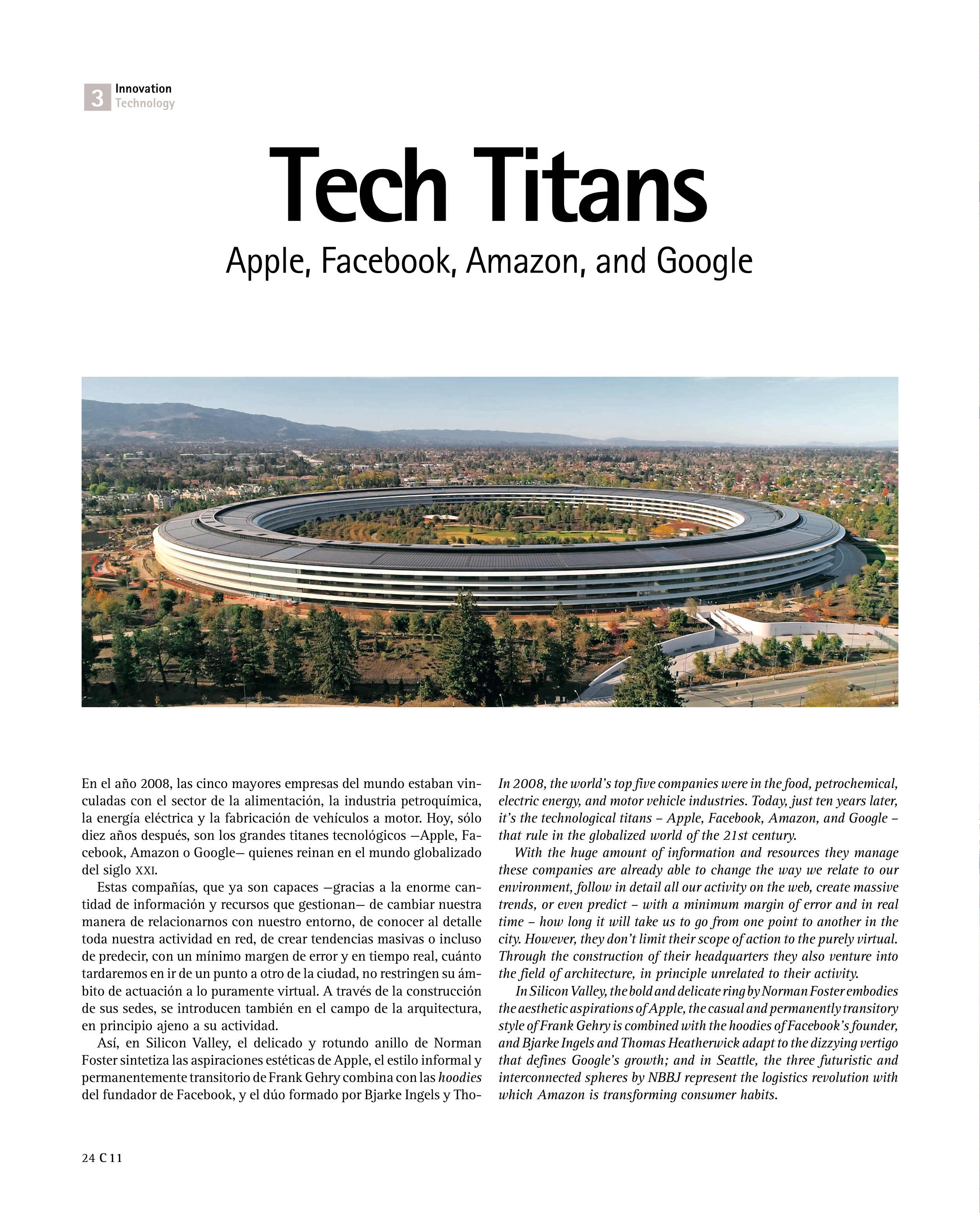
In Silicon Valley, the bold and delicate ring by Norman Foster embodies
the aesthetic aspirations of Apple, the casual and permanently transitory
style of Frank Gehry is combined with the hoodies of Facebook’s founder,
and Bjarke Ingels and Thomas Heatherwick adapt to the dizzying vertigo
that defines Google’s growth; and in Seattle, the three futuristic and
interconnected spheres by NBBJ represent the logistics revolution with
which Amazon is transforming consumer habits.
Innovation
Technology
3
En el año 2008, las cinco mayores empresas del mundo estaban vin-
culadas con el sector de la alimentación, la industria petroquímica,
la energía eléctrica y la fabricación de vehículos a motor. Hoy, sólo
diez años después, son los grandes titanes tecnológicos —Apple, Fa-
cebook, Amazon o Google— quienes reinan en el mundo globalizado
del siglo xxi.
Estas compañías, que ya son capaces —gracias a la enorme can-
tidad de información y recursos que gestionan— de cambiar nuestra
manera de relacionarnos con nuestro entorno, de conocer al detalle
toda nuestra actividad en red, de crear tendencias masivas o incluso
de predecir, con un mínimo margen de error y en tiempo real, cuánto
tardaremos en ir de un punto a otro de la ciudad, no restringen su ám-
bito de actuación a lo puramente virtual. A través de la construcción
de sus sedes, se introducen también en el campo de la arquitectura,
en principio ajeno a su actividad.
Así, en Silicon Valley, el delicado y rotundo anillo de Norman
Foster sintetiza las aspiraciones estéticas de Apple, el estilo informal y
permanentemente transitorio de Frank Gehry combina con las hoodies
del fundador de Facebook, y el dúo formado por Bjarke Ingels y Tho-
Tech Titans
Apple, Facebook, Amazon, and Google