C 10 29
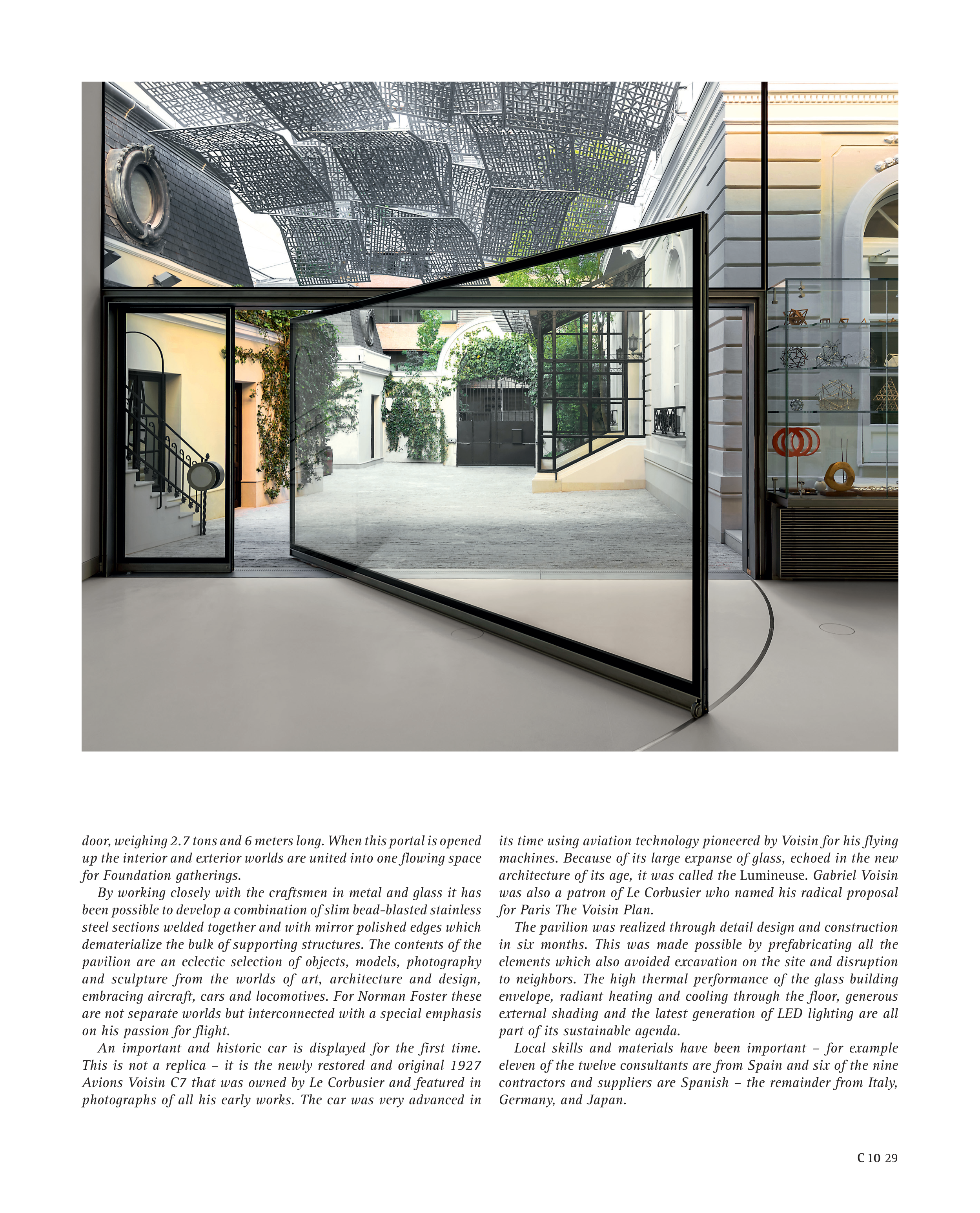
door, weighing 2.7 tons and 6 meters long. When this portal is opened
up the interior and exterior worlds are united into one flowing space
for Foundation gatherings.
By working closely with the craftsmen in metal and glass it has
been possible to develop a combination of slim bead-blasted stainless
steel sections welded together and with mirror polished edges which
dematerialize the bulk of supporting structures. The contents of the
pavilion are an eclectic selection of objects, models, photography
and sculpture from the worlds of art, architecture and design,
embracing aircraft, cars and locomotives. For Norman Foster these
are not separate worlds but interconnected with a special emphasis
on his passion for flight.
An important and historic car is displayed for the first time.
This is not a replica – it is the newly restored and original 1927
Avions Voisin C7 that was owned by Le Corbusier and featured in
photographs of all his early works. The car was very advanced in
its time using aviation technology pioneered by Voisin for his flying
machines. Because of its large expanse of glass, echoed in the new
architecture of its age, it was called the Lumineuse. Gabriel Voisin
was also a patron of Le Corbusier who named his radical proposal
for Paris The Voisin Plan.
The pavilion was realized through detail design and construction
in six months. This was made possible by prefabricating all the
elements which also avoided excavation on the site and disruption
to neighbors. The high thermal performance of the glass building
envelope, radiant heating and cooling through the floor, generous
external shading and the latest generation of LED lighting are all
part of its sustainable agenda.
Local skills and materials have been important – for example
eleven of the twelve consultants are from Spain and six of the nine
contractors and suppliers are Spanish – the remainder from Italy,
Germany, and Japan.