OUTDOOR COLLECTION
MATERIALS FABRICS
CHAPTER 5
376
377
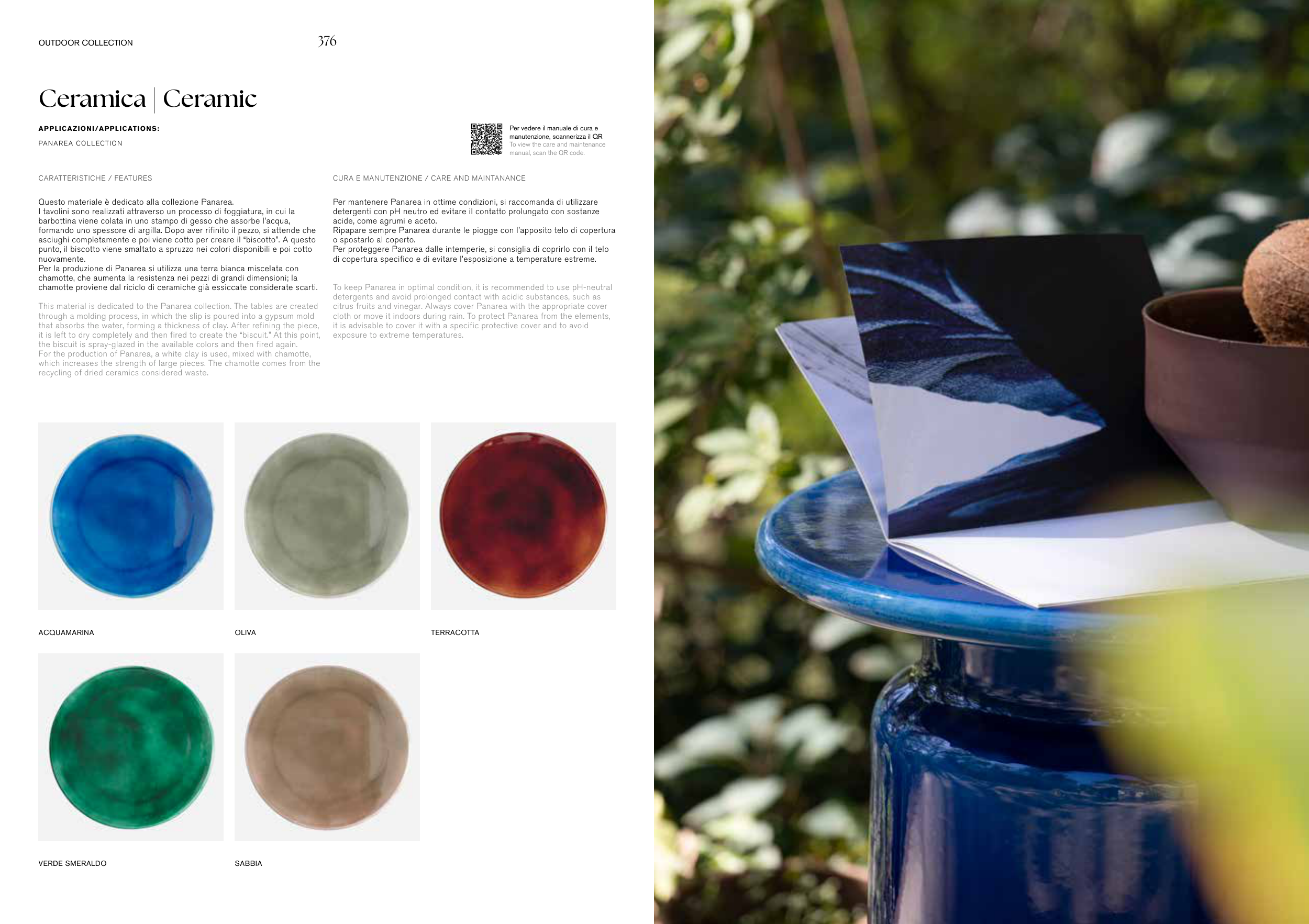
ACQUAMARINA
VERDE SMERALDO
OLIVA
SABBIA
TERRACOTTA
Ceramica | Ceramic
APPLICAZIONI/APPLICATIONS:
PANAREA COLLECTION
Per mantenere Panarea in ottime condizioni, si raccomanda di utilizzare
detergenti con pH neutro ed evitare il contatto prolungato con sostanze
acide, come agrumi e aceto.
Ripapare sempre Panarea durante le piogge con l’apposito telo di copertura
o spostarlo al coperto.
Per proteggere Panarea dalle intemperie, si consiglia di coprirlo con il telo
di copertura specifico e di evitare l’esposizione a temperature estreme.
To keep Panarea in optimal condition, it is recommended to use pH-neutral
detergents and avoid prolonged contact with acidic substances, such as
citrus fruits and vinegar. Always cover Panarea with the appropriate cover
cloth or move it indoors during rain. To protect Panarea from the elements,
it is advisable to cover it with a specific protective cover and to avoid
exposure to extreme temperatures.
CURA E MANUTENZIONE / CARE AND MAINTANANCE
Per vedere il manuale di cura e
manutenzione, scannerizza il QR
To view the care and maintenance
manual, scan the QR code.
Questo materiale è dedicato alla collezione Panarea.
I tavolini sono realizzati attraverso un processo di foggiatura, in cui la
barbottina viene colata in uno stampo di gesso che assorbe l’acqua,
formando uno spessore di argilla. Dopo aver rifinito il pezzo, si attende che
asciughi completamente e poi viene cotto per creare il “biscotto”. A questo
punto, il biscotto viene smaltato a spruzzo nei colori disponibili e poi cotto
nuovamente.
Per la produzione di Panarea si utilizza una terra bianca miscelata con
chamotte, che aumenta la resistenza nei pezzi di grandi dimensioni; la
chamotte proviene dal riciclo di ceramiche già essiccate considerate scarti.
This material is dedicated to the Panarea collection. The tables are created
through a molding process, in which the slip is poured into a gypsum mold
that absorbs the water, forming a thickness of clay. After refining the piece,
it is left to dry completely and then fired to create the “biscuit.” At this point,
the biscuit is spray-glazed in the available colors and then fired again.
For the production of Panarea, a white clay is used, mixed with chamotte,
which increases the strength of large pieces. The chamotte comes from the
recycling of dried ceramics considered waste.
CARATTERISTICHE / FEATURES