221
D R I A N T Z E N E L I
U N D E R A S U R F A C E
T H E R E I S N O T H I N G
E L S E T H A N A N O T H E R
S U R F A C E
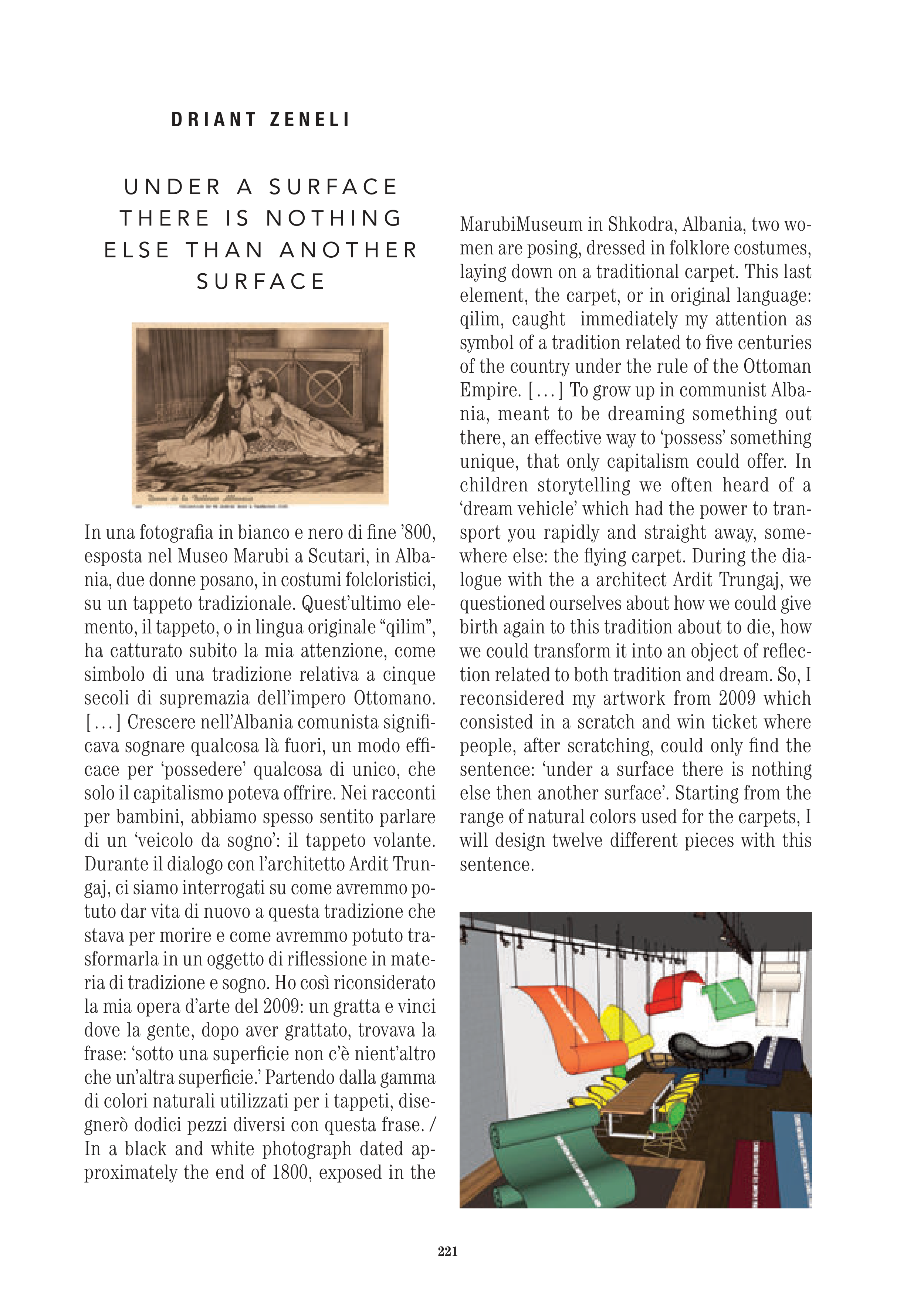
In una fotografia in bianco e nero di fine ’800,
esposta nel Museo Marubi a Scutari, in Alba-
nia, due donne posano, in costumi folcloristici,
su un tappeto tradizionale. Quest’ultimo ele-
mento, il tappeto, o in lingua originale “qilim”,
ha catturato subito la mia attenzione, come
simbolo di una tradizione relativa a cinque
secoli di supremazia dell’impero Ottomano.
[…] Crescere nell’Albania comunista signifi-
cava sognare qualcosa là fuori, un modo effi-
cace per ‘possedere’ qualcosa di unico, che
solo il capitalismo poteva offrire. Nei racconti
per bambini, abbiamo spesso sentito parlare
di un ‘veicolo da sogno’: il tappeto volante.
Durante il dialogo con l’architetto Ardit Trun-
gaj, ci siamo interrogati su come avremmo po-
tuto dar vita di nuovo a questa tradizione che
stava per morire e come avremmo potuto tra-
sformarla in un oggetto di riflessione in mate-
ria di tradizione e sogno. Ho così riconsiderato
la mia opera d’arte del 2009: un gratta e vinci
dove la gente, dopo aver grattato, trovava la
frase: ‘sotto una superficie non c’è nient’altro
che un’altra superficie.’ Partendo dalla gamma
di colori naturali utilizzati per i tappeti, dise-
gnerò dodici pezzi diversi con questa frase. /
In a black and white photograph dated ap-
proximately the end of 1800, exposed in the
MarubiMuseum in Shkodra, Albania, two wo-
men are posing, dressed in folklore costumes,
laying down on a traditional carpet. This last
element, the carpet, or in original language:
qilim, caught immediately my attention as
symbol of a tradition related to five centuries
of the country under the rule of the Ottoman
Empire. […] To grow up in communist Alba-
nia, meant to be dreaming something out
there, an effective way to ‘possess’ something
unique, that only capitalism could offer. In
children storytelling we often heard of a
‘dream vehicle’ which had the power to tran-
sport you rapidly and straight away, some-
where else: the flying carpet. During the dia-
logue with the a architect Ardit Trungaj, we
questioned ourselves about how we could give
birth again to this tradition about to die, how
we could transform it into an object of reflec-
tion related to both tradition and dream. So, I
reconsidered my artwork from 2009 which
consisted in a scratch and win ticket where
people, after scratching, could only find the
sentence: ‘under a surface there is nothing
else then another surface’. Starting from the
range of natural colors used for the carpets, I
will design twelve different pieces with this
sentence.