10
11
LEGNI IMPIALLACCIATI
VENEERED WOODS
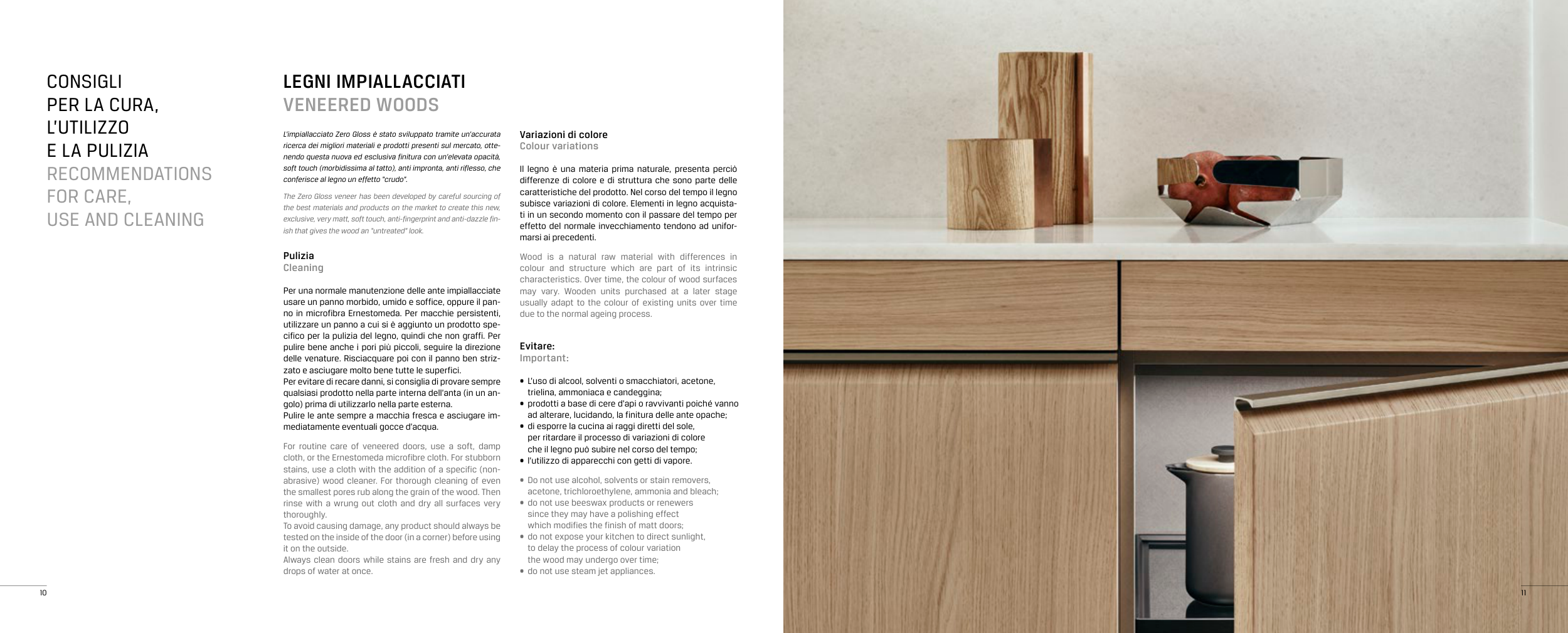
L’impiallacciato Zero Gloss è stato sviluppato tramite un’accurata
ricerca dei migliori materiali e prodotti presenti sul mercato, otte-
nendo questa nuova ed esclusiva finitura con un’elevata opacità,
soft touch (morbidissima al tatto), anti impronta, anti riflesso, che
conferisce al legno un effetto “crudo”.
The Zero Gloss veneer has been developed by careful sourcing of
the best materials and products on the market to create this new,
exclusive, very matt, soft touch, anti-fingerprint and anti-dazzle fin-
ish that gives the wood an “untreated” look.
Per una normale manutenzione delle ante impiallacciate
usare un panno morbido, umido e soffice, oppure il pan-
no in microfibra Ernestomeda. Per macchie persistenti,
utilizzare un panno a cui si è aggiunto un prodotto spe-
cifico per la pulizia del legno, quindi che non graffi. Per
pulire bene anche i pori più piccoli, seguire la direzione
delle venature. Risciacquare poi con il panno ben striz-
zato e asciugare molto bene tutte le superfici.
Per evitare di recare danni, si consiglia di provare sempre
qualsiasi prodotto nella parte interna dell’anta (in un an-
golo) prima di utilizzarlo nella parte esterna.
Pulire le ante sempre a macchia fresca e asciugare im-
mediatamente eventuali gocce d’acqua.
For routine care of veneered doors, use a soft, damp
cloth, or the Ernestomeda microfibre cloth. For stubborn
stains, use a cloth with the addition of a specific (non-
abrasive) wood cleaner. For thorough cleaning of even
the smallest pores rub along the grain of the wood. Then
rinse with a wrung out cloth and dry all surfaces very
thoroughly.
To avoid causing damage, any product should always be
tested on the inside of the door (in a corner) before using
it on the outside.
Always clean doors while stains are fresh and dry any
drops of water at once.
Pulizia
Cleaning
Il legno è una materia prima naturale, presenta perciò
differenze di colore e di struttura che sono parte delle
caratteristiche del prodotto. Nel corso del tempo il legno
subisce variazioni di colore. Elementi in legno acquista-
ti in un secondo momento con il passare del tempo per
effetto del normale invecchiamento tendono ad unifor-
marsi ai precedenti.
Wood is a natural raw material with differences in
colour and structure which are part of its intrinsic
characteristics. Over time, the colour of wood surfaces
may vary. Wooden units purchased at a later stage
usually adapt to the colour of existing units over time
due to the normal ageing process.
Variazioni di colore
Colour variations
• L’uso di alcool, solventi o smacchiatori, acetone,
trielina, ammoniaca e candeggina;
• prodotti a base di cere d’api o ravvivanti poiché vanno
ad alterare, lucidando, la finitura delle ante opache;
• di esporre la cucina ai raggi diretti del sole,
per ritardare il processo di variazioni di colore
che il legno può subire nel corso del tempo;
• l’utilizzo di apparecchi con getti di vapore.
• Do not use alcohol, solvents or stain removers,
acetone, trichloroethylene, ammonia and bleach;
• do not use beeswax products or renewers
since they may have a polishing effect
which modifies the finish of matt doors;
• do not expose your kitchen to direct sunlight,
to delay the process of colour variation
the wood may undergo over time;
• do not use steam jet appliances.
Evitare:
Important:
CONSIGLI
PER LA CURA,
L’UTILIZZO
E LA PULIZIA
RECOMMENDATIONS
FOR CARE,
USE AND CLEANING