There is a mix and re-mix of the
sacred and profane, you have also to
consider also the fact that these 15th
century artists were almost certainly
very far from being saints ...
Of course, Leonardo da Vinci and
his effigies could not possibly have
been left out of this inexhaustible
artistic mix. Lets us think about
the Mona Lisa, the art enigma of all
time which even in the early 20th
century was used by Marcel Duchamp
and Salvador Dalì. As we know,
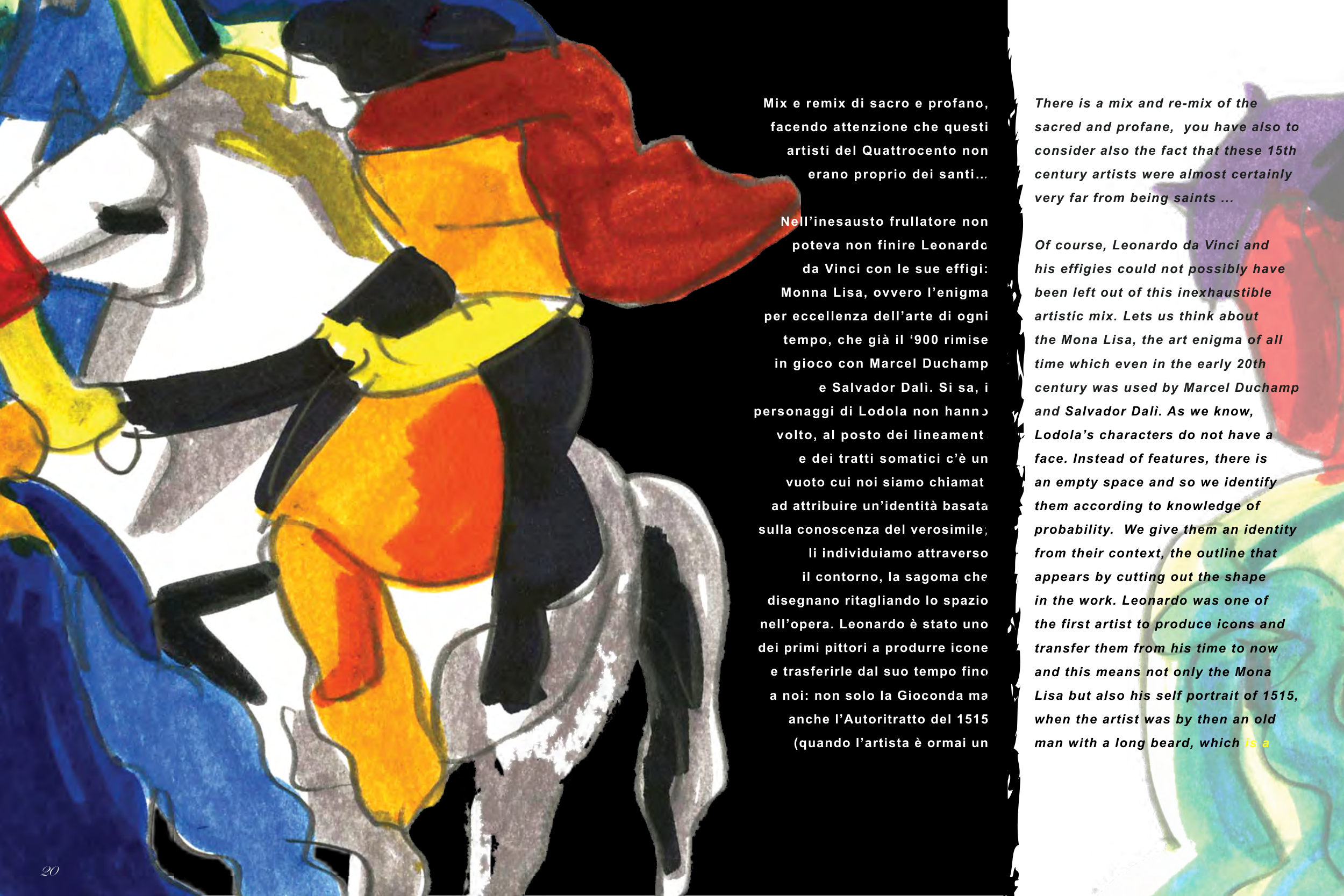
Lodola’s characters do not have a
face. Instead of features, there is
an empty space and so we identify
them according to knowledge of
probability. We give them an identity
from their context, the outline that
appears by cutting out the shape
in the work. Leonardo was one of
the first artist to produce icons and
transfer them from his time to now
and this means not only the Mona
Lisa but also his self portrait of 1515,
when the artist was by then an old
man with a long beard, which is a
Mix e remix di sacro e profano,
facendo attenzione che questi
artisti del Quattrocento non
erano proprio dei santi…
Nell’inesausto frullatore non
poteva non finire Leonardo
da Vinci con le sue effigi:
Monna Lisa, ovvero l’enigma
per eccellenza dell’arte di ogni
tempo, che già il ‘900 rimise
in gioco con Marcel Duchamp
e Salvador Dalì. Si sa, i
personaggi di Lodola non hanno
volto, al posto dei lineamenti
e dei tratti somatici c’è un
vuoto cui noi siamo chiamati
ad attribuire un’identità basata
sulla conoscenza del verosimile;
li individuiamo attraverso
il contorno, la sagoma che
disegnano ritagliando lo spazio
nell’opera. Leonardo è stato uno
dei primi pittori a produrre icone
e trasferirle dal suo tempo fino
a noi: non solo la Gioconda ma
anche l’Autoritratto del 1515
(quando l’artista è ormai un
20