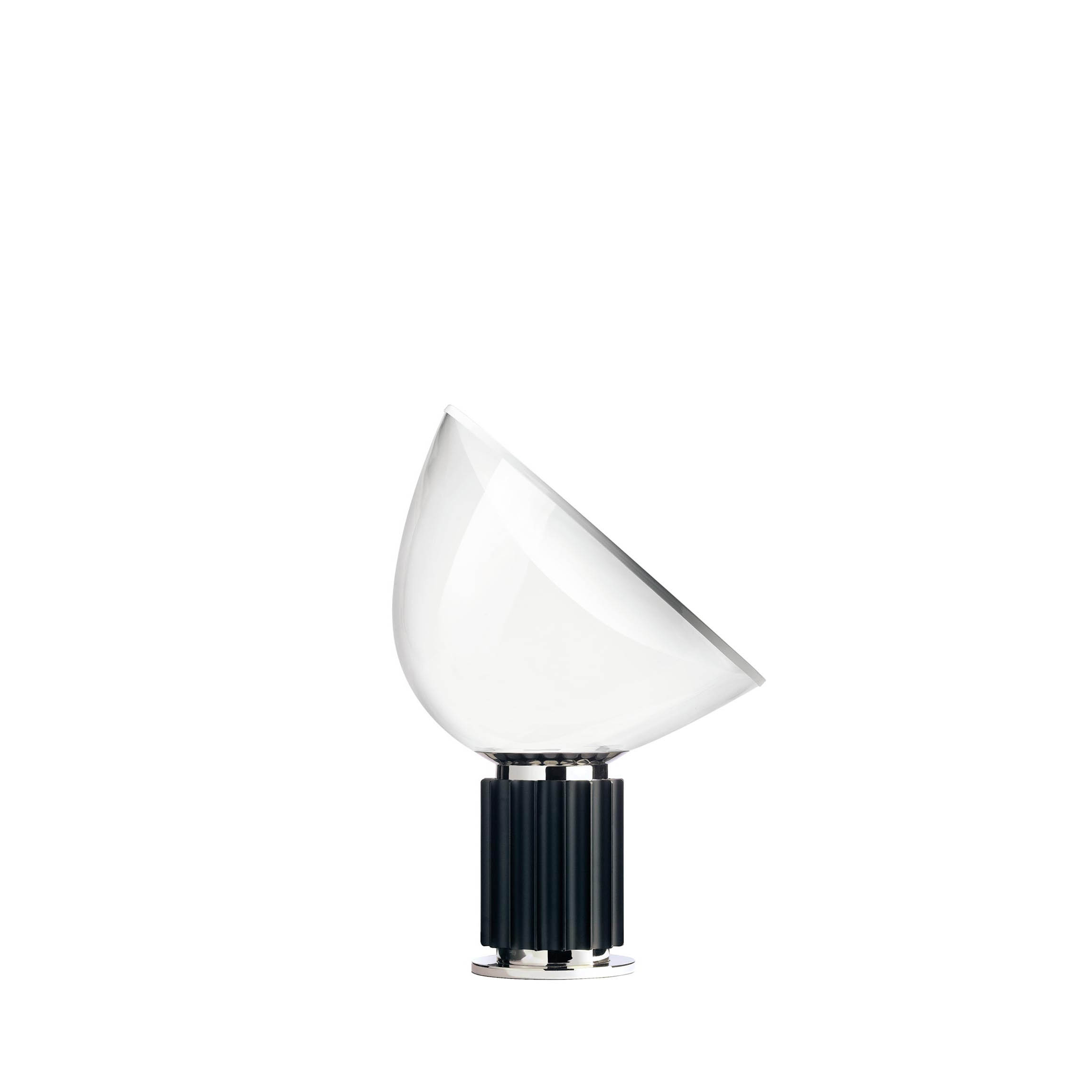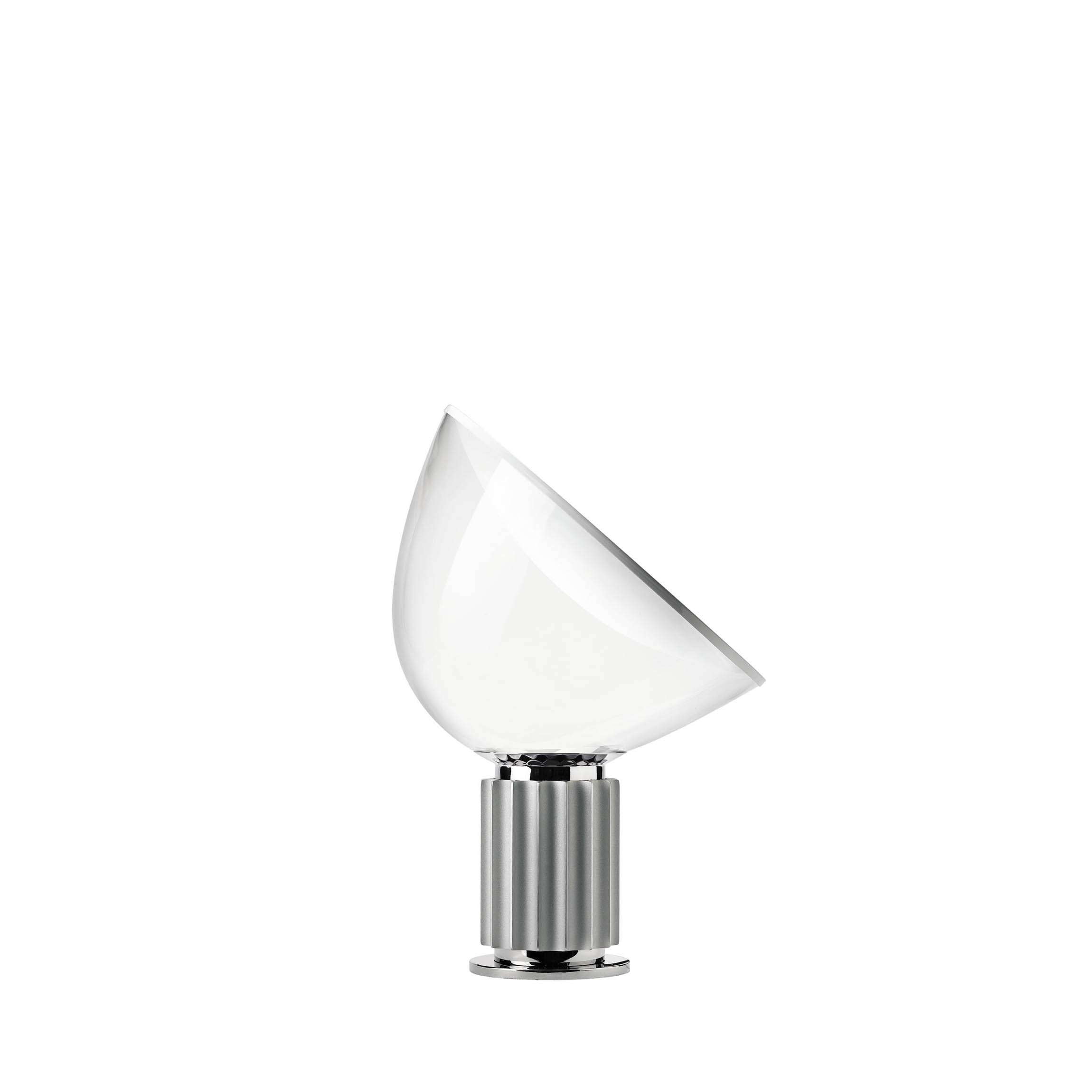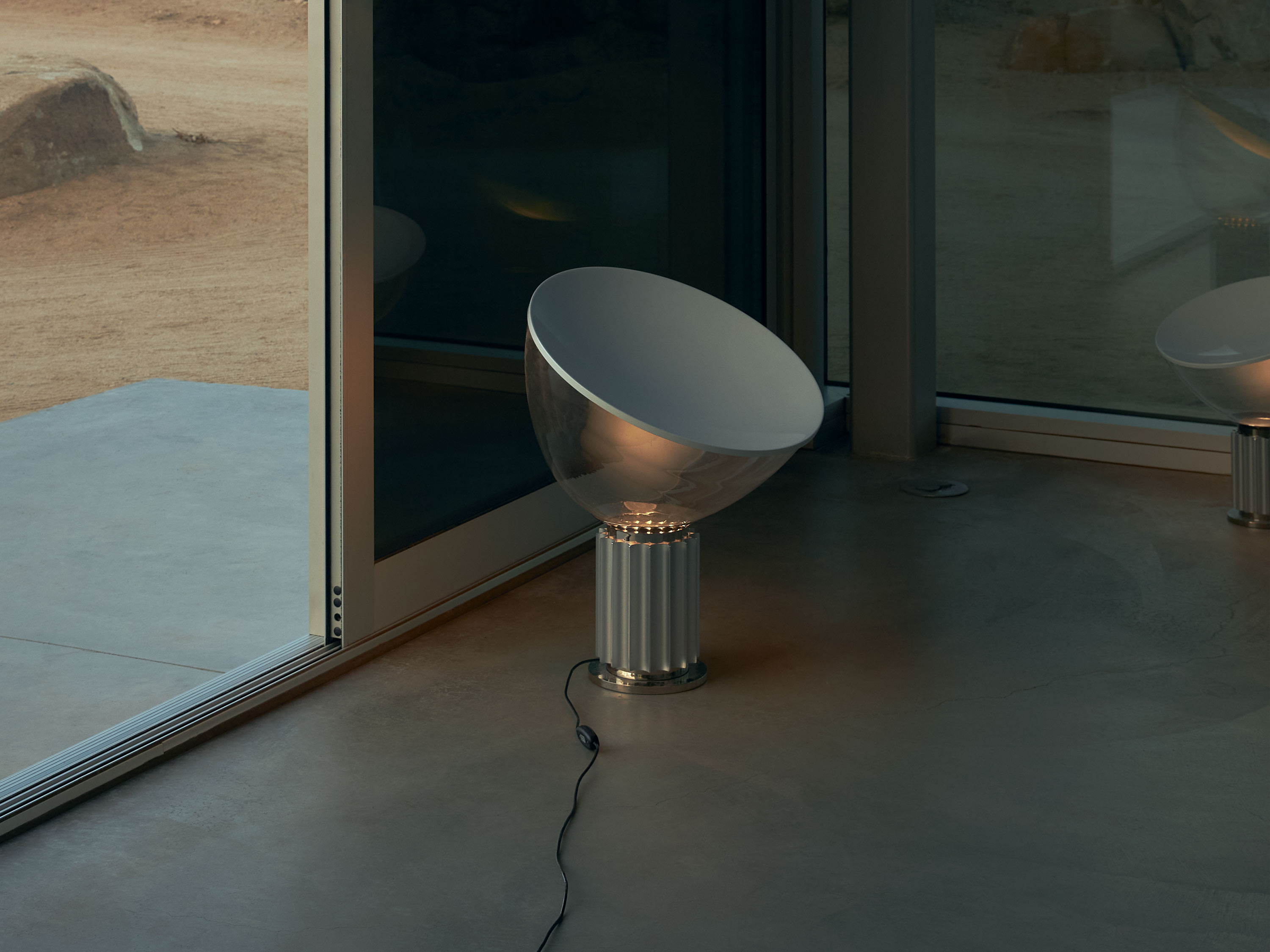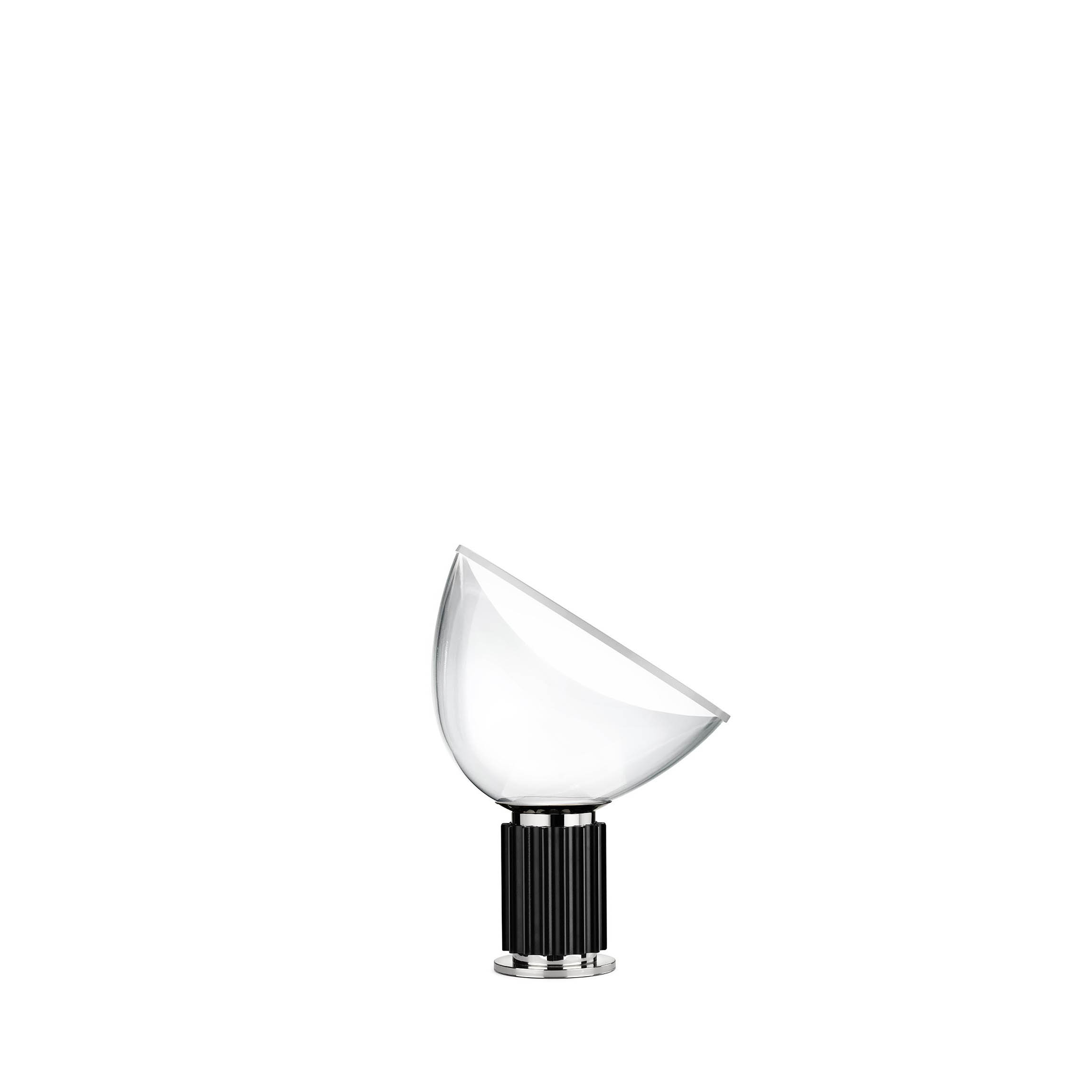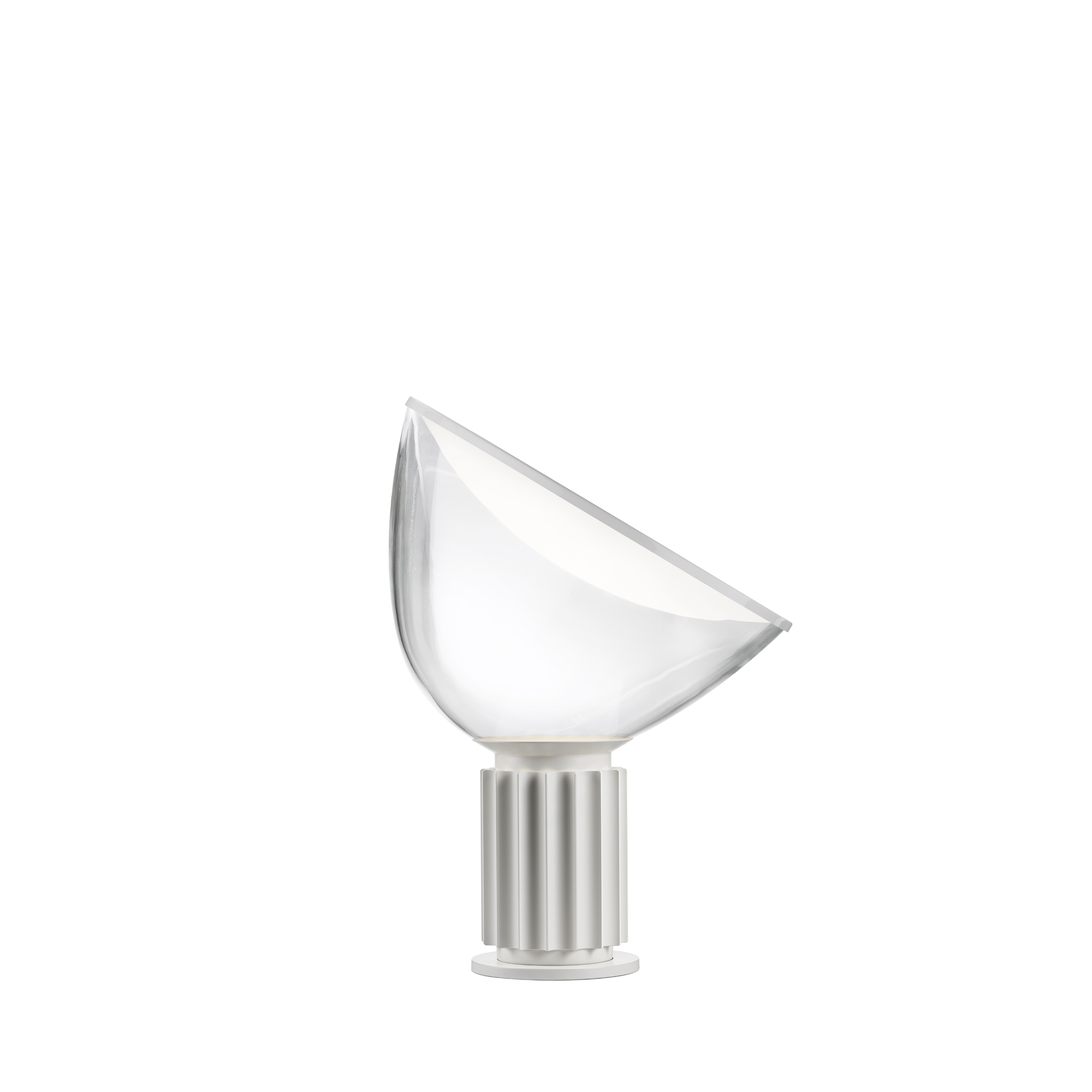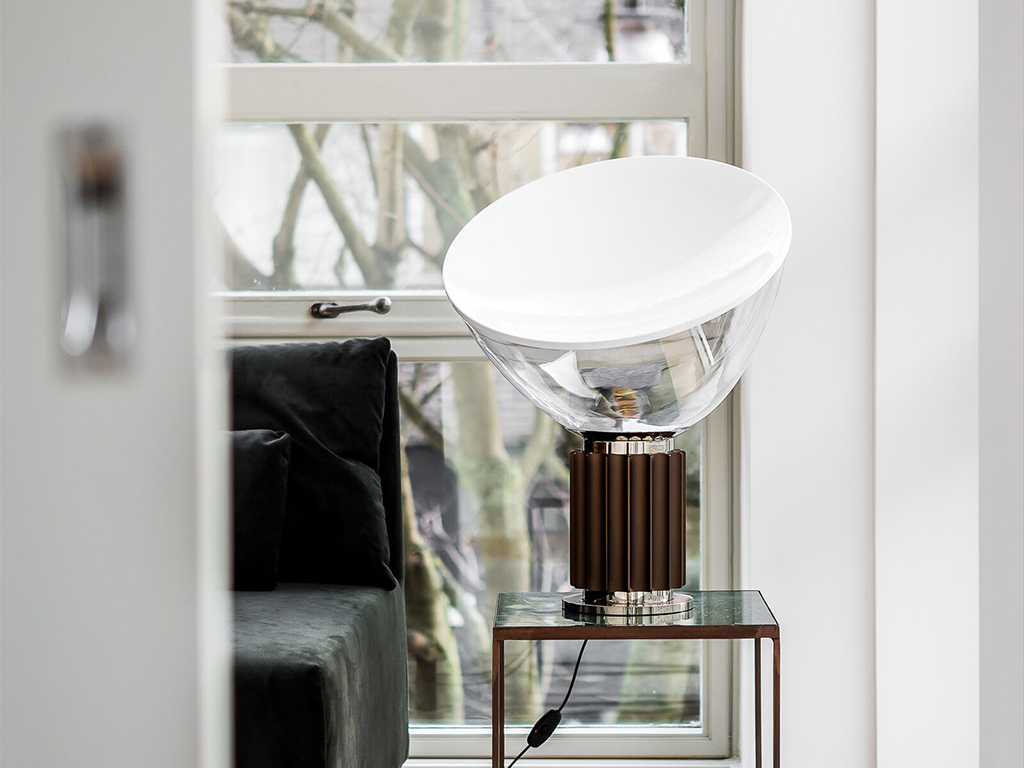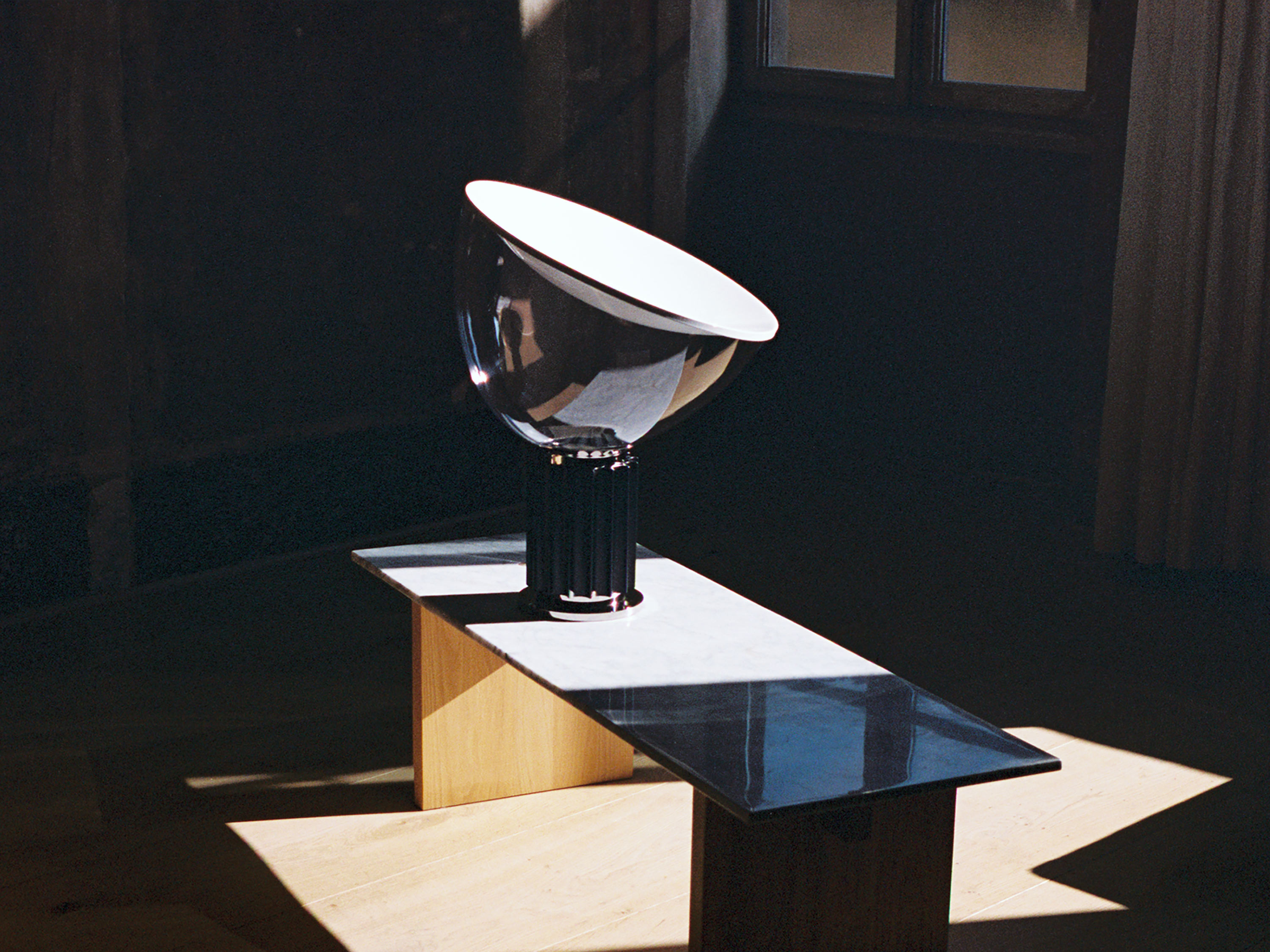
The Taccia collection, a Flos icon, fuses industrial aesthetics with refined elegance, embodying post-war Italian modernism. Its philosophy centers on sculptural, indirect light from an ingenious, deconstructed form. A 'floating' reflector above a fluted base creates compelling visual tension and dynamic interplay. This bold, functional, and theatrically understated piece diffuses illumination reflectively, imbuing spaces with an atmospheric glow—monumental yet intimately warm. Taccia symbolizes innovative lighting design.
Taccia embodies Flos's excellence through premium materiality and precision engineering. Its signature hand-blown glass reflector, meticulously balanced, directs light with soft, ambient grace. This delicate yet substantial component rests upon a robust, fluted base of anodized or painted extruded aluminum. Impeccable machining and a refined tactile finish ensure structural integrity. The sophisticated interplay of transparent and opaque elements highlights meticulous artisanal techniques, guaranteeing enduring beauty and unparalleled stability.
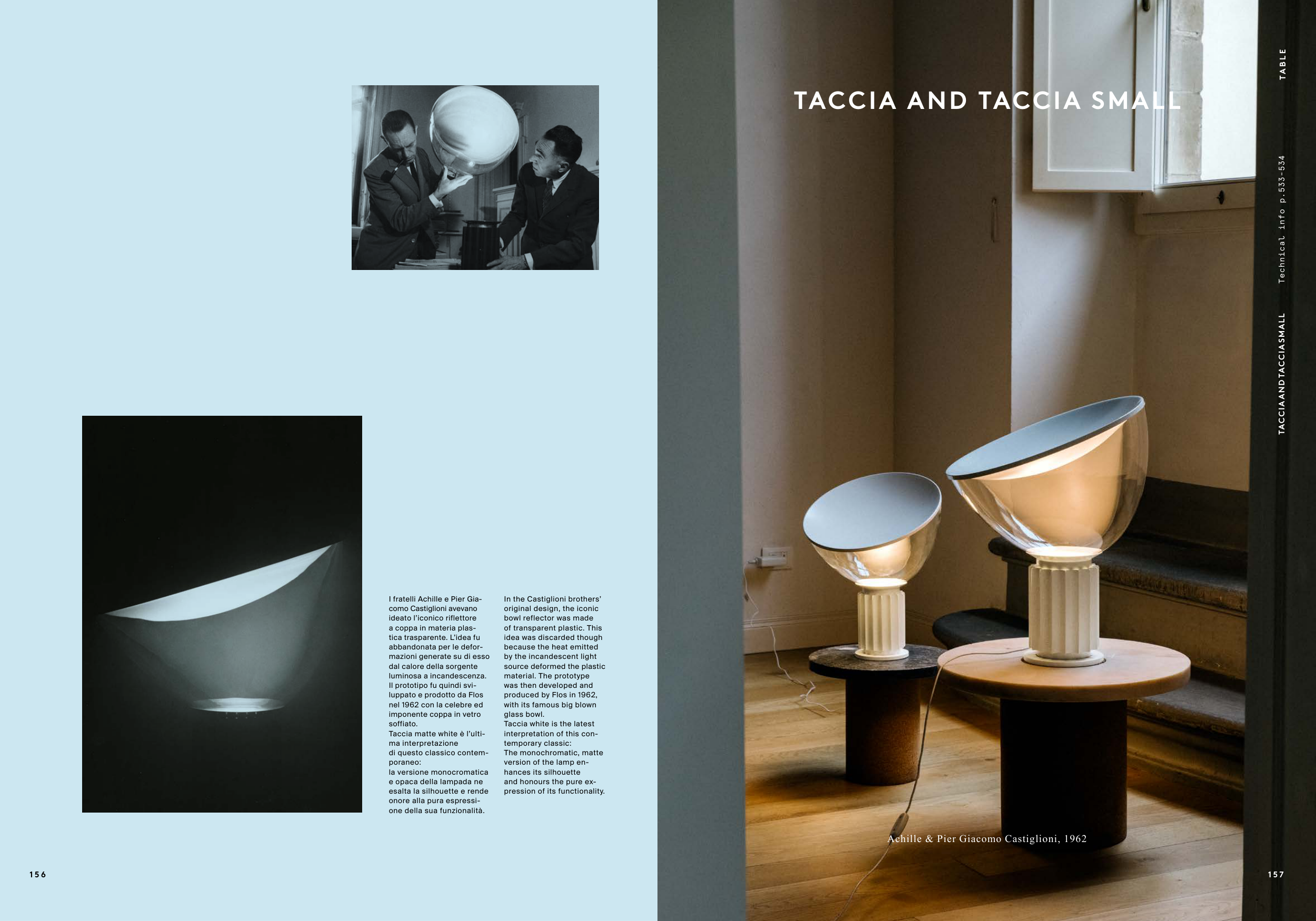
Introduced in 1962, the Taccia lamp swiftly became a timeless design classic. Its radical yet practical form, lauded for innovative light direction and sculptural presence, secured its place among modern design's masterpieces. This enduring artifact is prominently displayed in the permanent collections of prestigious institutions: MoMA, Centre Pompidou, and the V&A. Taccia's groundbreaking vision continues to inspire, cementing its status as a significant cultural emblem.
The Taccia collection offers a profound architectural presence, serving as a sculptural centerpiece. Its adjustable reflector allows precise control over light diffusion, casting an expansive, glare-free ambient glow that enhances spatial depth and texture. Ideal for executive desks, sophisticated living areas, or minimalist settings, Taccia adapts effortlessly. Available as an iconic table lamp and in Piccola variations, its versatile range ensures its evocative light quality and commanding form elevate diverse architectural contexts.