20
Milano
Milano
21
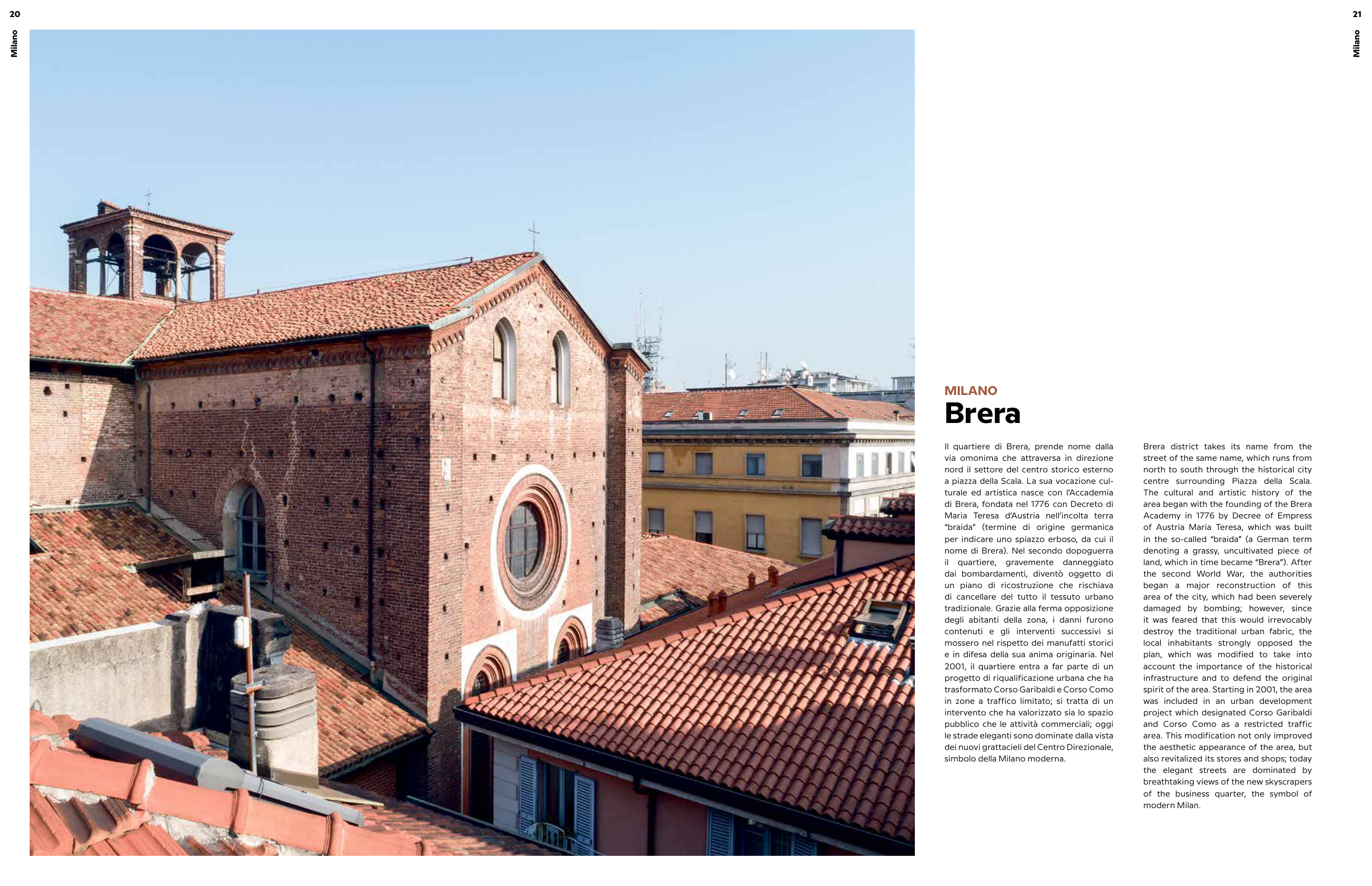
Il quartiere di Brera, prende nome dalla
via omonima che attraversa in direzione
nord il settore del centro storico esterno
a piazza della Scala. La sua vocazione cul-
turale ed artistica nasce con l’Accademia
di Brera, fondata nel 1776 con Decreto di
Maria Teresa d’Austria nell’incolta terra
“braida” (termine di origine germanica
per indicare uno spiazzo erboso, da cui il
nome di Brera). Nel secondo dopoguerra
il
quartiere,
gravemente
danneggiato
dai bombardamenti, diventò oggetto di
un piano di ricostruzione che rischiava
di cancellare del tutto il tessuto urbano
tradizionale. Grazie alla ferma opposizione
degli abitanti della zona, i danni furono
contenuti e gli interventi successivi si
mossero nel rispetto dei manufatti storici
e in difesa della sua anima originaria. Nel
2001, il quartiere entra a far parte di un
progetto di riqualificazione urbana che ha
trasformato Corso Garibaldi e Corso Como
in zone a traffico limitato; si tratta di un
intervento che ha valorizzato sia lo spazio
pubblico che le attività commerciali; oggi
le strade eleganti sono dominate dalla vista
dei nuovi grattacieli del Centro Direzionale,
simbolo della Milano moderna.
Brera
MILANO
Brera district takes its name from the
street of the same name, which runs from
north to south through the historical city
centre surrounding Piazza della Scala.
The cultural and artistic history of the
area began with the founding of the Brera
Academy in 1776 by Decree of Empress
of Austria Maria Teresa, which was built
in the so-called “braida” (a German term
denoting a grassy, uncultivated piece of
land, which in time became “Brera”). After
the second World War, the authorities
began a major reconstruction of this
area of the city, which had been severely
damaged by bombing; however, since
it was feared that this would irrevocably
destroy the traditional urban fabric, the
local inhabitants strongly opposed the
plan, which was modified to take into
account the importance of the historical
infrastructure and to defend the original
spirit of the area. Starting in 2001, the area
was included in an urban development
project which designated Corso Garibaldi
and Corso Como as a restricted traffic
area. This modification not only improved
the aesthetic appearance of the area, but
also revitalized its stores and shops; today
the elegant streets are dominated by
breathtaking views of the new skyscrapers
of the business quarter, the symbol of
modern Milan.