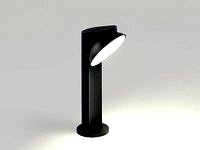
Umberto Riva
Opere e progetti
1962
Casa per vacanze, Stintino (Sassari)
1962
Casa per vacanze, Oliveto Lario (Como)
1966
Cooperativa d’abitazione,
via Paravia, Milano
1966
Progetto di un edificio per uffici
1967
Casa Berrini, Taino (Varese)
1968
Casa Giorgio Riva, Lesmo
(Monza Brianza)
1969
Officina C & B, Novedrate (Como)
1971
Case di Palma, Stintino, (Sassari)
1974
Appartamento per un collezionista d’arte
1975
Casa Ferrario, Osmate (Varese)
1978
Scuola elementare e media,
Faedis (Udine)
1980
Progetto per l’area della marina
di Petrarolo, Castellammare
del Golfo (Trapani)
1980
Progetto per l’area della
circonvallazione esterna, Vita (Trapani)
1980
Nuovo insediamento residenziale,
valle dell’Oued Touil (Algeria)
1982
Palazzo d’abitazione,
via Conchetta, Milano
1983
Ristrutturazione casa Frea, Milano
1985
Casa De Paolini, via Tantardini, Milano
1985
Studio Frea, Milano, 1985
1986
Ristrutturazione di un
appartamento, via Arena, Milano
1986
Ristrutturazione di un
appartamento, via Crema, Milano
1986
Casa d’abitazione nel centro storico,
Otranto (Lecce)
1986
Casa Insinga, via Arena, Milano
1987
Progetto per lo Sperone
Del Guasco, Ancona
1988
Appartamento Poggi/Dragone,
Corso di Porta Ticinese, Milano
1989
Planivolumetrico del Centro Civico,
Salemi, (Trapani)
Riconoscimenti
2003
Medaglia d’Oro all’Architettura Italiana
2018
Medaglia d’Oro alla Carriera
1989
Sistemazione di Piazza San
Nazaro in Brolo, Milano
1989
Casa Miggiano, Otranto (Lecce)
1991
Negozio I. B. Office, Padova
1992
Ristrutturazione di Casa Frea,
Otranto (Lecce)
1993
Ristrutturazione di un
appartamento, New York (USA)
1994
Porta d’ingresso e vetrina della
galleria A.A.M. Architettura Arte
Moderna, Milano
1997
Restauro del piano terreno
del Caffè Pedrocchi, Padova
1998
Progetto per la sistemazione del
viale del Ministero degli Esteri
e di piazza della Farnesina, Roma
1998
Sistemazione dell’ambito
circostante la chiesa di Santa Maria
di Castello, Alessandria
1998
Nuova Officina PRF-UMO,
Castellammare di Stabia, (Napoli)
2001
Porta Vittoria, Milano
2004
Centrale termoelettrica
EDISON, Simeri Crichi, (Cosenza)
2004
Risistemazione dell’asse monumentale
del centro urbano, Montpellier (Francia)
2006
Nuova Centrale Termoelettrica
Termoli, (Campobasso)
2011
Chiesa di San Corbiniano,
Quartiere Infernetto, (Roma)
Allestimenti
1975
Bar Sem, via Piermarini a Milano
1992
Negozio per IB Office, Padova
1994
Sistemazione della hall di accesso
al castello di Schönbrunn
1994
Sistema di arredi per ufficio, IB Office
1996
Ristrutturazione dell’atrio, della sala
conferenze e della libreria del palazzo
della Triennale di Milano, Milano
1996
Allestimen to della mostra “Frederick
Kiesler: arte, architettura, ambiente”,
Triennale di Milano, Milano
1998
Progetto di riorganizzazione
funzionale e adattamento museale
di Palazzo Barbaran da Porto, Vicenza
2000
Allestimento della mostra “Carlo
Scarpa”, Centro Internazionale di Studi
di Architettura Andrea Palladio, Vicenza
2000
Allestimento della mostra “John Soane
architetto (1753-1837)”, Palazzo Barbaran
da Porto, Vicenza
2001
Allestimento della mostra “John Soane
modern architecture in the making”,
Centre Canadien d’Architecture,
Montréal, Quebec (Canada)
2008
Allestimento della mostra “Carlo
Scarpa e l’origine delle cose”,
Biennale Architettura, Giardini di
Castello, Venezia
2012
Allestimento della mostra “L’Italia
di Le Corbusier”, Museo MAXXI, Roma
Umberto Riva
“I almost forced myself to like the job of architect. The world of painting would have been more suitable
because, as I told before, the approach would have been completely private and I would have been
totally responsible for what I was doing. Meanwhile if you are an architect or a designer, there are lots
of aspects that influence the final result: the client, the manufacturer, the economic issue, usually
very significant, the responsibility of understanding which will be the final result, and the final result itself.
If you do a painting or make a sculpture, you have the control, especially on architectural works: they
do not come out from a private formal process, but from precise requirements.”
A master of lighting, Umberto Riva was born in Milan in 1928 and has worked in
design since 1960. Having studied with Carlo Scarpa, Riva pursued his own person-
al research process via the most widely differing disciplines, from urban spaces
to buildings, landscape to interiors, outfitting to the design of lamps and furniture.
His most important creations include Casa Frea in Milan, considered to be one
of his masterpieces, the redevelopment of Piazza San Nazaro in Milan, restoration
Umberto Riva, Apartment Riva, via Paravia, 1965-67 (ph. Giorgio Casali
– Università IUAV di Venezia, Archivio Progetti, Fondo Giorgio Casali).
of the historic Caffè Pedrocchi in Padua, the design for the work on the Viale
del Ministero degli Esteri and Piazza della Farnesina in Rome, the Biblioteca
Europea at Porta Vittoria in Milan, the thermal power plants in Catanzaro
and Campobasso and a long line of houses, from Milan to Sardinia and Puglia,
as well as various designs of lamps and furniture for the biggest names in
3
Design Masters
This ongoing process ensures
a sense of connection with
contemporary style, which is then
further enhanced by the choice of
quality materials and leading-edge
technology, and always referencing
an all-important tradition, so as
to avoid the danger of confusing
style with fleeting fashions and
design with simple mass production.
Inevitably, the story of a family is
reflected in the places they inhabit:
the headquarters of a company
mirrors the people who work there
and the philosophy to which they
aspire. The Tacchini building features
an architecture structured into two
storeys, a fusion of materials and
spaces that blend into a complete
whole, expressing its ethos and
essence. In the background, Brianza,
between Como and Milan, too
blindingly green in summer, too grey
and inward-looking in winter; these
places with their extremes form
the backdrop to this story, the very
birthplace of design, where people
and ideas merge with the design
culture. Each object, each piece of
furniture created in this building
carries within it the hallmark of
Italian design: the ability to give any
space a sense of place, be it public
or private, domestic or communal,
filling it with presence.
Tacchini Italia Forniture Srl
19, v. Domodossola, 20822
Baruccana di Seveso (MB), Italy
T. +39 0362 50 41 82
F. +39 0362 55 24 02
info@tacchini.it – www.tacchini.it
TacchiniEdizioni
Umberto Riva
Forewords