20
21
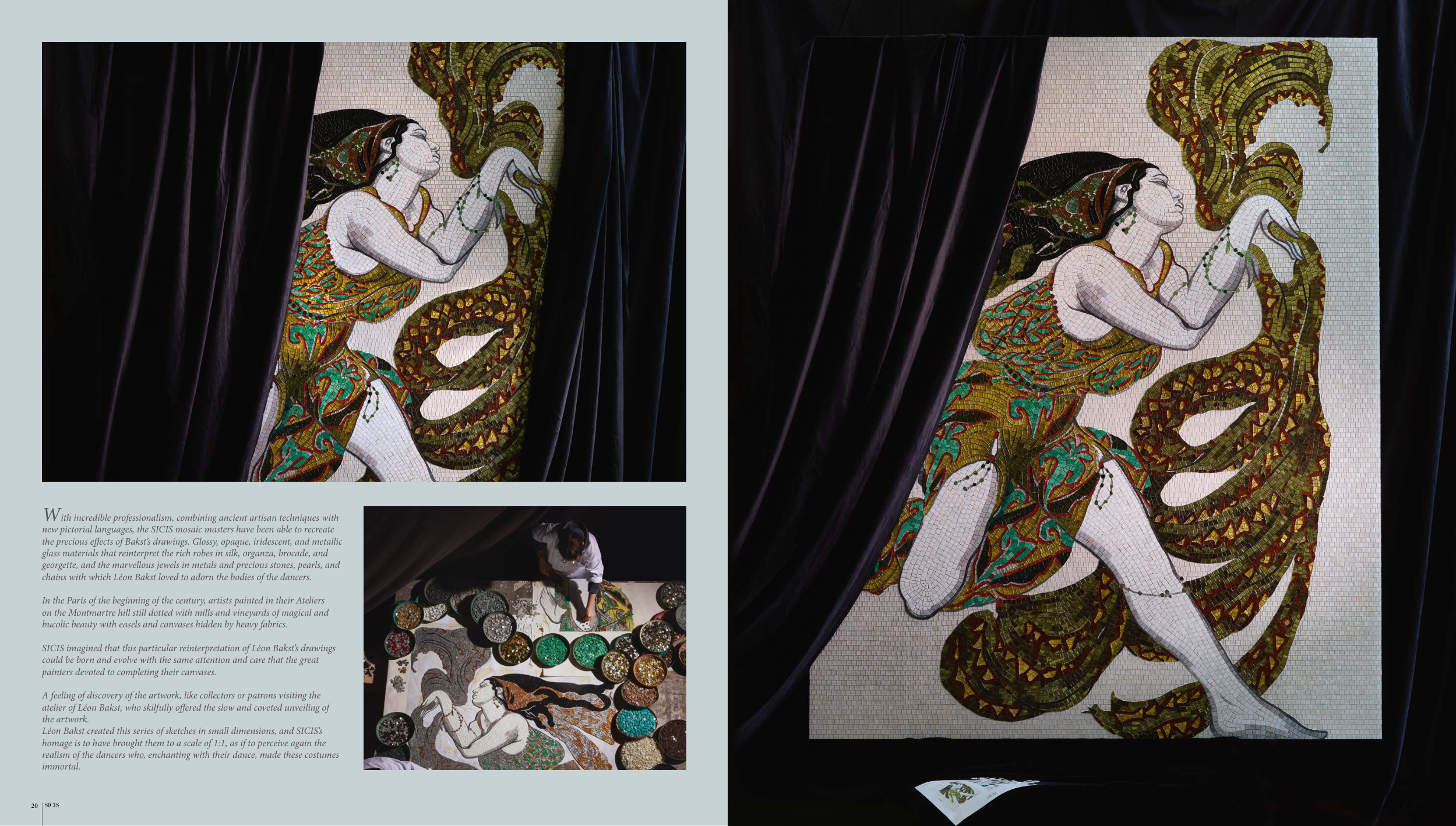
With incredible professionalism, combining ancient artisan techniques with
new pictorial languages, the SICIS mosaic masters have been able to recreate
the precious effects of Bakst’s drawings. Glossy, opaque, iridescent, and metallic
glass materials that reinterpret the rich robes in silk, organza, brocade, and
georgette, and the marvellous jewels in metals and precious stones, pearls, and
chains with which Léon Bakst loved to adorn the bodies of the dancers.
In the Paris of the beginning of the century, artists painted in their Ateliers
on the Montmartre hill still dotted with mills and vineyards of magical and
bucolic beauty with easels and canvases hidden by heavy fabrics.
SICIS imagined that this particular reinterpretation of Léon Bakst’s drawings
could be born and evolve with the same attention and care that the great
painters devoted to completing their canvases.
A feeling of discovery of the artwork, like collectors or patrons visiting the
atelier of Léon Bakst, who skilfully offered the slow and coveted unveiling of
the artwork.
Léon Bakst created this series of sketches in small dimensions, and SICIS’s
homage is to have brought them to a scale of 1:1, as if to perceive again the
realism of the dancers who, enchanting with their dance, made these costumes
immortal.