it — La nuova collezione di tappeti “Cime”, nasce dal desiderio
di Saba di usare la materia di cui è fatto un tappeto, quale tela
per esprimere i suoi asset valoriali, ovvero la memoria
e la poesia. Legare la memoria del passato, fatta di tradizioni
artigianali da preservare, all’estetica contemporanea, è stato
il tema affidato al duo creativo Zanellato/Bortotto.
I designers hanno attinto al mondo nautico per pensare
al progetto ispirandosi alla Vela al Terzo. Caratteristica
dell’Adriatico, la Vela al Terzo possedeva funzioni particolari
tra cui quella di costituire un sistema di riconoscimento
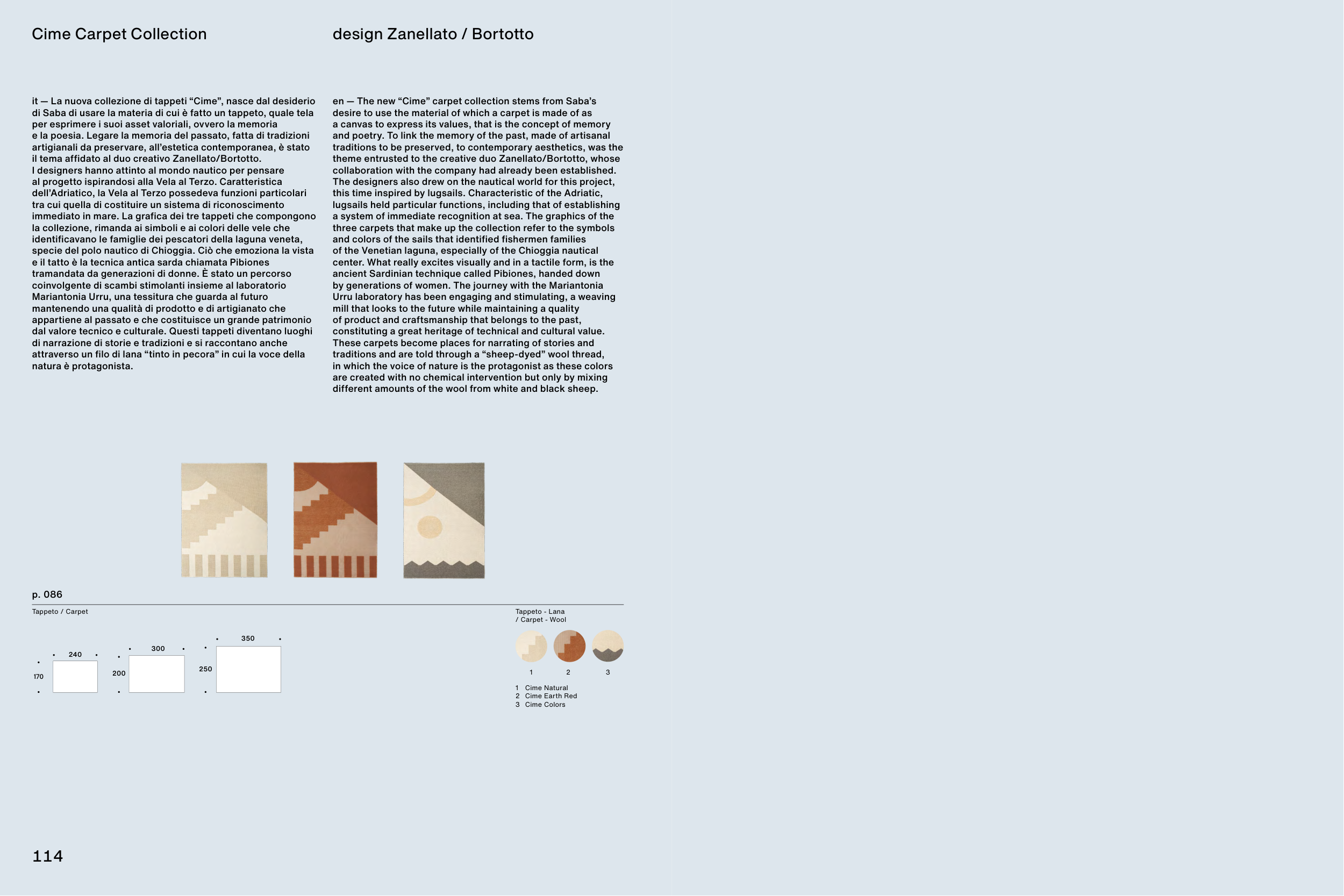
immediato in mare. La grafica dei tre tappeti che compongono
la collezione, rimanda ai simboli e ai colori delle vele che
identificavano le famiglie dei pescatori della laguna veneta,
specie del polo nautico di Chioggia. Ciò che emoziona la vista
e il tatto è la tecnica antica sarda chiamata Pibiones
tramandata da generazioni di donne. È stato un percorso
coinvolgente di scambi stimolanti insieme al laboratorio
Mariantonia Urru, una tessitura che guarda al futuro
mantenendo una qualità di prodotto e di artigianato che
appartiene al passato e che costituisce un grande patrimonio
dal valore tecnico e culturale. Questi tappeti diventano luoghi
di narrazione di storie e tradizioni e si raccontano anche
attraverso un filo di lana “tinto in pecora” in cui la voce della
natura è protagonista.
en — The new “Cime” carpet collection stems from Saba’s
desire to use the material of which a carpet is made of as
a canvas to express its values, that is the concept of memory
and poetry. To link the memory of the past, made of artisanal
traditions to be preserved, to contemporary aesthetics, was the
theme entrusted to the creative duo Zanellato/Bortotto, whose
collaboration with the company had already been established.
The designers also drew on the nautical world for this project,
this time inspired by lugsails. Characteristic of the Adriatic,
lugsails held particular functions, including that of establishing
a system of immediate recognition at sea. The graphics of the
three carpets that make up the collection refer to the symbols
and colors of the sails that identified fishermen families
of the Venetian laguna, especially of the Chioggia nautical
center. What really excites visually and in a tactile form, is the
ancient Sardinian technique called Pibiones, handed down
by generations of women. The journey with the Mariantonia
Urru laboratory has been engaging and stimulating, a weaving
mill that looks to the future while maintaining a quality
of product and craftsmanship that belongs to the past,
constituting a great heritage of technical and cultural value.
These carpets become places for narrating of stories and
traditions and are told through a “sheep-dyed” wool thread,
in which the voice of nature is the protagonist as these colors
are created with no chemical intervention but only by mixing
different amounts of the wool from white and black sheep.
p. 086
Cime Carpet Collection
design Zanellato / Bortotto
3
170
200
250
240
300
350
170
200
250
240
300
350
Tappeto / Carpet
1 Cime Natural
2 Cime Earth Red
3 Cime Colors
Tappeto - Lana
/ Carpet - Wool
1
2
114