335
Planning notes for ceiling extractors
Distance between hob and cooker hood
The distance between the ceiling extractor and hob should be between 70 cm and 130 cm. We do not recommend exceeding the
maximum distance as the vapour extraction performance is significantly reduced as the distance increases. Cold hobs, such as
induction hobs or electric hobs, do not help vapours to lift up as much as gas hobs, for example. The vapours cool down more quickly
and condense while rising. Condensed elements of the vapours do not reach the cooker hood's collection zone and fall back towards
the floor.
Hob heating types and vapour collection
Due to the different types of heating in hobs, the way in which vapours rise can differ (thermal lift).
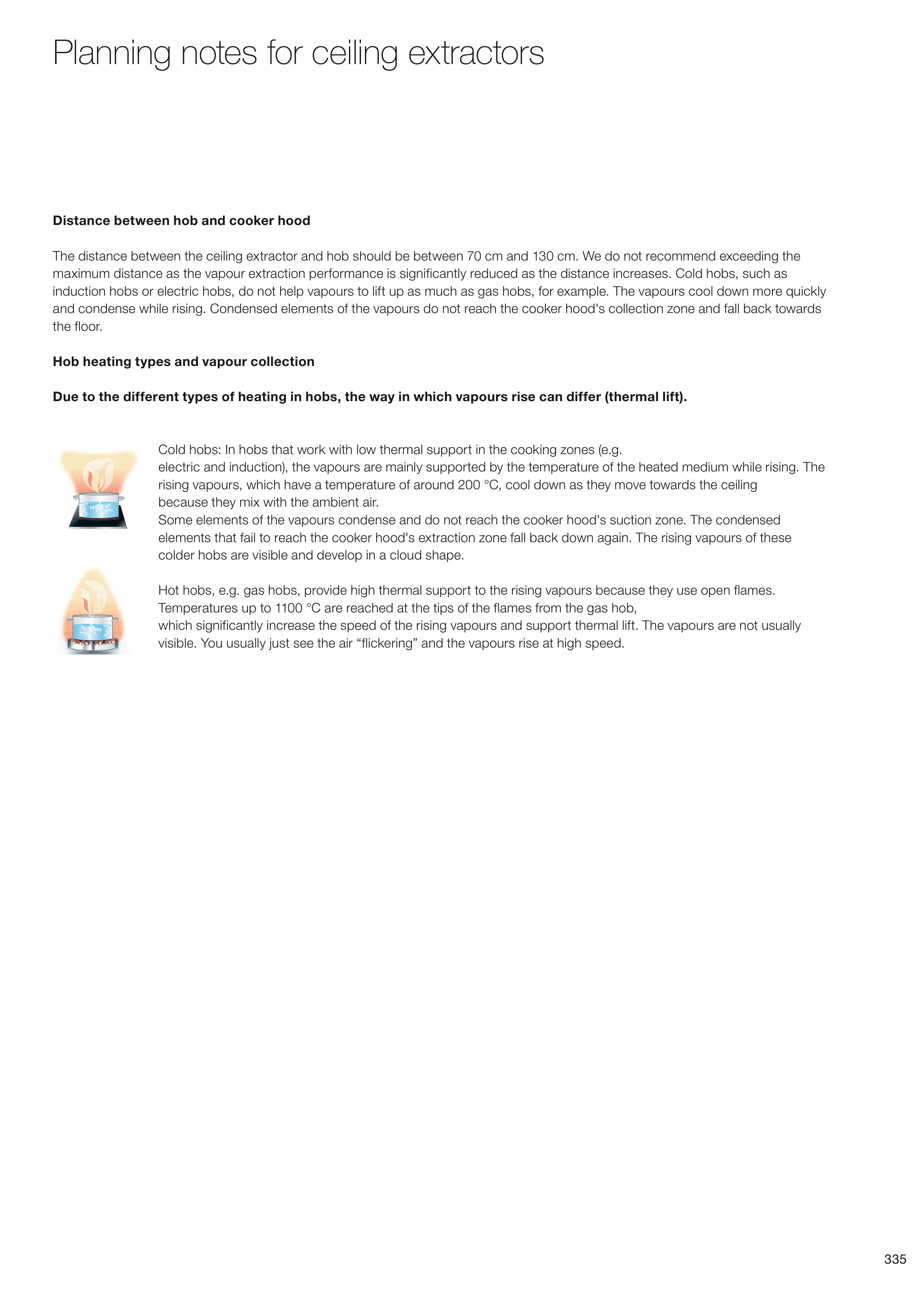
Cold hobs: In hobs that work with low thermal support in the cooking zones (e.g.
electric and induction), the vapours are mainly supported by the temperature of the heated medium while rising. The
rising vapours, which have a temperature of around 200 °C, cool down as they move towards the ceiling
because they mix with the ambient air.
Some elements of the vapours condense and do not reach the cooker hood's suction zone. The condensed
elements that fail to reach the cooker hood's extraction zone fall back down again. The rising vapours of these
colder hobs are visible and develop in a cloud shape.
Hot hobs, e.g. gas hobs, provide high thermal support to the rising vapours because they use open flames.
Temperatures up to 1100 °C are reached at the tips of the flames from the gas hob,
which significantly increase the speed of the rising vapours and support thermal lift. The vapours are not usually
visible. You usually just see the air “flickering” and the vapours rise at high speed.
22-1557_Part20_Skizzen_VitroLine_Gen7000_Kurz_GB.indd 335
22-1557_Part20_Skizzen_VitroLine_Gen7000_Kurz_GB.indd 335
16.03.23 14:01
16.03.23 14:01