79
78
78
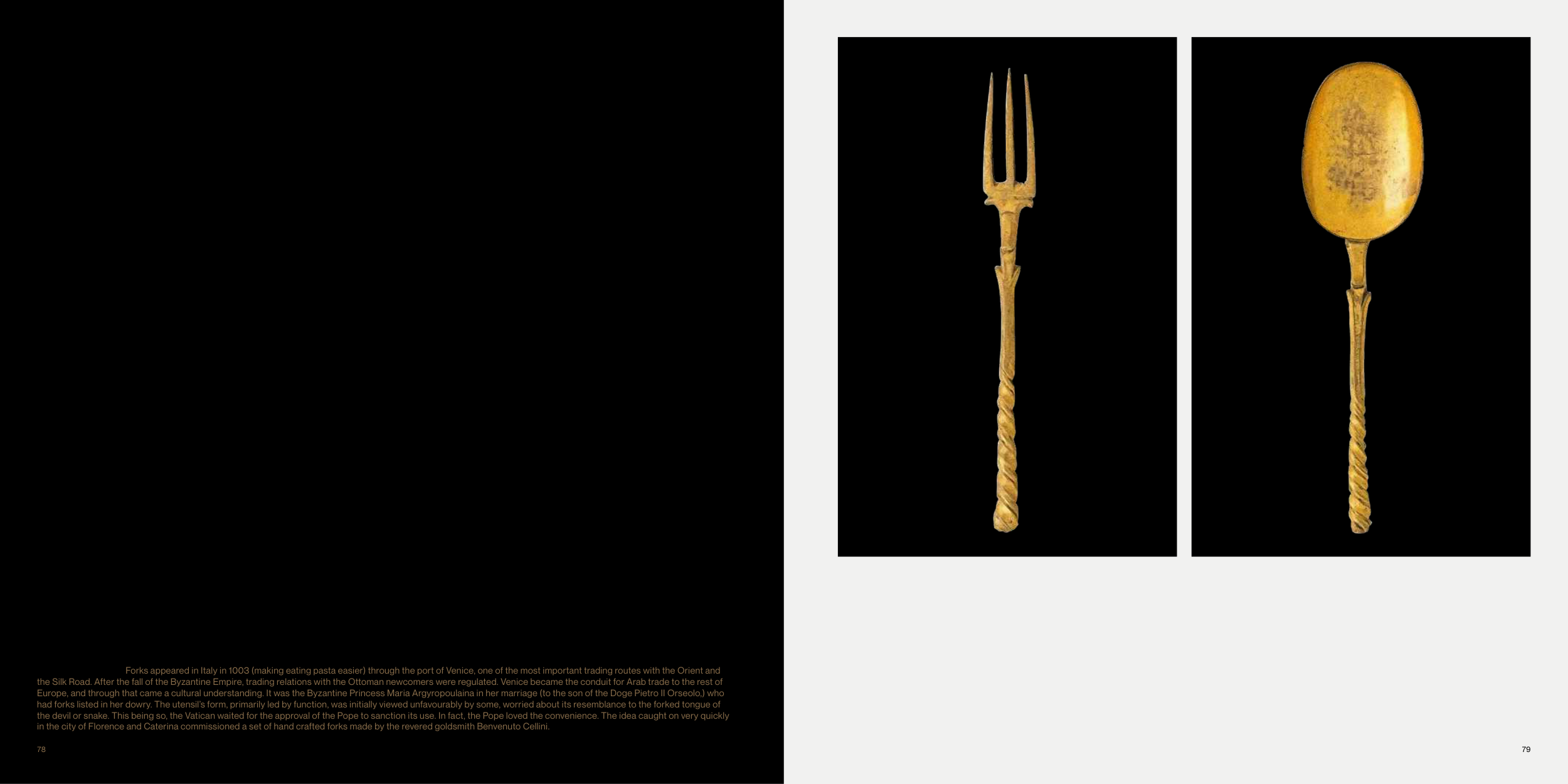
Forks appeared in Italy in 1003 (making eating pasta easier) through the port of Venice, one of the most important trading routes with the Orient and
the Silk Road. After the fall of the Byzantine Empire, trading relations with the Ottoman newcomers were regulated. Venice became the conduit for Arab trade to the rest of
Europe, and through that came a cultural understanding. It was the Byzantine Princess Maria Argyropoulaina in her marriage (to the son of the Doge Pietro II Orseolo,) who
had forks listed in her dowry. The utensil’s form, primarily led by function, was initially viewed unfavourably by some, worried about its resemblance to the forked tongue of
the devil or snake. This being so, the Vatican waited for the approval of the Pope to sanction its use. In fact, the Pope loved the convenience. The idea caught on very quickly
in the city of Florence and Caterina commissioned a set of hand crafted forks made by the revered goldsmith Benvenuto Cellini.