73
72
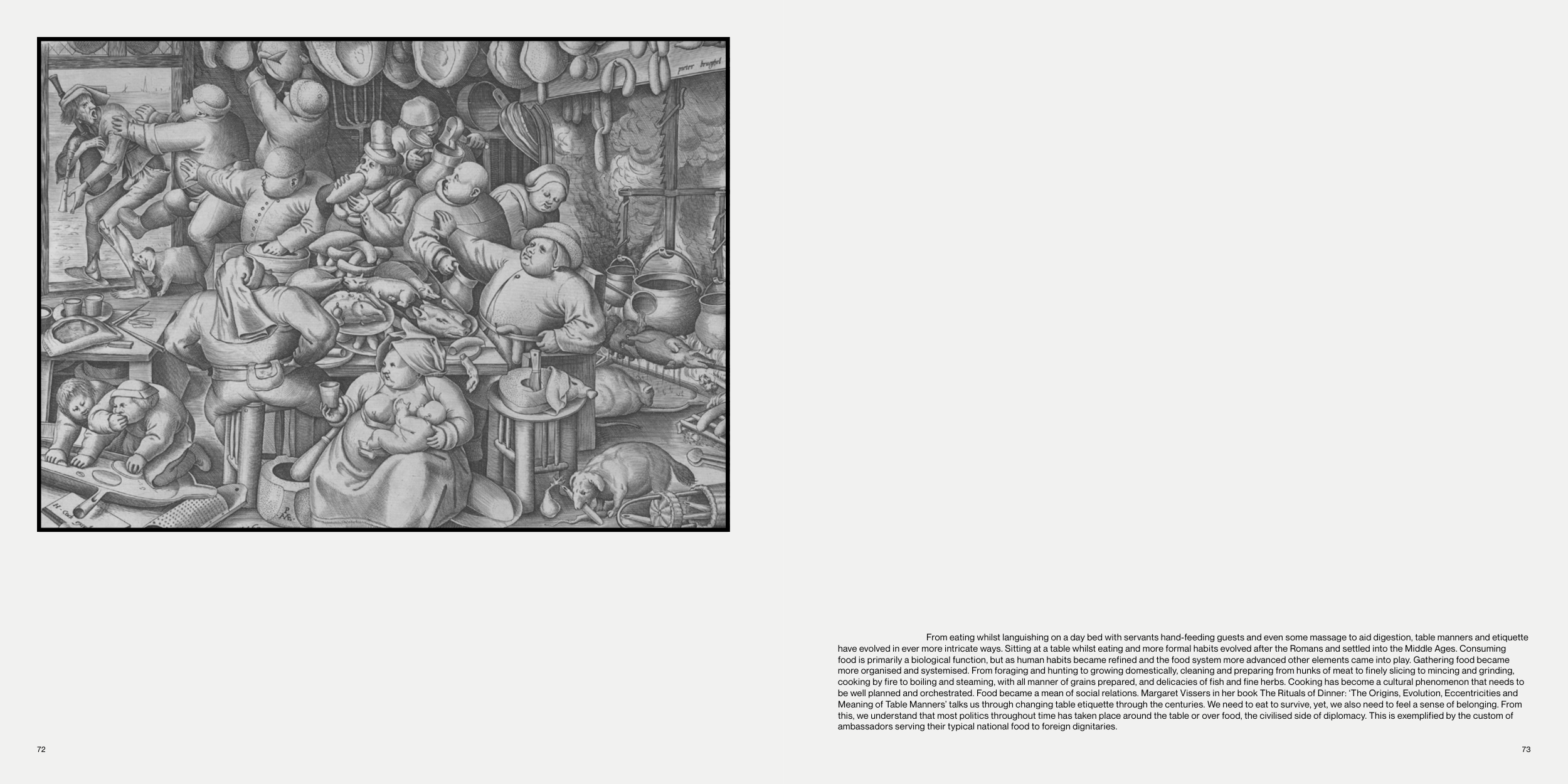
From eating whilst languishing on a day bed with servants hand-feeding guests and even some massage to aid digestion, table manners and etiquette
have evolved in ever more intricate ways. Sitting at a table whilst eating and more formal habits evolved after the Romans and settled into the Middle Ages. Consuming
food is primarily a biological function, but as human habits became refined and the food system more advanced other elements came into play. Gathering food became
more organised and systemised. From foraging and hunting to growing domestically, cleaning and preparing from hunks of meat to finely slicing to mincing and grinding,
cooking by fire to boiling and steaming, with all manner of grains prepared, and delicacies of fish and fine herbs. Cooking has become a cultural phenomenon that needs to
be well planned and orchestrated. Food became a mean of social relations. Margaret Vissers in her book The Rituals of Dinner: ‘The Origins, Evolution, Eccentricities and
Meaning of Table Manners’ talks us through changing table etiquette through the centuries. We need to eat to survive, yet, we also need to feel a sense of belonging. From
this, we understand that most politics throughout time has taken place around the table or over food, the civilised side of diplomacy. This is exemplified by the custom of
ambassadors serving their typical national food to foreign dignitaries.