47
46
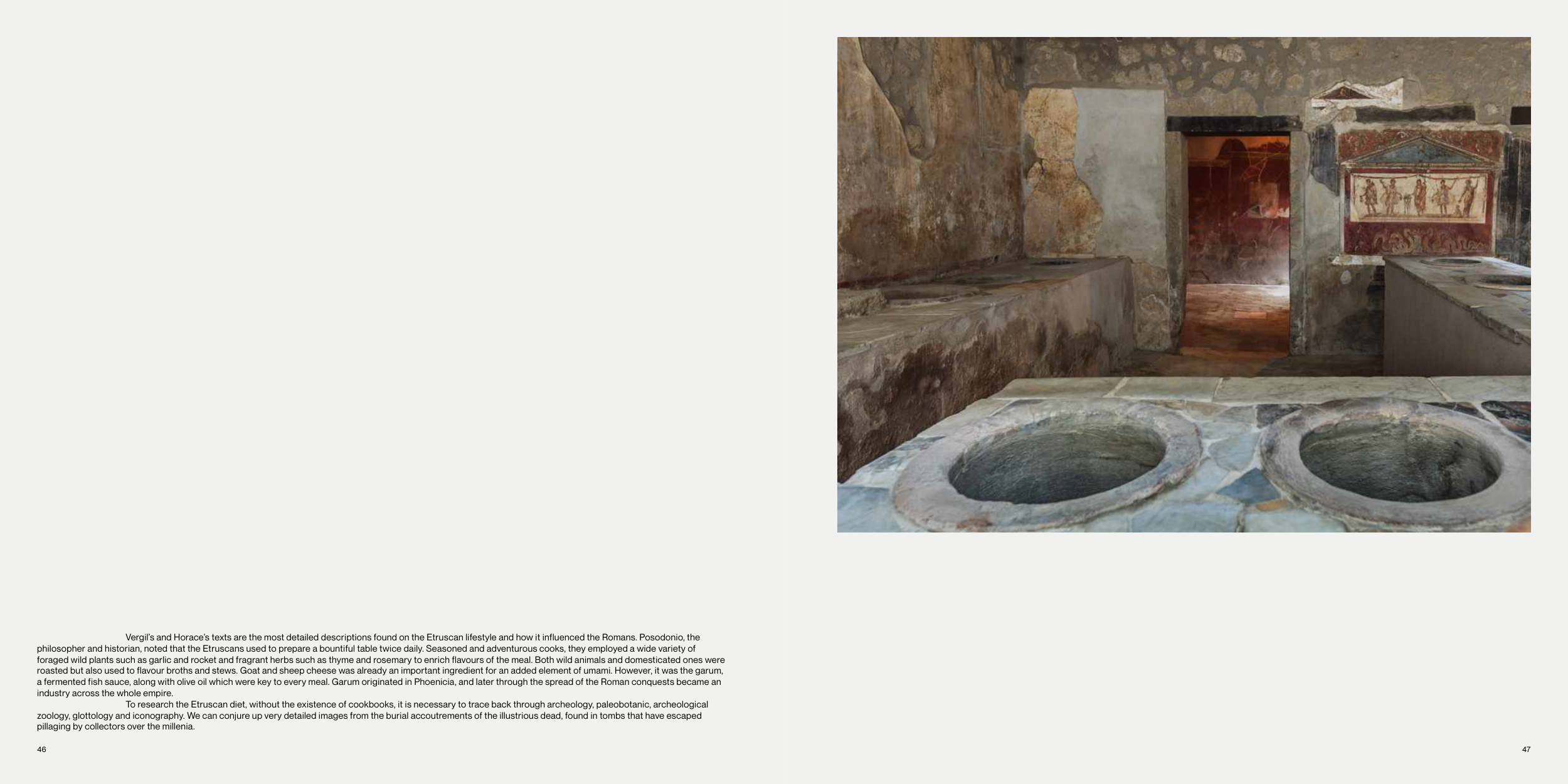
Vergil’s and Horace’s texts are the most detailed descriptions found on the Etruscan lifestyle and how it influenced the Romans. Posodonio, the
philosopher and historian, noted that the Etruscans used to prepare a bountiful table twice daily. Seasoned and adventurous cooks, they employed a wide variety of
foraged wild plants such as garlic and rocket and fragrant herbs such as thyme and rosemary to enrich flavours of the meal. Both wild animals and domesticated ones were
roasted but also used to flavour broths and stews. Goat and sheep cheese was already an important ingredient for an added element of umami. However, it was the garum,
a fermented fish sauce, along with olive oil which were key to every meal. Garum originated in Phoenicia, and later through the spread of the Roman conquests became an
industry across the whole empire.
To research the Etruscan diet, without the existence of cookbooks, it is necessary to trace back through archeology, paleobotanic, archeological
zoology, glottology and iconography. We can conjure up very detailed images from the burial accoutrements of the illustrious dead, found in tombs that have escaped
pillaging by collectors over the millenia.