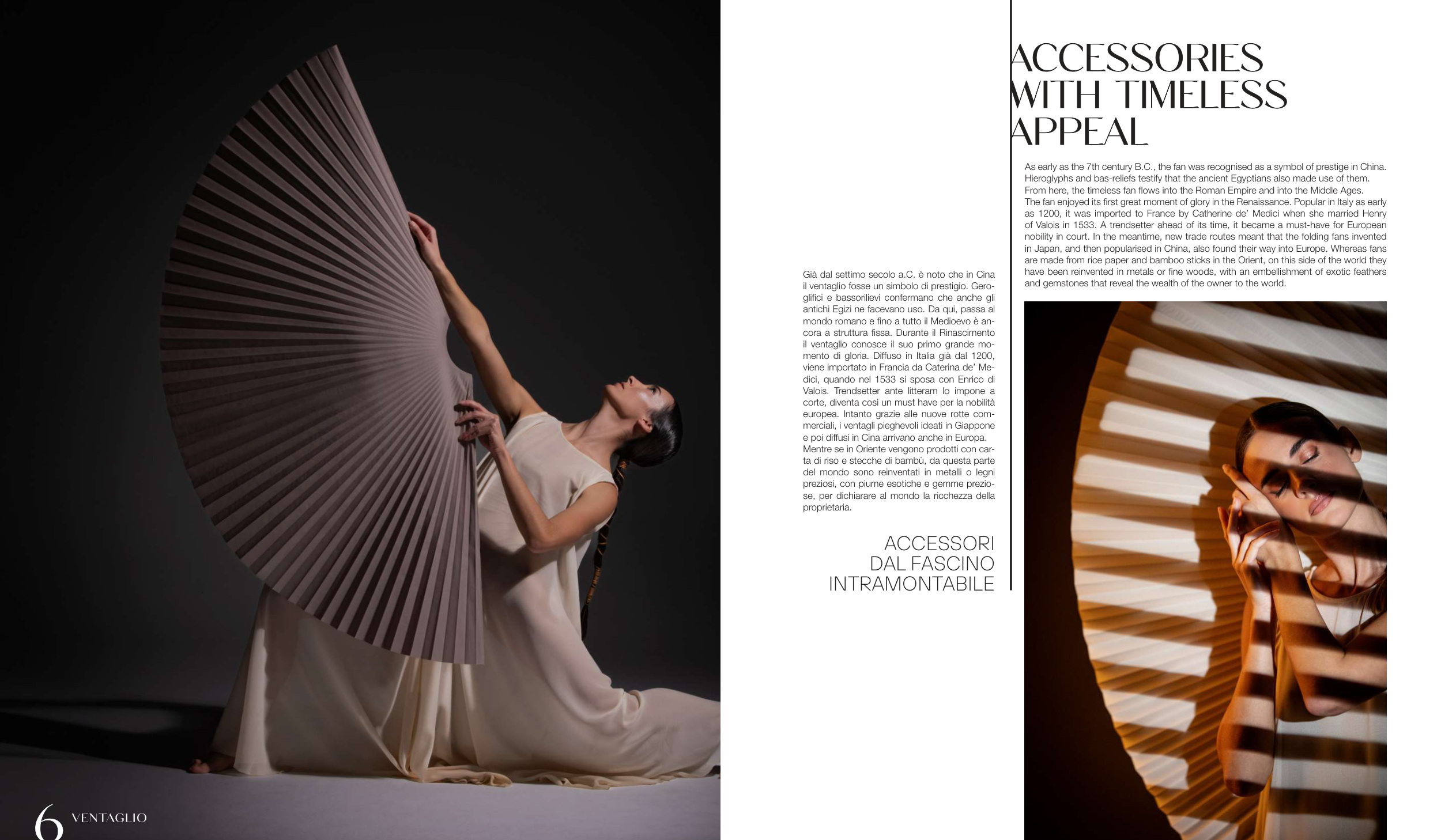
As early as the 7th century B.C., the fan was recognised as a symbol of prestige in China.
Hieroglyphs and bas-reliefs testify that the ancient Egyptians also made use of them.
From here, the timeless fan flows into the Roman Empire and into the Middle Ages.
The fan enjoyed its first great moment of glory in the Renaissance. Popular in Italy as early
as 1200, it was imported to France by Catherine de’ Medici when she married Henry
of Valois in 1533. A trendsetter ahead of its time, it became a must-have for European
nobility in court. In the meantime, new trade routes meant that the folding fans invented
in Japan, and then popularised in China, also found their way into Europe. Whereas fans
are made from rice paper and bamboo sticks in the Orient, on this side of the world they
have been reinvented in metals or fine woods, with an embellishment of exotic feathers
and gemstones that reveal the wealth of the owner to the world.
Già dal settimo secolo a.C. è noto che in Cina
il ventaglio fosse un simbolo di prestigio. Gero-
glifici e bassorilievi confermano che anche gli
antichi Egizi ne facevano uso. Da qui, passa al
mondo romano e fino a tutto il Medioevo è an-
cora a struttura fissa. Durante il Rinascimento
il ventaglio conosce il suo primo grande mo-
mento di gloria. Diffuso in Italia già dal 1200,
viene importato in Francia da Caterina de’ Me-
dici, quando nel 1533 si sposa con Enrico di
Valois. Trendsetter ante litteram lo impone a
corte, diventa così un must have per la nobilità
europea. Intanto grazie alle nuove rotte com-
merciali, i ventagli pieghevoli ideati in Giappone
e poi diffusi in Cina arrivano anche in Europa.
Mentre se in Oriente vengono prodotti con car-
ta di riso e stecche di bambù, da questa parte
del mondo sono reinventati in metalli o legni
preziosi, con piume esotiche e gemme prezio-
se, per dichiarare al mondo la ricchezza della
proprietaria.
ACCESSORIES
ACCESSORIES
WITH TIMELESS
WITH TIMELESS
APPEAL
APPEAL
ACCESSORI
DAL FASCINO
INTRAMONTABILE
6