70 | F E R R E R O L E G N O E X P E R I E N C E M A G A Z I N E | 2020
1960
Sugli schermi Fellini imprime per sempre nella
retina della storia del cinema le immagini di
Marcello and Sylvia nella Fontana di Trevi, le
prime TV trasmettono Non è Mai Troppo Tardi,
corso di alfabetizzazione per adulti, mentre la
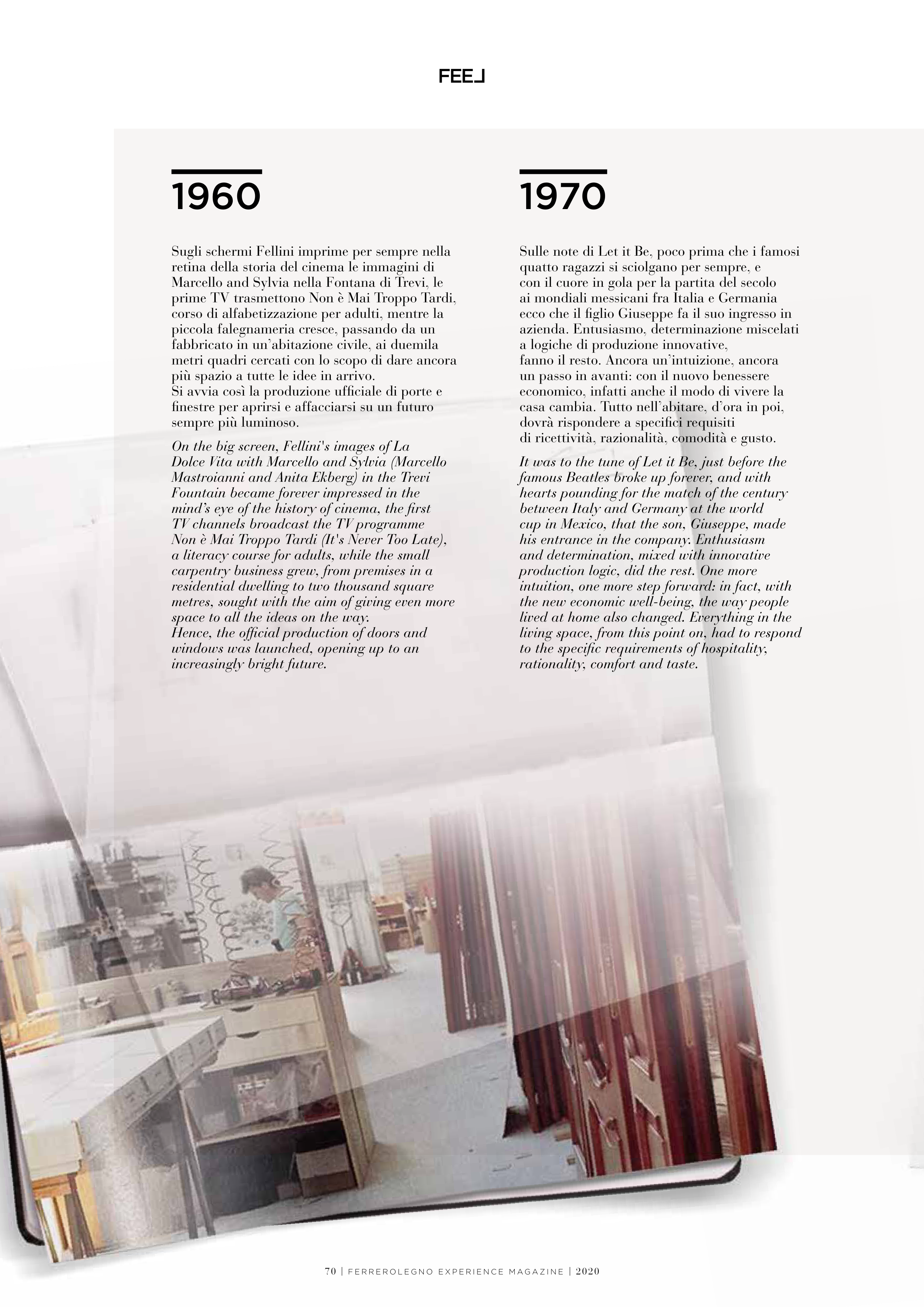
piccola falegnameria cresce, passando da un
fabbricato in un’abitazione civile, ai duemila
metri quadri cercati con lo scopo di dare ancora
più spazio a tutte le idee in arrivo.
Si avvia così la produzione ufficiale di porte e
finestre per aprirsi e affacciarsi su un futuro
sempre più luminoso.
On the big screen, Fellini's images of La
Dolce Vita with Marcello and Sylvia (Marcello
Mastroianni and Anita Ekberg) in the Trevi
Fountain became forever impressed in the
mind’s eye of the history of cinema, the first
TV channels broadcast the TV programme
Non è Mai Troppo Tardi (It's Never Too Late),
a literacy course for adults, while the small
carpentry business grew, from premises in a
residential dwelling to two thousand square
metres, sought with the aim of giving even more
space to all the ideas on the way.
Hence, the official production of doors and
windows was launched, opening up to an
increasingly bright future.
1970
Sulle note di Let it Be, poco prima che i famosi
quatto ragazzi si sciolgano per sempre, e
con il cuore in gola per la partita del secolo
ai mondiali messicani fra Italia e Germania
ecco che il figlio Giuseppe fa il suo ingresso in
azienda. Entusiasmo, determinazione miscelati
a logiche di produzione innovative,
fanno il resto. Ancora un’intuizione, ancora
un passo in avanti: con il nuovo benessere
economico, infatti anche il modo di vivere la
casa cambia. Tutto nell’abitare, d’ora in poi,
dovrà rispondere a specifici requisiti
di ricettività, razionalità, comodità e gusto.
It was to the tune of Let it Be, just before the
famous Beatles broke up forever, and with
hearts pounding for the match of the century
between Italy and Germany at the world
cup in Mexico, that the son, Giuseppe, made
his entrance in the company. Enthusiasm
and determination, mixed with innovative
production logic, did the rest. One more
intuition, one more step forward: in fact, with
the new economic well-being, the way people
lived at home also changed. Everything in the
living space, from this point on, had to respond
to the specific requirements of hospitality,
rationality, comfort and taste.