197
Built around an element as typical of Spanish architecture as
the patio (heir to the Arab courtyard usually planted with orange
trees), the pavilion was split into two naves, one made of wood
and the other one of stainless steel symbolizing tradition and
innovation respectively. On the other hand, its finishes evoked
products so rooted in our gastronomy as wine or olive oil. Easy to
assemble and reusable, the architects tried to make the most of
daylight and air circulation thanks to the combination of cross-
laminated timber and transparent panels.
All these components led into “a pavilion easily understandable,
capable of generating souvenirs, whose structure in porticos
created an effect of repetition strengthening singularity, and thus
becoming attractive and striking”. In short, a unique project in
which half a hundred professionals, from architects to engineers,
agronomists, interior designers and hospitality consultants, were
involved.
Organizado en torno a un elemento tan típico de la arquitectura
española como el patio de naranjos, el pabellón se dividía en
dos naves, una de madera y la otra de acero inoxidable, símbolo
de la tradición y la innovación respectivamente, Sus acabados
evocaban productos tan arraigados a nuestra gastronomía como
el vino o el aceite. De fácil ensamblaje y reutilización, se trató
de potenciar al máximo la iluminación y la ventilación natural
mediante su estructura a base de madera laminada y paneles
transparentes.
Todo esto desembocó en “un pabellón fácilmente
comprensible, generador de recuerdo, cuya estructura de pórticos
genera un efecto de repetición que refuerza la singularidad,
resultando atractivo e impactante”. En definitiva, un proyecto
único en el que participaron medio centenar de profesionales,
entre arquitectos, ingenieros, agrónomos, interioristas y asesores
de hostelería.
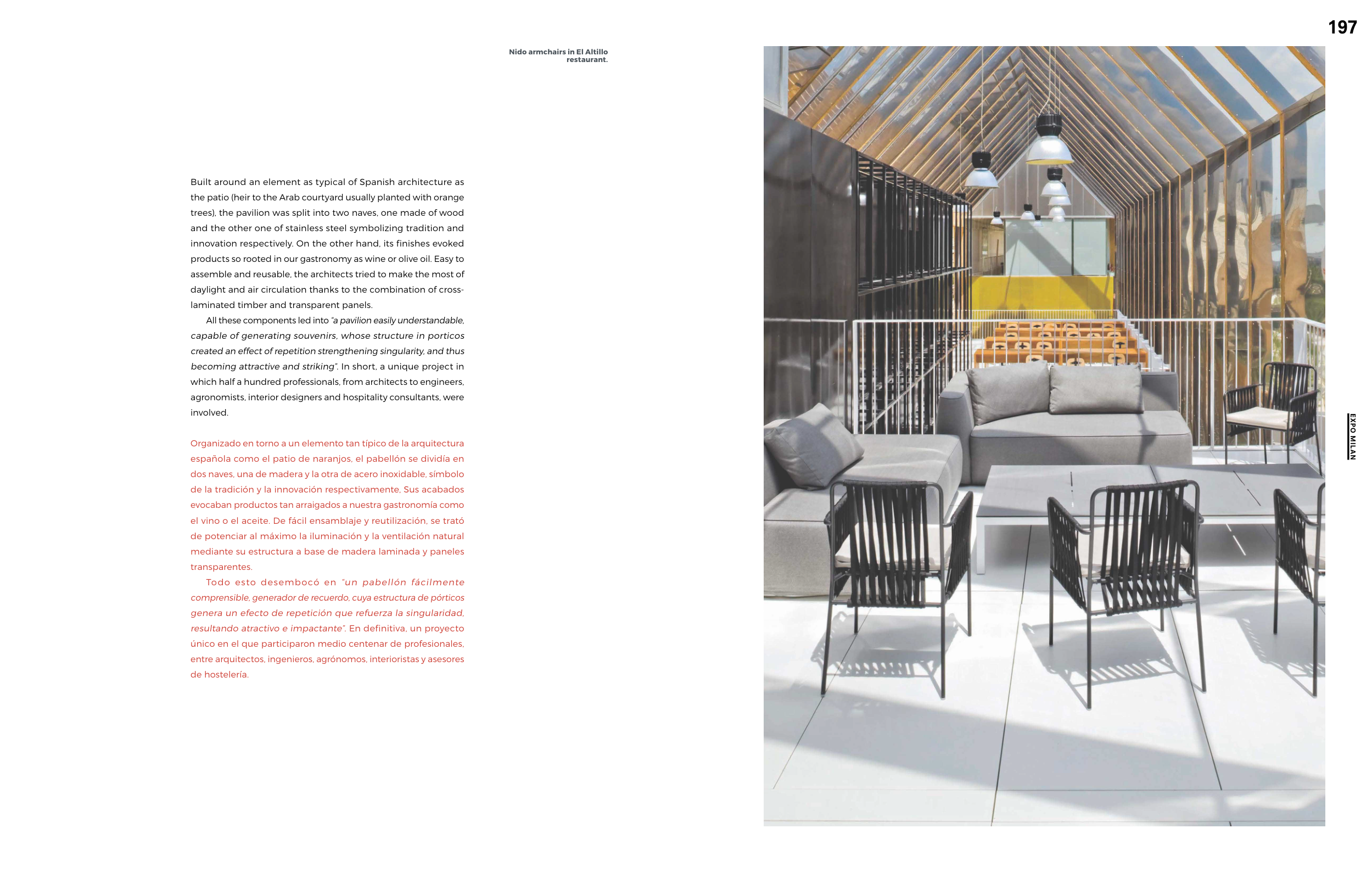
Nido armchairs in El Altillo
restaurant.
EXPO MILAN