153
Red colour, which is also a symbol of the cañí spirit (bullfighting
capes, carnations and even the flag flaunt it), splashes almost
every corner in the room: from the gigantic sculpture of a pissed
off chicken to the furniture and patterns on the hydraulic tiles
of Andalusian inspiration. It is also present in the partitions and
even in some elements of the dinnerware.
It is proper neo-cañí too taking genuine idioms, such as
“Me importa tres pepinos” (“I don’t give a damn”), and translate
them into something which is not any close to English following
the outlandish rules of Superbritánico (“It matters to me three
cucumbers”, who can resist playing this stupid funny game?) and
then stamp them in metal plates and hang them all over the
place. But most of all do not skimp on combs, the logo raised to
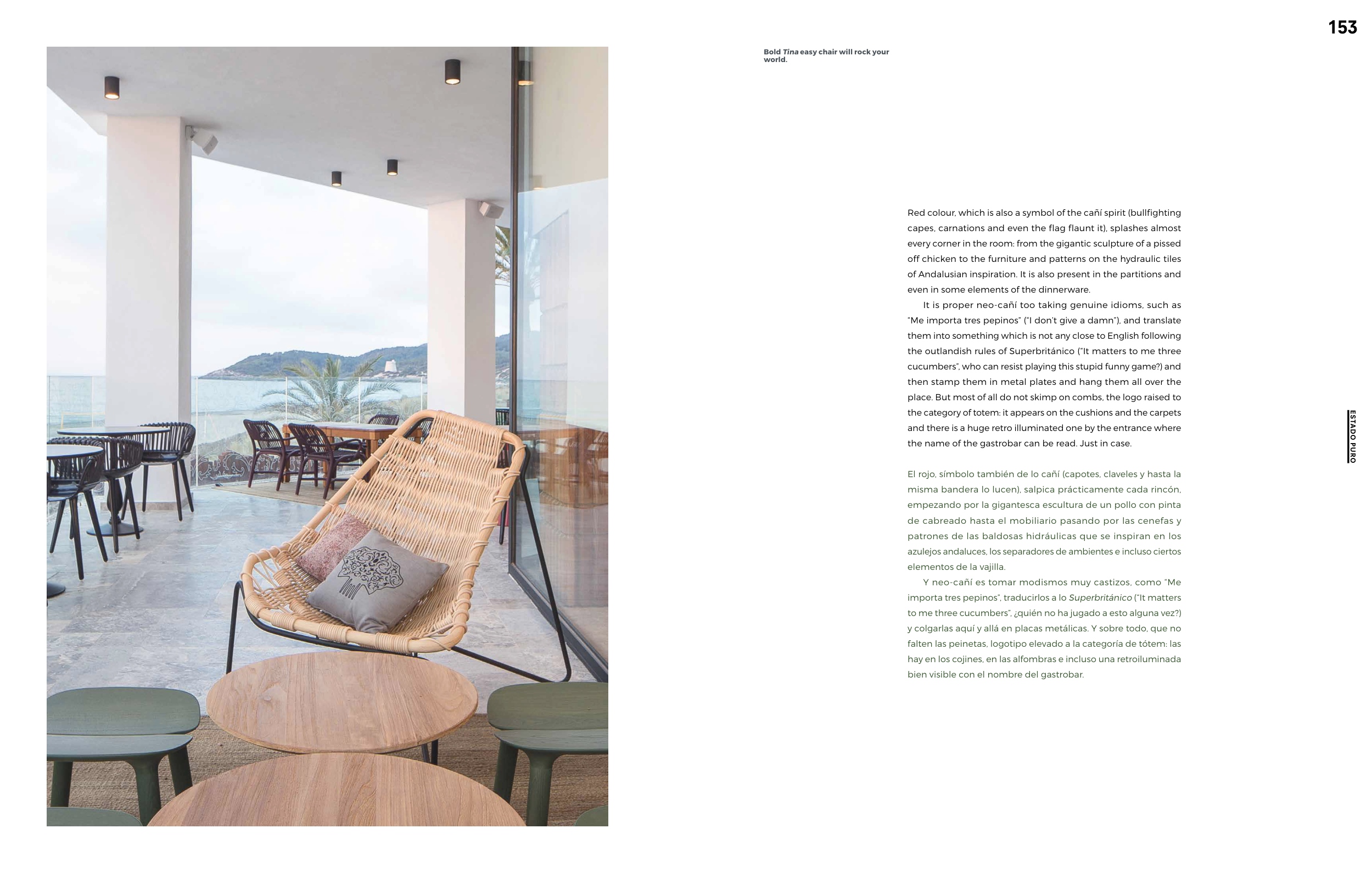
the category of totem: it appears on the cushions and the carpets
and there is a huge retro illuminated one by the entrance where
the name of the gastrobar can be read. Just in case.
El rojo, símbolo también de lo cañí (capotes, claveles y hasta la
misma bandera lo lucen), salpica prácticamente cada rincón,
empezando por la gigantesca escultura de un pollo con pinta
de cabreado hasta el mobiliario pasando por las cenefas y
patrones de las baldosas hidráulicas que se inspiran en los
azulejos andaluces, los separadores de ambientes e incluso ciertos
elementos de la vajilla.
Y neo-cañí es tomar modismos muy castizos, como “Me
importa tres pepinos”, traducirlos a lo Superbritánico (“It matters
to me three cucumbers”, ¿quién no ha jugado a esto alguna vez?)
y colgarlas aquí y allá en placas metálicas. Y sobre todo, que no
falten las peinetas, logotipo elevado a la categoría de tótem: las
hay en los cojines, en las alfombras e incluso una retroiluminada
bien visible con el nombre del gastrobar.
Bold Tina easy chair will rock your
world.
ESTADO PURO