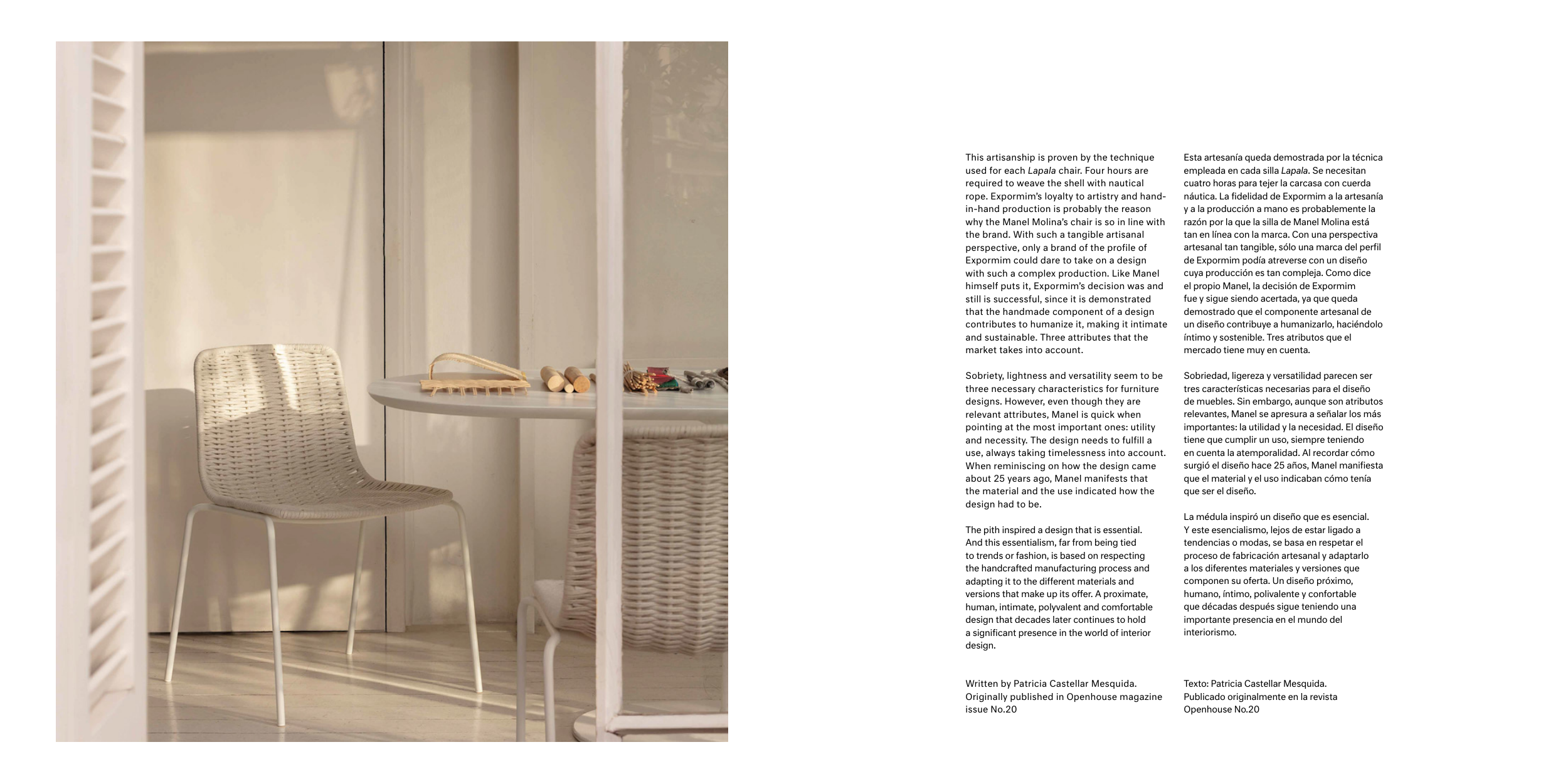
This artisanship is proven by the technique
used for each Lapala chair. Four hours are
required to weave the shell with nautical
rope. Expormim’s loyalty to artistry and hand-
in-hand production is probably the reason
why the Manel Molina’s chair is so in line with
the brand. With such a tangible artisanal
perspective, only a brand of the profile of
Expormim could dare to take on a design
with such a complex production. Like Manel
himself puts it, Expormim’s decision was and
still is successful, since it is demonstrated
that the handmade component of a design
contributes to humanize it, making it intimate
and sustainable. Three attributes that the
market takes into account.
Sobriety, lightness and versatility seem to be
three necessary characteristics for furniture
designs. However, even though they are
relevant attributes, Manel is quick when
pointing at the most important ones: utility
and necessity. The design needs to fulfill a
use, always taking timelessness into account.
When reminiscing on how the design came
about 25 years ago, Manel manifests that
the material and the use indicated how the
design had to be.
The pith inspired a design that is essential.
And this essentialism, far from being tied
to trends or fashion, is based on respecting
the handcrafted manufacturing process and
adapting it to the different materials and
versions that make up its offer. A proximate,
human, intimate, polyvalent and comfortable
design that decades later continues to hold
a significant presence in the world of interior
design.
Written by Patricia Castellar Mesquida.
Originally published in Openhouse magazine
issue No.20
Esta artesanía queda demostrada por la técnica
empleada en cada silla Lapala. Se necesitan
cuatro horas para tejer la carcasa con cuerda
náutica. La fidelidad de Expormim a la artesanía
y a la producción a mano es probablemente la
razón por la que la silla de Manel Molina está
tan en línea con la marca. Con una perspectiva
artesanal tan tangible, sólo una marca del perfil
de Expormim podía atreverse con un diseño
cuya producción es tan compleja. Como dice
el propio Manel, la decisión de Expormim
fue y sigue siendo acertada, ya que queda
demostrado que el componente artesanal de
un diseño contribuye a humanizarlo, haciéndolo
íntimo y sostenible. Tres atributos que el
mercado tiene muy en cuenta.
Sobriedad, ligereza y versatilidad parecen ser
tres características necesarias para el diseño
de muebles. Sin embargo, aunque son atributos
relevantes, Manel se apresura a señalar los más
importantes: la utilidad y la necesidad. El diseño
tiene que cumplir un uso, siempre teniendo
en cuenta la atemporalidad. Al recordar cómo
surgió el diseño hace 25 años, Manel manifiesta
que el material y el uso indicaban cómo tenía
que ser el diseño.
La médula inspiró un diseño que es esencial.
Y este esencialismo, lejos de estar ligado a
tendencias o modas, se basa en respetar el
proceso de fabricación artesanal y adaptarlo
a los diferentes materiales y versiones que
componen su oferta. Un diseño próximo,
humano, íntimo, polivalente y confortable
que décadas después sigue teniendo una
importante presencia en el mundo del
interiorismo.
Texto: Patricia Castellar Mesquida.
Publicado originalmente en la revista
Openhouse No.20