4
5
MATERIALS THAT MATTER: DURABILITY MEETS DESIGN
MATERIALS
We are committed to creating products with a long-lasting
life, and it all begins with the right materials.
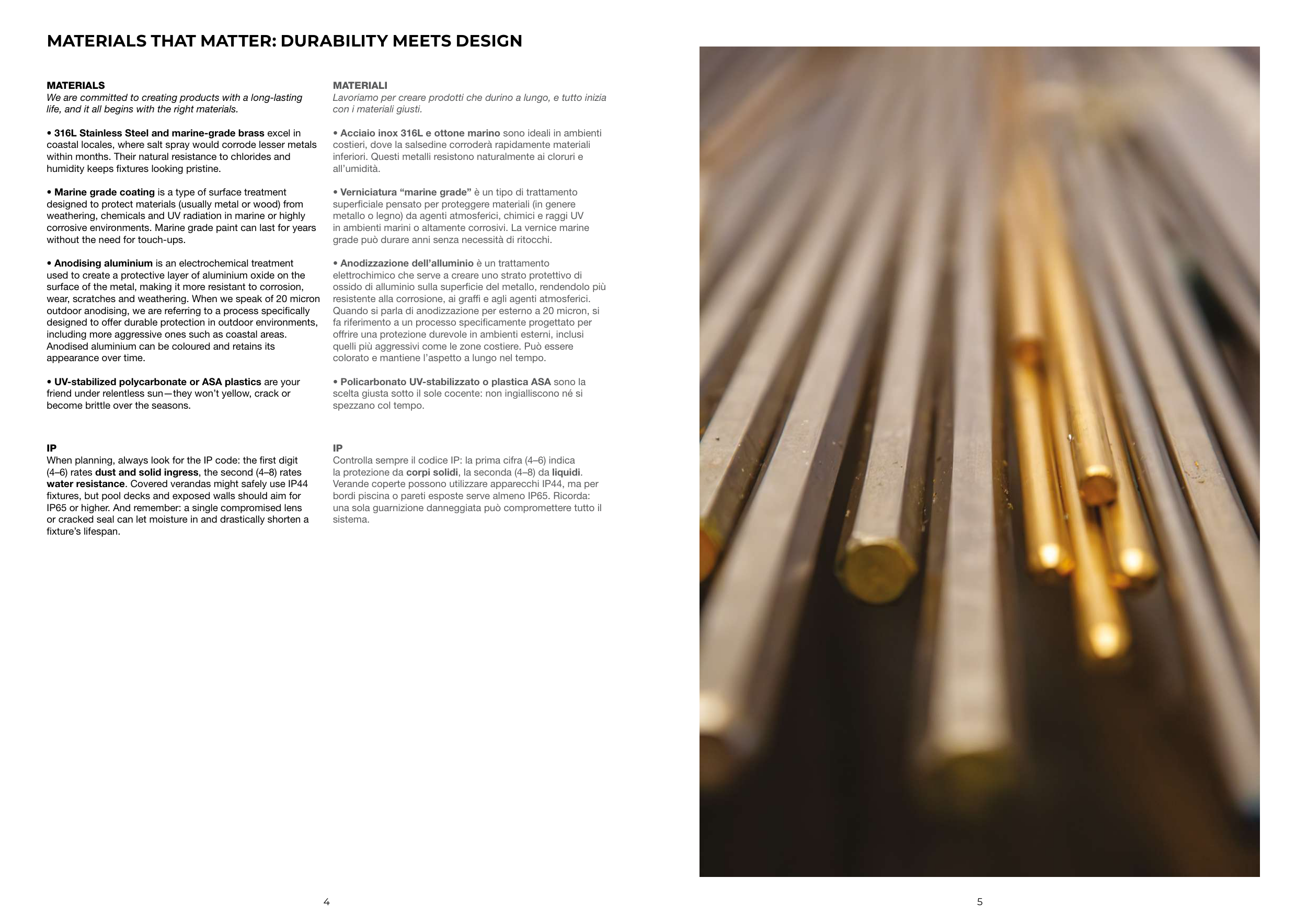
• 316L Stainless Steel and marine-grade brass excel in
coastal locales, where salt spray would corrode lesser metals
within months. Their natural resistance to chlorides and
humidity keeps fixtures looking pristine.
• Marine grade coating is a type of surface treatment
designed to protect materials (usually metal or wood) from
weathering, chemicals and UV radiation in marine or highly
corrosive environments. Marine grade paint can last for years
without the need for touch-ups.
• Anodising aluminium is an electrochemical treatment
used to create a protective layer of aluminium oxide on the
surface of the metal, making it more resistant to corrosion,
wear, scratches and weathering. When we speak of 20 micron
outdoor anodising, we are referring to a process specifically
designed to offer durable protection in outdoor environments,
including more aggressive ones such as coastal areas.
Anodised aluminium can be coloured and retains its
appearance over time.
• UV-stabilized polycarbonate or ASA plastics are your
friend under relentless sun—they won’t yellow, crack or
become brittle over the seasons.
IP
When planning, always look for the IP code: the first digit
(4–6) rates dust and solid ingress, the second (4–8) rates
water resistance. Covered verandas might safely use IP44
fixtures, but pool decks and exposed walls should aim for
IP65 or higher. And remember: a single compromised lens
or cracked seal can let moisture in and drastically shorten a
fixture’s lifespan.
IP
Controlla sempre il codice IP: la prima cifra (4–6) indica
la protezione da corpi solidi, la seconda (4–8) da liquidi.
Verande coperte possono utilizzare apparecchi IP44, ma per
bordi piscina o pareti esposte serve almeno IP65. Ricorda:
una sola guarnizione danneggiata può compromettere tutto il
sistema.
MATERIALI
Lavoriamo per creare prodotti che durino a lungo, e tutto inizia
con i materiali giusti.
• Acciaio inox 316L e ottone marino sono ideali in ambienti
costieri, dove la salsedine corroderà rapidamente materiali
inferiori. Questi metalli resistono naturalmente ai cloruri e
all’umidità.
• Verniciatura “marine grade” è un tipo di trattamento
superficiale pensato per proteggere materiali (in genere
metallo o legno) da agenti atmosferici, chimici e raggi UV
in ambienti marini o altamente corrosivi. La vernice marine
grade può durare anni senza necessità di ritocchi.
• Anodizzazione dell’alluminio è un trattamento
elettrochimico che serve a creare uno strato protettivo di
ossido di alluminio sulla superficie del metallo, rendendolo più
resistente alla corrosione, ai graffi e agli agenti atmosferici.
Quando si parla di anodizzazione per esterno a 20 micron, si
fa riferimento a un processo specificamente progettato per
offrire una protezione durevole in ambienti esterni, inclusi
quelli più aggressivi come le zone costiere. Può essere
colorato e mantiene l’aspetto a lungo nel tempo.
• Policarbonato UV-stabilizzato o plastica ASA sono la
scelta giusta sotto il sole cocente: non ingialliscono né si
spezzano col tempo.