più raccolti e altri affacciati sull’esterno. Al piano terra ci
sono spazi comuni ricreativi tra i quali cucina estiva, area
benessere e piscina, uno studio e camere per gli ospiti.
Mentre il piano superiore comprende ambienti più privati,
zona pranzo, il grande soggiorno, camere e studio. I percor-
si dall’uno all’altro sono attentamente studiati per organiz-
zare i flussi di percorrenza attraverso due ampi corridoi: uno
con pareti in pietra naturale che collega visivamente i piani,
un altro che ospita una suggestiva scala a chiocciola in ac-
ciaio e legno pensata come un’opera scultorea protagonista
dello spazio. Questo segno fluido e continuo conduce fino
all’ultimo livello mansardato, dove si trovano un piccolo ca-
sinò, la zona padronale e un ufficio amministrativo.
La natura è la protagonista del progetto. “Abbiamo innal-
zato di 1,5 metri la capriata del tetto al piano superiore,
utilizzando un’elaborata struttura in acciaio per creare un’in-
tercapedine luminosa tra la travatura e il solido piano ter-
ra. Il paesaggio circostante viene così portato visivamente
all’interno delle stanze, catturato”. Il collegamento con la
natura avviene anche sotto forma di materiali naturali di alta
qualità: sono stati utilizzati legno massiccio, muri in pietra,
argilla e intonaco di calce grezzo con colori chiari che pre-
dominano al piano terra e scuri al piano superiore. “Il fascino
del grezzo, dell’incompiuto, dell’imperfetto, delle cose che
acquistano bellezza con il tempo… sono queste le cose che
mi attraggono. Amo i materiali che invecchiano con grazia,
come il viso di una persona che col tempo è segnato dalle
rughe, che gli conferiscono un carattere inconfondibile, ren-
dendolo unico”.
Questo vale per i materiali dell’architettura come per alcune
scelte di arredo: pezzi di artigianato, ceramiche antiche e
legno recuperato di quercia utilizzato per rivestire i mobili
con intarsi. Ci sono materiali che lavorano a contrasto per
mettere in evidenza alcuni oggetti.
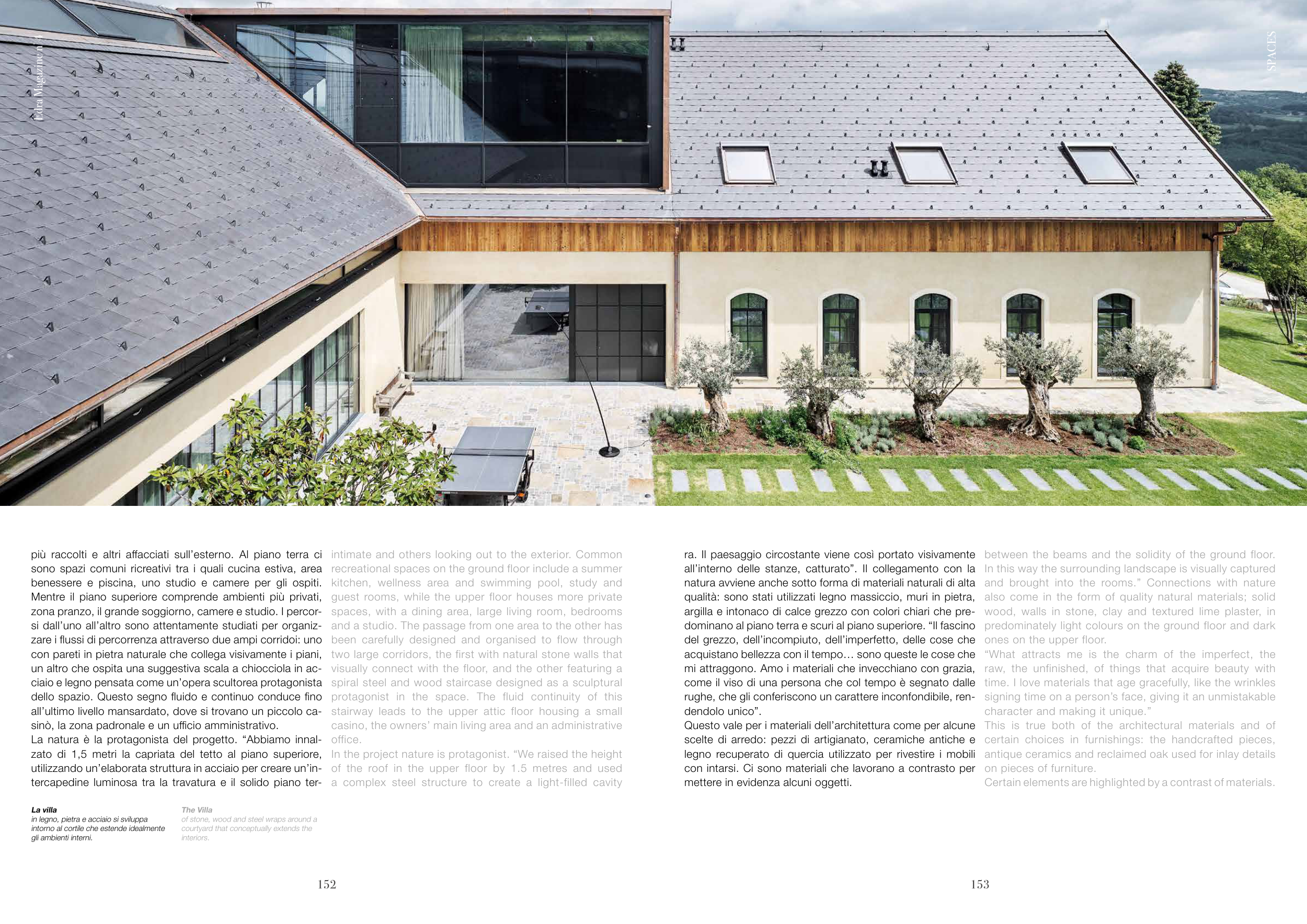
La villa
in legno, pietra e acciaio si sviluppa
intorno al cortile che estende idealmente
gli ambienti interni.
The Villa
of stone, wood and steel wraps around a
courtyard that conceptually extends the
interiors.
intimate and others looking out to the exterior. Common
recreational spaces on the ground floor include a summer
kitchen, wellness area and swimming pool, study and
guest rooms, while the upper floor houses more private
spaces, with a dining area, large living room, bedrooms
and a studio. The passage from one area to the other has
been carefully designed and organised to flow through
two large corridors, the first with natural stone walls that
visually connect with the floor, and the other featuring a
spiral steel and wood staircase designed as a sculptural
protagonist in the space. The fluid continuity of this
stairway leads to the upper attic floor housing a small
casino, the owners’ main living area and an administrative
office.
In the project nature is protagonist. “We raised the height
of the roof in the upper floor by 1.5 metres and used
a complex steel structure to create a light-filled cavity
between the beams and the solidity of the ground floor.
In this way the surrounding landscape is visually captured
and brought into the rooms.” Connections with nature
also come in the form of quality natural materials; solid
wood, walls in stone, clay and textured lime plaster, in
predominately light colours on the ground floor and dark
ones on the upper floor.
“What attracts me is the charm of the imperfect, the
raw, the unfinished, of things that acquire beauty with
time. I love materials that age gracefully, like the wrinkles
signing time on a person’s face, giving it an unmistakable
character and making it unique.”
This is true both of the architectural materials and of
certain choices in furnishings: the handcrafted pieces,
antique ceramics and reclaimed oak used for inlay details
on pieces of furniture.
Certain elements are highlighted by a contrast of materials.
Edra Magazine n°4
152
153
SPACES