20
21
della
villeggiatura,
ormai
appannaggio
della
borghesia ricca e rampante e non più della consunta
nobiltà, si svolgeva nei lunghi mesi dell’estate. Solo
se si andava a passar le acque a Salsomaggiore,
Montecatini o a San Pellegrino era ideale l’autunno;
ci si dava invece appuntamento appena dopo Natale
o a Carnevale negli alberghi coi balconi e i timpani
in legno della Valle d’Aosta e delle Dolomiti per
dedicarsi ai bobsleighs, al pattinaggio, alle discese
vertiginose sugli sci e, per i più ardimentosi, al salto
dal trampolino.
La realizzazione dei nuovi Grand Hôtel presto
seguì un’impronta diversa, moderna e dallo stile
sobrio e, allo stesso tempo, prezioso. A contorno
della struttura vera e propria dedicata all’ospitalità
spesso nascevano ambienti deputati esclusivamente
allo svago, con invenzioni decorative tematiche,
e fantasiose, quasi a compensare il tono più
austero degli spazi istituzionali: nell’importante
complesso termale del Grand Hotel di Castrocaro
nasce addirittura un’architettura indipendente, il
Padiglione delle Feste con le soluzioni decorative
straordinariamente accattivanti di Tito Chini. Tutti
questi alberghi, vecchi e nuovi, si adeguarono con
prontezza alle esigenze di una clientela alquanto
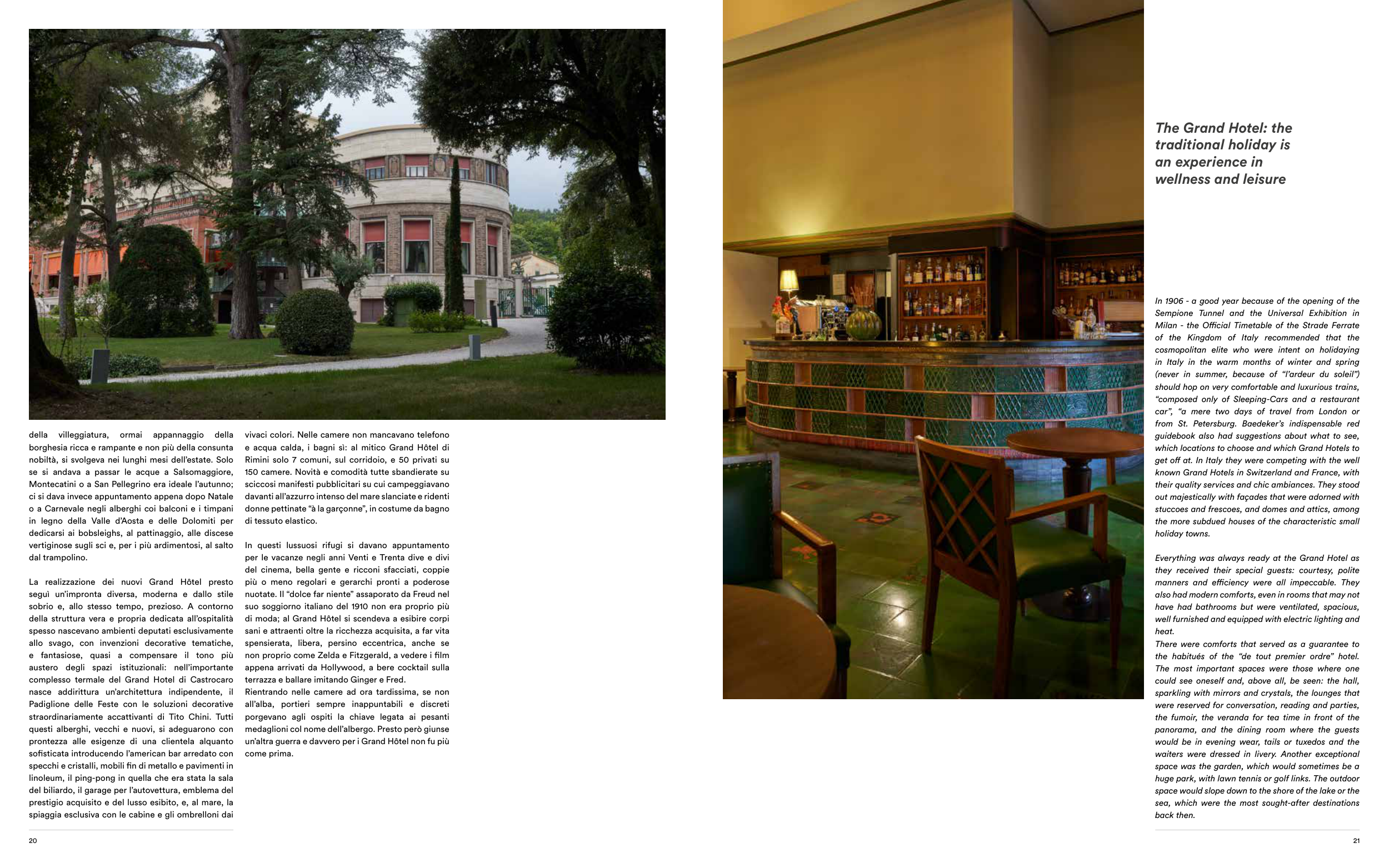
sofisticata introducendo l’american bar arredato con
specchi e cristalli, mobili fin di metallo e pavimenti in
linoleum, il ping-pong in quella che era stata la sala
del biliardo, il garage per l’autovettura, emblema del
prestigio acquisito e del lusso esibito, e, al mare, la
spiaggia esclusiva con le cabine e gli ombrelloni dai
The Grand Hotel: the
traditional holiday is
an experience in
wellness and leisure
In 1906 - a good year because of the opening of the
Sempione Tunnel and the Universal Exhibition in
Milan - the Official Timetable of the Strade Ferrate
of the Kingdom of Italy recommended that the
cosmopolitan elite who were intent on holidaying
in Italy in the warm months of winter and spring
(never in summer, because of “l’ardeur du soleil”)
should hop on very comfortable and luxurious trains,
“composed only of Sleeping-Cars and a restaurant
car”, “a mere two days of travel from London or
from St. Petersburg. Baedeker’s indispensable red
guidebook also had suggestions about what to see,
which locations to choose and which Grand Hotels to
get off at. In Italy they were competing with the well
known Grand Hotels in Switzerland and France, with
their quality services and chic ambiances. They stood
out majestically with façades that were adorned with
stuccoes and frescoes, and domes and attics, among
the more subdued houses of the characteristic small
holiday towns.
Everything was always ready at the Grand Hotel as
they received their special guests: courtesy, polite
manners and efficiency were all impeccable. They
also had modern comforts, even in rooms that may not
have had bathrooms but were ventilated, spacious,
well furnished and equipped with electric lighting and
heat.
There were comforts that served as a guarantee to
the habitués of the “de tout premier ordre” hotel.
The most important spaces were those where one
could see oneself and, above all, be seen: the hall,
sparkling with mirrors and crystals, the lounges that
were reserved for conversation, reading and parties,
the fumoir, the veranda for tea time in front of the
panorama, and the dining room where the guests
would be in evening wear, tails or tuxedos and the
waiters were dressed in livery. Another exceptional
space was the garden, which would sometimes be a
huge park, with lawn tennis or golf links. The outdoor
space would slope down to the shore of the lake or the
sea, which were the most sought-after destinations
back then.
vivaci colori. Nelle camere non mancavano telefono
e acqua calda, i bagni sì: al mitico Grand Hôtel di
Rimini solo 7 comuni, sul corridoio, e 50 privati su
150 camere. Novità e comodità tutte sbandierate su
sciccosi manifesti pubblicitari su cui campeggiavano
davanti all’azzurro intenso del mare slanciate e ridenti
donne pettinate “à la garçonne”, in costume da bagno
di tessuto elastico.
In questi lussuosi rifugi si davano appuntamento
per le vacanze negli anni Venti e Trenta dive e divi
del cinema, bella gente e ricconi sfacciati, coppie
più o meno regolari e gerarchi pronti a poderose
nuotate. Il “dolce far niente” assaporato da Freud nel
suo soggiorno italiano del 1910 non era proprio più
di moda; al Grand Hôtel si scendeva a esibire corpi
sani e attraenti oltre la ricchezza acquisita, a far vita
spensierata, libera, persino eccentrica, anche se
non proprio come Zelda e Fitzgerald, a vedere i film
appena arrivati da Hollywood, a bere cocktail sulla
terrazza e ballare imitando Ginger e Fred.
Rientrando nelle camere ad ora tardissima, se non
all’alba, portieri sempre inappuntabili e discreti
porgevano agli ospiti la chiave legata ai pesanti
medaglioni col nome dell’albergo. Presto però giunse
un’altra guerra e davvero per i Grand Hôtel non fu più
come prima.