Liku Japanese chair
Originally, chairs were not used in Japanese homes. The
floors inside houses were covered with tatami mats woven
from rushes, where Japanese people used to sit directly.
Furniture was introduced around 150 years ago when West-
ern-style chairs and tables began to be used in public build-
ings during the cultural shift that accompanied the Meiji
Restoration. For the next few decades until the early Showa
period, items like chairs and tables were not used in ordinary
homes. However, as flooring materials transitioned from
tatami to hardwood during the rapid economic growth follow-
ing World War II, the Western lifestyle with chairs and tables
became more widespread. Although the number of tatami
rooms in Japanese houses has decreased, the tradition
remains. Even now, the Japanese custom of removing one’s
shoes at the entrance of a home and sitting on the floor contin-
ues.
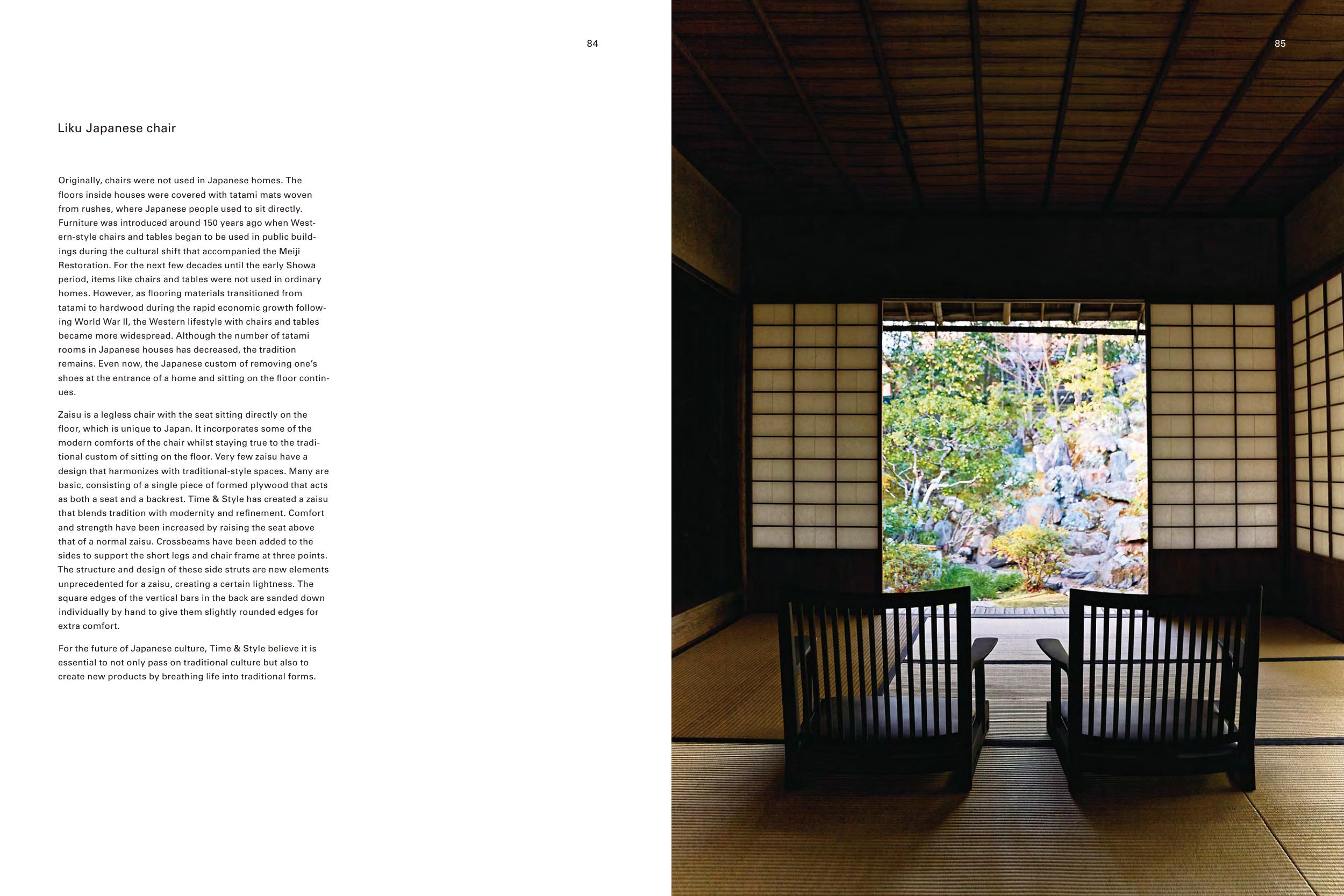
Zaisu is a legless chair with the seat sitting directly on the
floor, which is unique to Japan. It incorporates some of the
modern comforts of the chair whilst staying true to the tradi-
tional custom of sitting on the floor. Very few zaisu have a
design that harmonizes with traditional-style spaces. Many are
basic, consisting of a single piece of formed plywood that acts
as both a seat and a backrest. Time & Style has created a zaisu
that blends tradition with modernity and refinement. Comfort
and strength have been increased by raising the seat above
that of a normal zaisu. Crossbeams have been added to the
sides to support the short legs and chair frame at three points.
The structure and design of these side struts are new elements
unprecedented for a zaisu, creating a certain lightness. The
square edges of the vertical bars in the back are sanded down
individually by hand to give them slightly rounded edges for
extra comfort.
For the future of Japanese culture, Time & Style believe it is
essential to not only pass on traditional culture but also to
create new products by breathing life into traditional forms.
84
85
85