A chair outside the cage
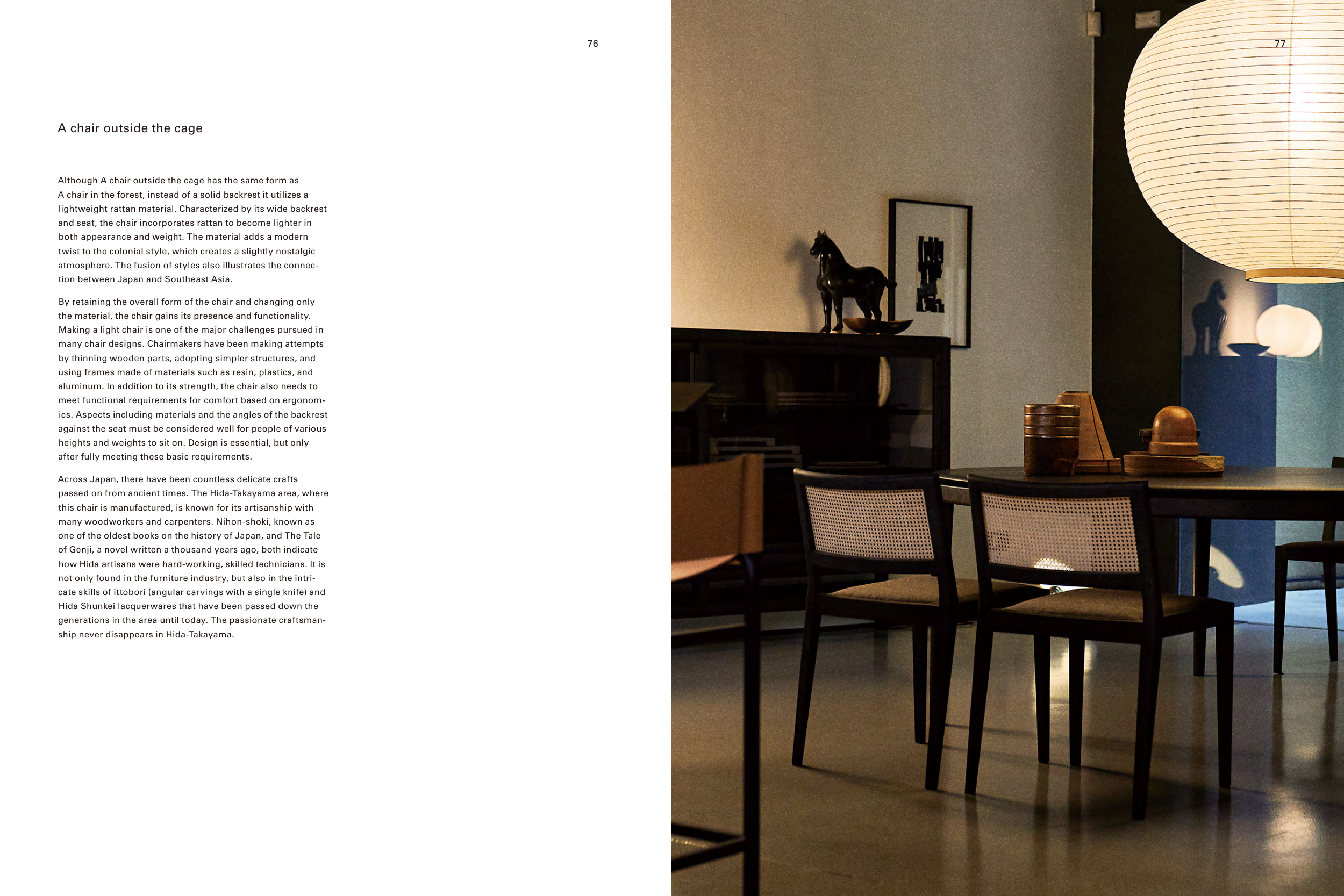
Although A chair outside the cage has the same form as
A chair in the forest, instead of a solid backrest it utilizes a
lightweight rattan material. Characterized by its wide backrest
and seat, the chair incorporates rattan to become lighter in
both appearance and weight. The material adds a modern
twist to the colonial style, which creates a slightly nostalgic
atmosphere. The fusion of styles also illustrates the connec-
tion between Japan and Southeast Asia.
By retaining the overall form of the chair and changing only
the material, the chair gains its presence and functionality.
Making a light chair is one of the major challenges pursued in
many chair designs. Chairmakers have been making attempts
by thinning wooden parts, adopting simpler structures, and
using frames made of materials such as resin, plastics, and
aluminum. In addition to its strength, the chair also needs to
meet functional requirements for comfort based on ergonom-
ics. Aspects including materials and the angles of the backrest
against the seat must be considered well for people of various
heights and weights to sit on. Design is essential, but only
after fully meeting these basic requirements.
Across Japan, there have been countless delicate crafts
passed on from ancient times. The Hida-Takayama area, where
this chair is manufactured, is known for its artisanship with
many woodworkers and carpenters. Nihon-shoki, known as
one of the oldest books on the history of Japan, and The Tale
of Genji, a novel written a thousand years ago, both indicate
how Hida artisans were hard-working, skilled technicians. It is
not only found in the furniture industry, but also in the intri-
cate skills of ittobori (angular carvings with a single knife) and
Hida Shunkei lacquerwares that have been passed down the
generations in the area until today. The passionate craftsman-
ship never disappears in Hida-Takayama.
76
77