Moon
Moon table was born from a process of shaping wood by hand,
understanding its unique characteristics by touch until the
form is discovered with. Time & Style strived to create a style
that could harmonize with any type of space, with the soft
curve of the solid wood existing with the presence of sharp
modernity. Previously, all products were based on simple
cuboid shapes to create a balance following a simple and
clean design ethic, which is characteristic of Japanese design.
Inevitably, this cube-based design structure produced sharp
corners where three faces of the cube met, giving the prod-
uct’s appearance a solid presence. On the other hand, furni-
ture with sharp corners can also create stress when it is used.
Although it was a difficult decision to move away from the
design vocabulary, the time had revealed its limits.
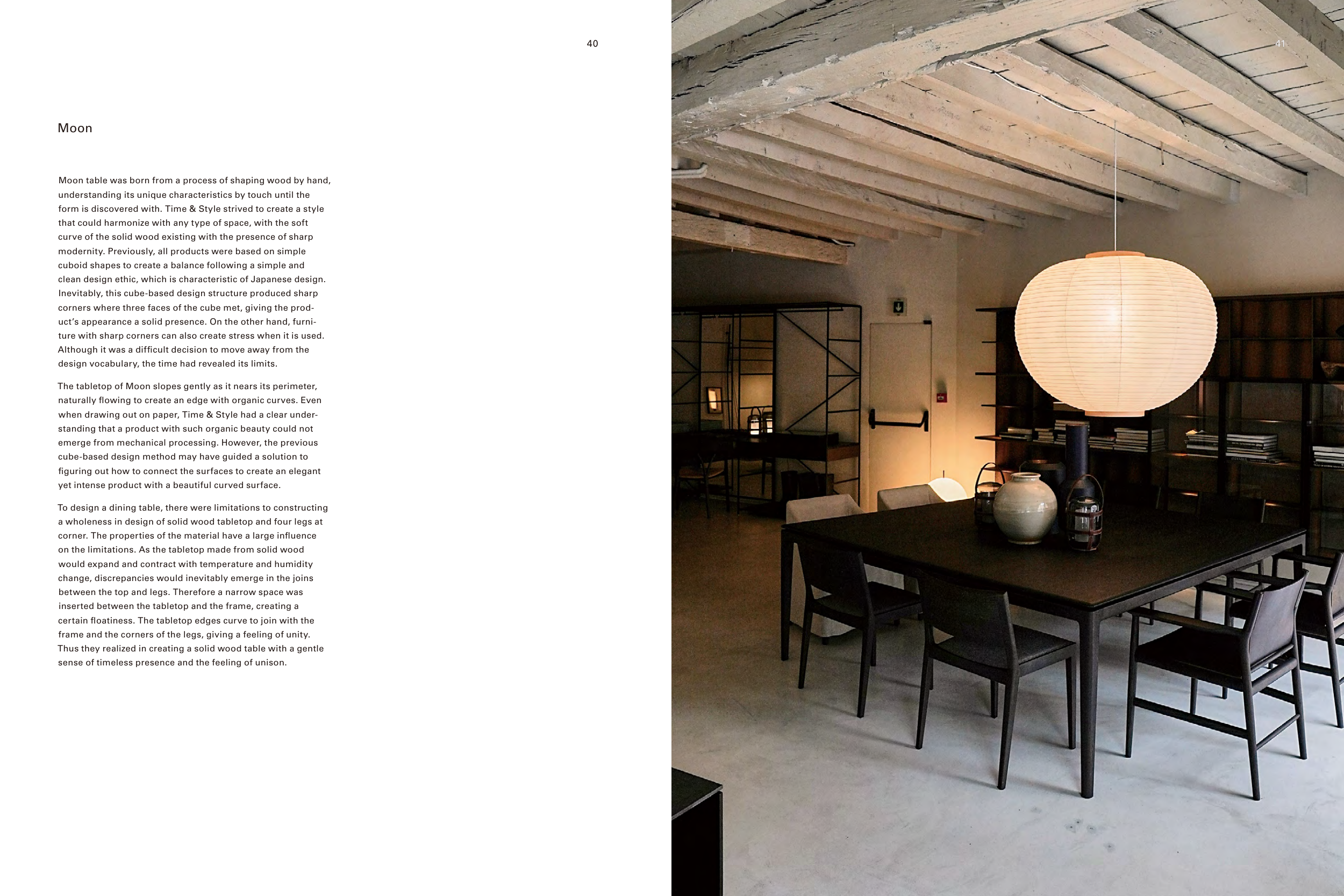
The tabletop of Moon slopes gently as it nears its perimeter,
naturally flowing to create an edge with organic curves. Even
when drawing out on paper, Time & Style had a clear under-
standing that a product with such organic beauty could not
emerge from mechanical processing. However, the previous
cube-based design method may have guided a solution to
figuring out how to connect the surfaces to create an elegant
yet intense product with a beautiful curved surface.
To design a dining table, there were limitations to constructing
a wholeness in design of solid wood tabletop and four legs at
corner. The properties of the material have a large influence
on the limitations. As the tabletop made from solid wood
would expand and contract with temperature and humidity
change, discrepancies would inevitably emerge in the joins
between the top and legs. Therefore a narrow space was
inserted between the tabletop and the frame, creating a
certain floatiness. The tabletop edges curve to join with the
frame and the corners of the legs, giving a feeling of unity.
Thus they realized in creating a solid wood table with a gentle
sense of timeless presence and the feeling of unison.
40
41
41