DE LA ESPADA VOLUME IV 63
Mantas Alentejanas, traditional blankets from the
Alentejo region of Portugal, carry layers of his-
tory, personal experiences, local materials, hand
craft, and an ever-evolving story. The forms these
blankets take — cloaks, rugs, bedding, furniture
and accessories — and the patterns and colours
they contain, illustrate their journey through
time, at once embracing their heritage and the
changing demands of the modern world. Pivotal in
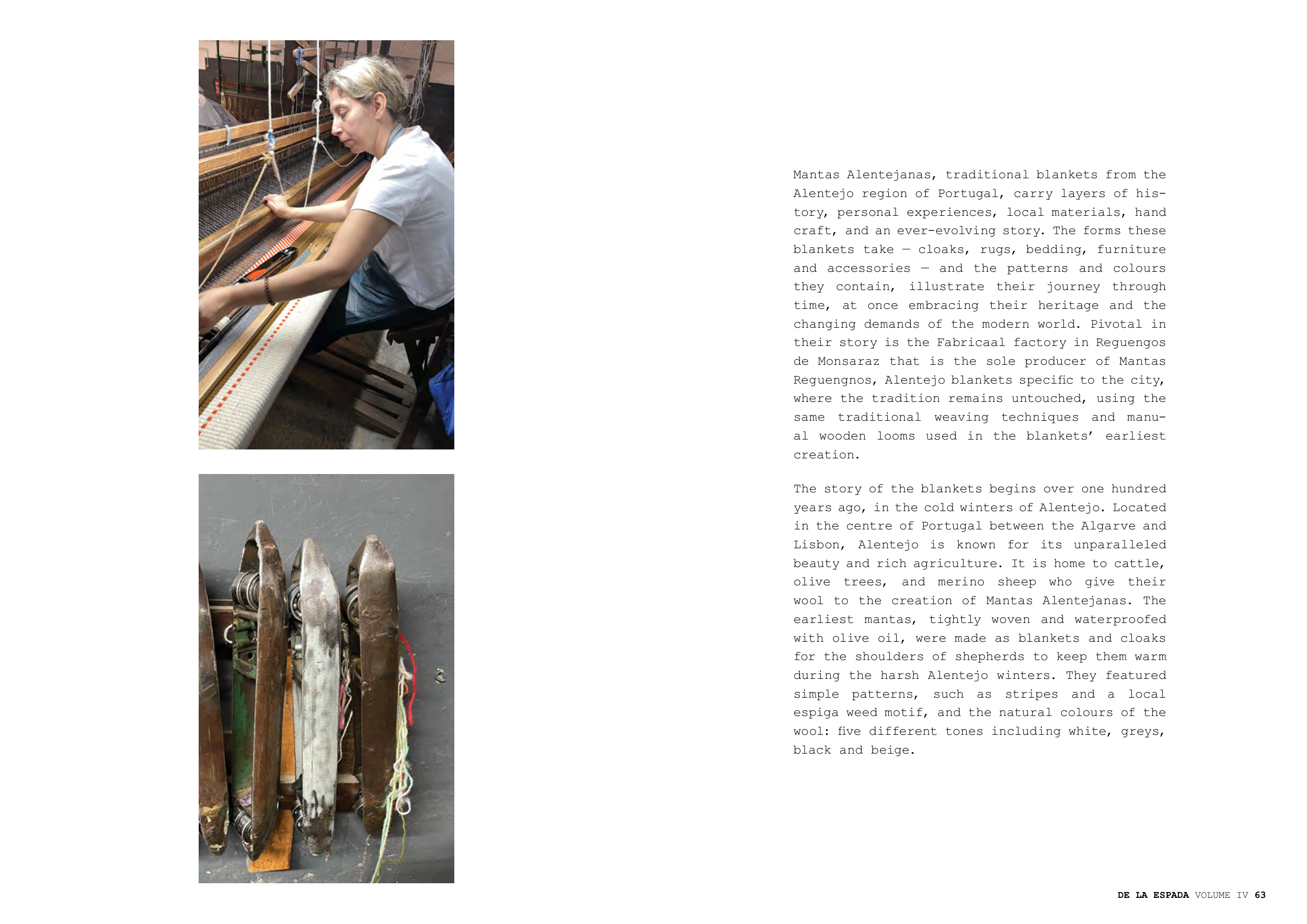
their story is the Fabricaal factory in Reguengos
de Monsaraz that is the sole producer of Mantas
Reguengnos, Alentejo blankets specific to the city,
where the tradition remains untouched, using the
same traditional weaving techniques and manu-
al wooden looms used in the blankets’ earliest
creation.
The story of the blankets begins over one hundred
years ago, in the cold winters of Alentejo. Located
in the centre of Portugal between the Algarve and
Lisbon, Alentejo is known for its unparalleled
beauty and rich agriculture. It is home to cattle,
olive trees, and merino sheep who give their
wool to the creation of Mantas Alentejanas. The
earliest mantas, tightly woven and waterproofed
with olive oil, were made as blankets and cloaks
for the shoulders of shepherds to keep them warm
during the harsh Alentejo winters. They featured
simple patterns, such as stripes and a local
espiga weed motif, and the natural colours of the
wool: five different tones including white, greys,
black and beige.