140
C - TOP
PLACES
Gezellig is an expression one hears all the time if at least one of the
interlocutors is Dutch. It means something like feeling at ease, in
a pleasant place and in good company, although there’s no literal
translation. Maybe that’s why the natives use it so often. It’s a genuine
word whose true meaning can only be appreciated by someone who
shares it roots.
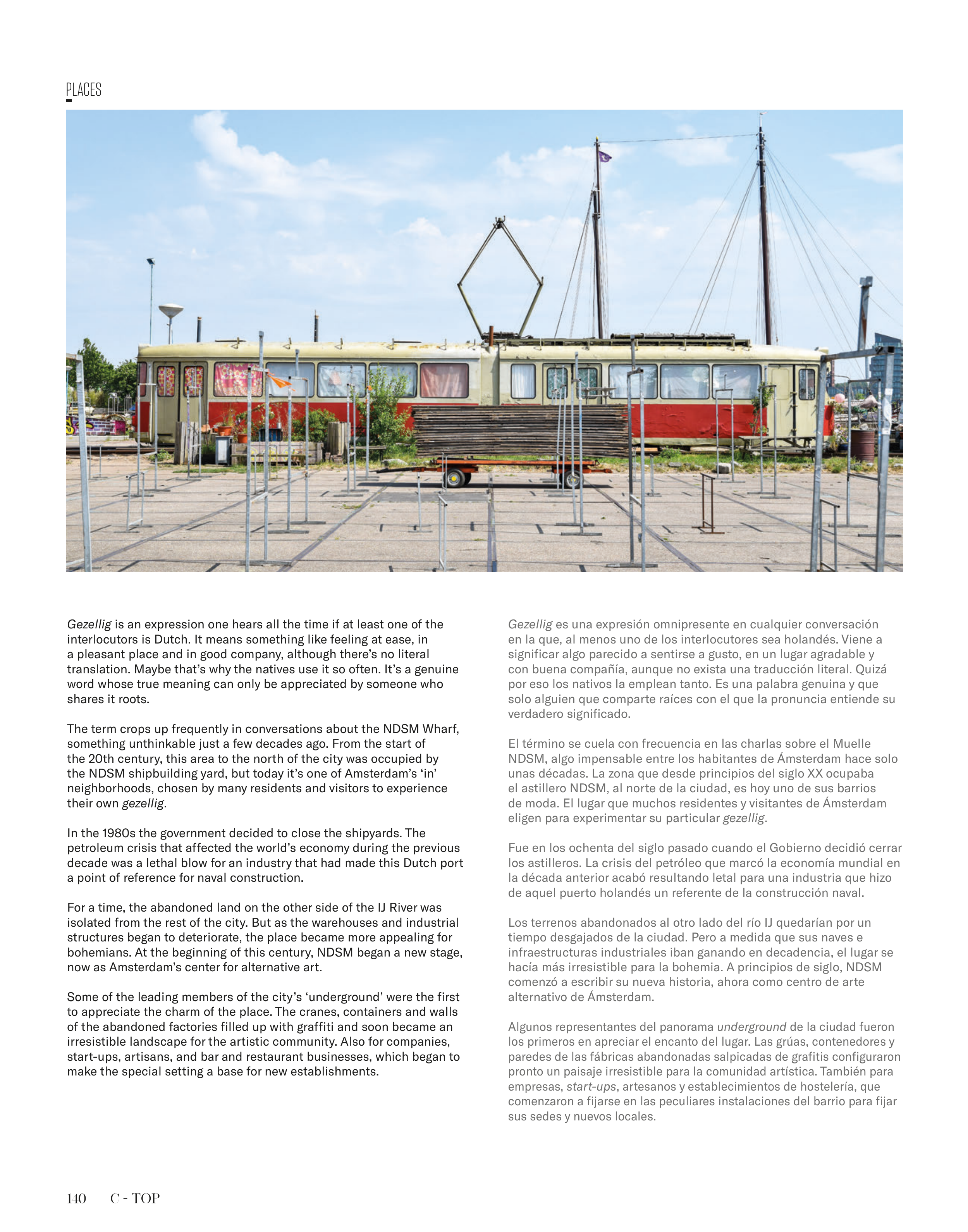
The term crops up frequently in conversations about the NDSM Wharf,
something unthinkable just a few decades ago. From the start of
the 20th century, this area to the north of the city was occupied by
the NDSM shipbuilding yard, but today it’s one of Amsterdam’s ‘in’
neighborhoods, chosen by many residents and visitors to experience
their own gezellig.
In the 1980s the government decided to close the shipyards. The
petroleum crisis that affected the world’s economy during the previous
decade was a lethal blow for an industry that had made this Dutch port
a point of reference for naval construction.
For a time, the abandoned land on the other side of the IJ River was
isolated from the rest of the city. But as the warehouses and industrial
structures began to deteriorate, the place became more appealing for
bohemians. At the beginning of this century, NDSM began a new stage,
now as Amsterdam’s center for alternative art.
Some of the leading members of the city’s ‘underground’ were the first
to appreciate the charm of the place. The cranes, containers and walls
of the abandoned factories filled up with graffiti and soon became an
irresistible landscape for the artistic community. Also for companies,
start-ups, artisans, and bar and restaurant businesses, which began to
make the special setting a base for new establishments.
Gezellig es una expresión omnipresente en cualquier conversación
en la que, al menos uno de los interlocutores sea holandés. Viene a
significar algo parecido a sentirse a gusto, en un lugar agradable y
con buena compañía, aunque no exista una traducción literal. Quizá
por eso los nativos la emplean tanto. Es una palabra genuina y que
solo alguien que comparte raíces con el que la pronuncia entiende su
verdadero significado.
El término se cuela con frecuencia en las charlas sobre el Muelle
NDSM, algo impensable entre los habitantes de Ámsterdam hace solo
unas décadas. La zona que desde principios del siglo XX ocupaba
el astillero NDSM, al norte de la ciudad, es hoy uno de sus barrios
de moda. El lugar que muchos residentes y visitantes de Ámsterdam
eligen para experimentar su particular gezellig.
Fue en los ochenta del siglo pasado cuando el Gobierno decidió cerrar
los astilleros. La crisis del petróleo que marcó la economía mundial en
la década anterior acabó resultando letal para una industria que hizo
de aquel puerto holandés un referente de la construcción naval.
Los terrenos abandonados al otro lado del río IJ quedarían por un
tiempo desgajados de la ciudad. Pero a medida que sus naves e
infraestructuras industriales iban ganando en decadencia, el lugar se
hacía más irresistible para la bohemia. A principios de siglo, NDSM
comenzó a escribir su nueva historia, ahora como centro de arte
alternativo de Ámsterdam.
Algunos representantes del panorama underground de la ciudad fueron
los primeros en apreciar el encanto del lugar. Las grúas, contenedores y
paredes de las fábricas abandonadas salpicadas de grafitis configuraron
pronto un paisaje irresistible para la comunidad artística. También para
empresas, start-ups, artesanos y establecimientos de hostelería, que
comenzaron a fijarse en las peculiares instalaciones del barrio para fijar
sus sedes y nuevos locales.