40 C 06
Innovation
Structures
3
Inflatables
Blow up! Ephemeral constructions
Las arquitecturas inflables o inflatoestructuras (como las llama el
arquitecto español Prada Poole) nos invitan a buscar la manera de
construir expresiones espaciales alternativas a los rígidos caminos
arquitectónicos que nos desilusionaban cuando éramos niños.
La construcción neumática actual tiene sus orígenes en las inves-
tigaciones desarrolladas durante la II Guerra Mundial. Los centros
de investigación militares construyeron hospitales, hangares y hasta
puentes inflables que resultaron muy eficaces por su facilidad de
transporte y velocidad de montaje. Se produjeron incluso tanques
inflables para utilizarlos como señuelos falsos ante los aviones de
reconocimiento enemigos. Tras la guerra, la experiencia adquirida se
aplicó a la industria para producir protecciones de radares y cubiertas
de barco, y también hangares móviles.
Posteriormente, se dio un segundo periodo de esplendor cuando los
materiales plásticos se pusieron de moda, en las décadas de 1960 y
1970. Los estudios de arquitectura contraculturales se apropiaron de
este lenguaje constructivo como herramienta subversiva y de crítica
a la arquitectura más académica, presentándola como la arquitectura
del cambio y lo efímero, como el hábitat del nómada contemporáneo.
Bajo esos preceptos se diseñaron propuestas como Corazón Amarillo
Vicenç Sarrablo & Nuria Prieto
Inflatable architectures (coined ‘inflatoestructuras’ in Spanish by ar-
chitect Prada Poole) invite us to look for the means, the way to build
space forms that provide alternatives to the strict architectural paths
that we found so disappointing when we were kids.
Current pneumatic architecture stems from the researches devel-
oped during World War II. Military research centers built hospitals,
hangars and even inflatable bridges that were very effective because
they were portable and quick to deploy. Even inflatable tanks were
built to confuse enemy surveillance aircrafts. After the war, all this
acquired experience was applied to the industry for the production of
radar protections and ship decks, as well as portable hangars.
Later on there was a second period of splendor when plastic materi-
als came back into fashion, in the 1960s and 1970s. Countercultural
architecture studios used this language it as a means to adopt a sub-
versive and critical stance against the most academic architecture,
presenting it as the architecture of change and the non-permanent,
as the habitat of the contemporary nomad. These precepts inspired
proposals like Yellow Heart by Hauss-Rucker-Co (1968), Parasites
by Missing Link Productions (1969), Dyodon by Jean Paul Jungman
(1967), Inflatables by Ant Farm (1970) or Instant City by Prada Poole.
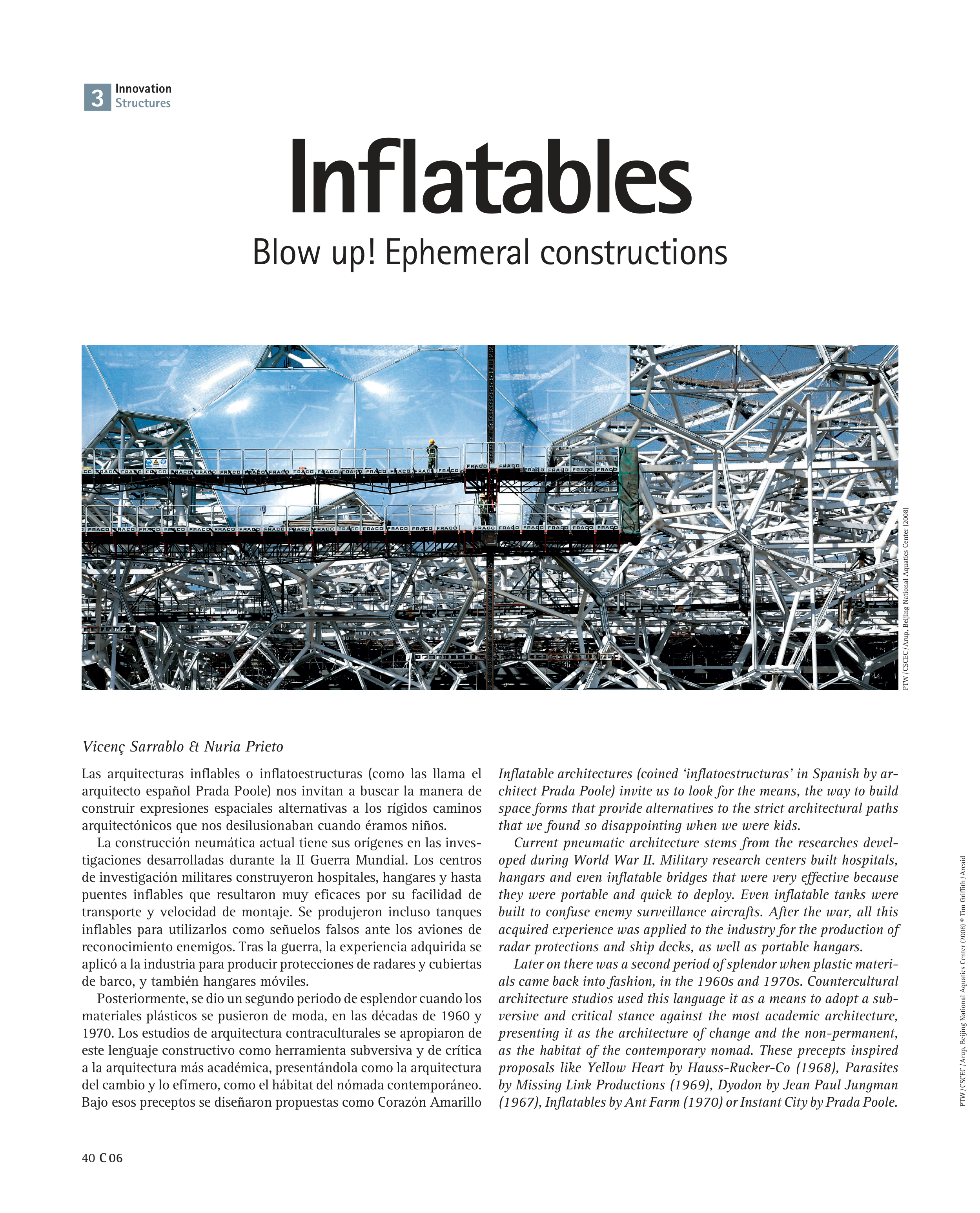
PTW / CSCEC / Arup, Beijing National Aquatics Center (2008) © Tim Griffith / Arcaid
PTW / CSCEC / Arup, Beijing National Aquatics Center (2008)