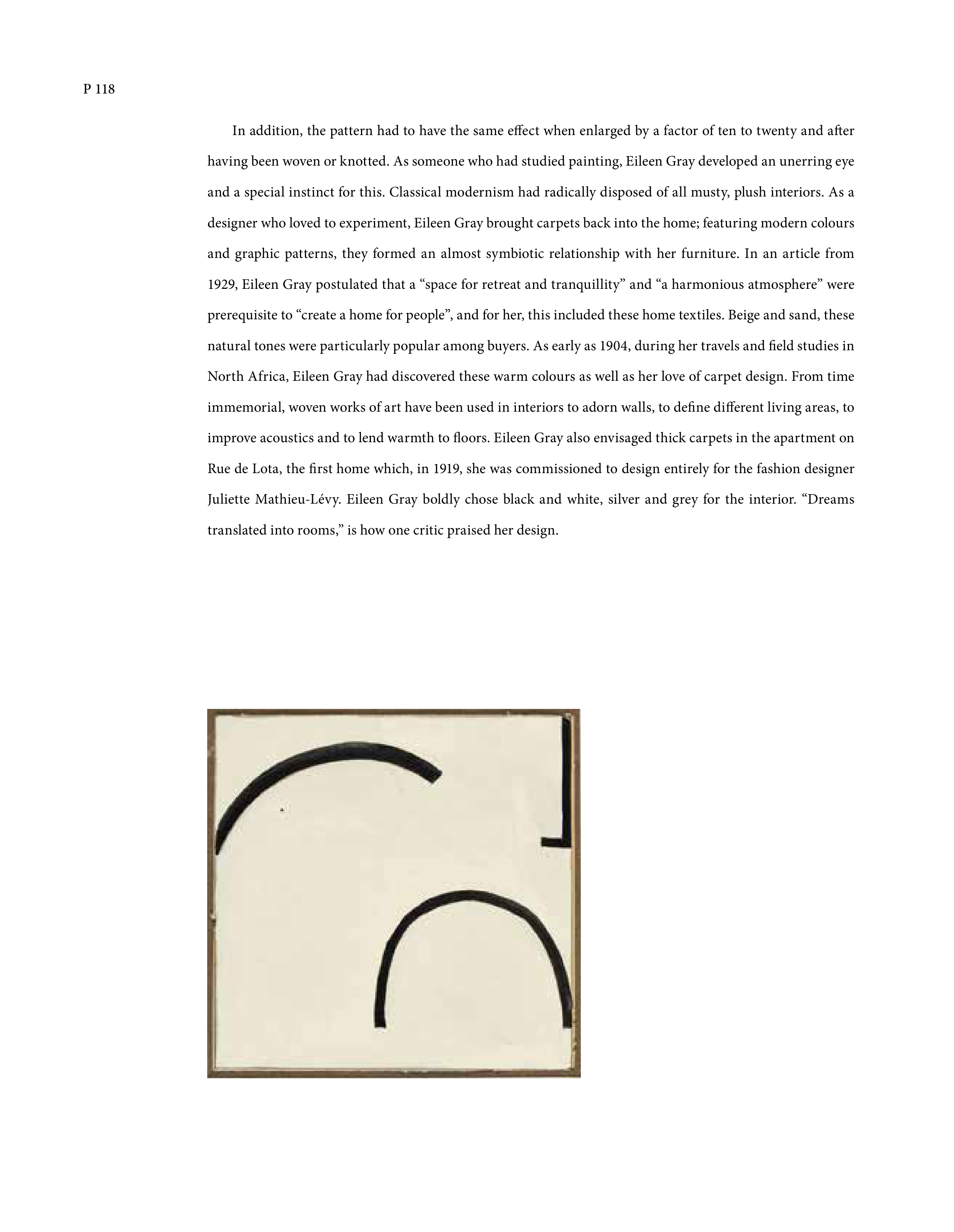
In addition, the pattern had to have the same efect when enlarged by a factor of ten to twenty and afer
having been woven or knotted. As someone who had studied painting, Eileen Gray developed an unerring eye
and a special instinct for this. Classical modernism had radically disposed of all musty, plush interiors. As a
designer who loved to experiment, Eileen Gray brought carpets back into the home; featuring modern colours
and graphic patterns, they formed an almost symbiotic relationship with her furniture. In an article from
1929, Eileen Gray postulated that a “space for retreat and tranquillity” and “a harmonious atmosphere” were
prerequisite to “create a home for people”, and for her, this included these home textiles. Beige and sand, these
natural tones were particularly popular among buyers. As early as 1904, during her travels and feld studies in
North Africa, Eileen Gray had discovered these warm colours as well as her love of carpet design. From time
immemorial, woven works of art have been used in interiors to adorn walls, to defne diferent living areas, to
improve acoustics and to lend warmth to foors. Eileen Gray also envisaged thick carpets in the apartment on
Rue de Lota, the frst home which, in 1919, she was commissioned to design entirely for the fashion designer
Juliette Mathieu-Lévy. Eileen Gray boldly chose black and white, silver and grey for the interior. “Dreams
translated into rooms,” is how one critic praised her design.
P 118