COVETED MAGAZINE PAGE 79.
FASHION //
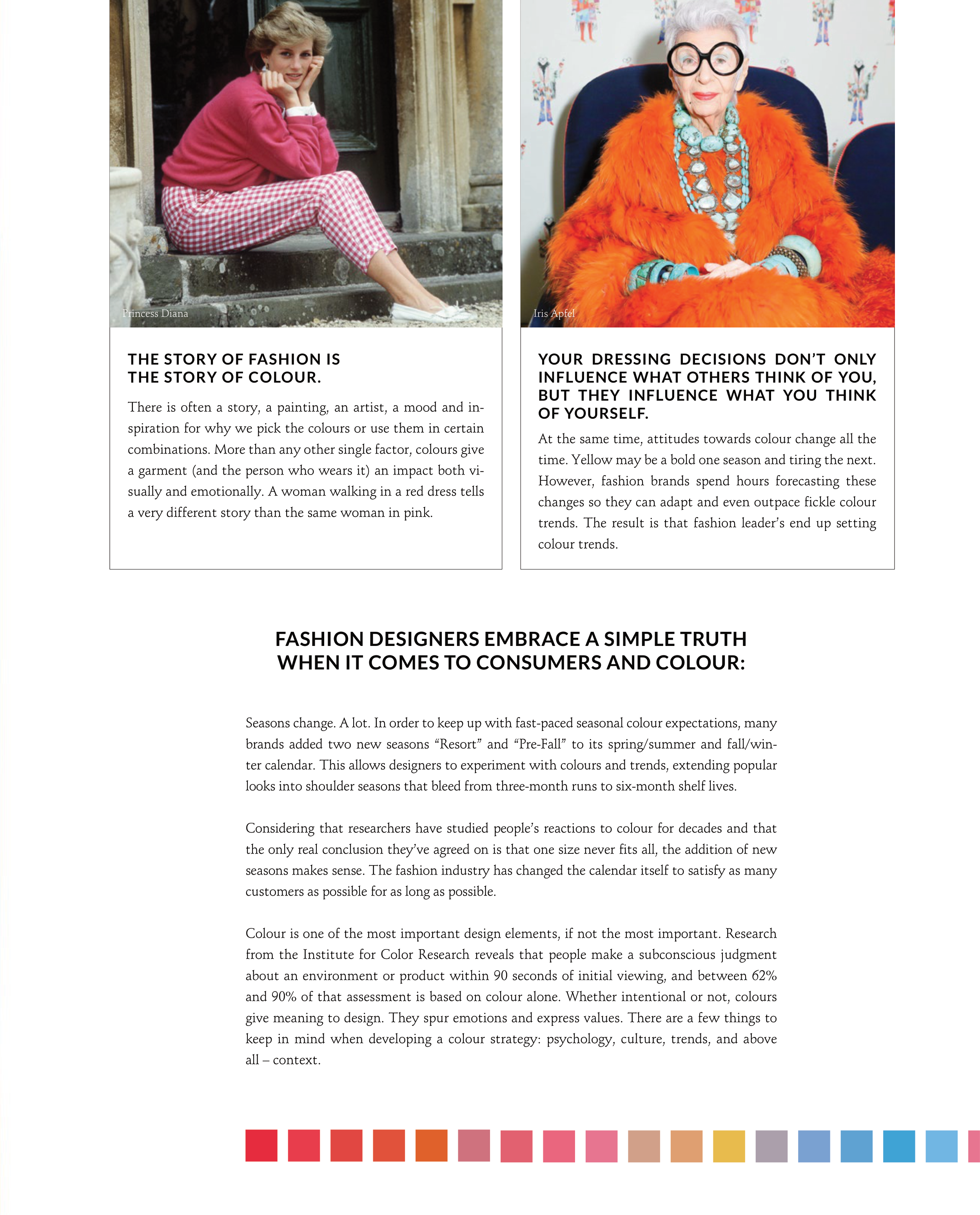
There is often a story, a painting, an artist, a mood and in-
spiration for why we pick the colours or use them in certain
combinations. More than any other single factor, colours give
a garment (and the person who wears it) an impact both vi-
sually and emotionally. A woman walking in a red dress tells
a very different story than the same woman in pink.
THE STORY OF FASHION IS
THE STORY OF COLOUR.
At the same time, attitudes towards colour change all the
time. Yellow may be a bold one season and tiring the next.
However, fashion brands spend hours forecasting these
changes so they can adapt and even outpace fickle colour
trends. The result is that fashion leader’s end up setting
colour trends.
YOUR DRESSING DECISIONS DON’T ONLY
INFLUENCE WHAT OTHERS THINK OF YOU,
BUT THEY INFLUENCE WHAT YOU THINK
OF YOURSELF.
FASHION DESIGNERS EMBRACE A SIMPLE TRUTH
WHEN IT COMES TO CONSUMERS AND COLOUR:
Seasons change. A lot. In order to keep up with fast-paced seasonal colour expectations, many
brands added two new seasons “Resort” and “Pre-Fall” to its spring/summer and fall/win-
ter calendar. This allows designers to experiment with colours and trends, extending popular
looks into shoulder seasons that bleed from three-month runs to six-month shelf lives.
Considering that researchers have studied people’s reactions to colour for decades and that
the only real conclusion they’ve agreed on is that one size never fits all, the addition of new
seasons makes sense. The fashion industry has changed the calendar itself to satisfy as many
customers as possible for as long as possible.
Colour is one of the most important design elements, if not the most important. Research
from the Institute for Color Research reveals that people make a subconscious judgment
about an environment or product within 90 seconds of initial viewing, and between 62%
and 90% of that assessment is based on colour alone. Whether intentional or not, colours
give meaning to design. They spur emotions and express values. There are a few things to
keep in mind when developing a colour strategy: psychology, culture, trends, and above
all – context.
Princess Diana
Iris Apfel