DarkSky
BugSaver
®
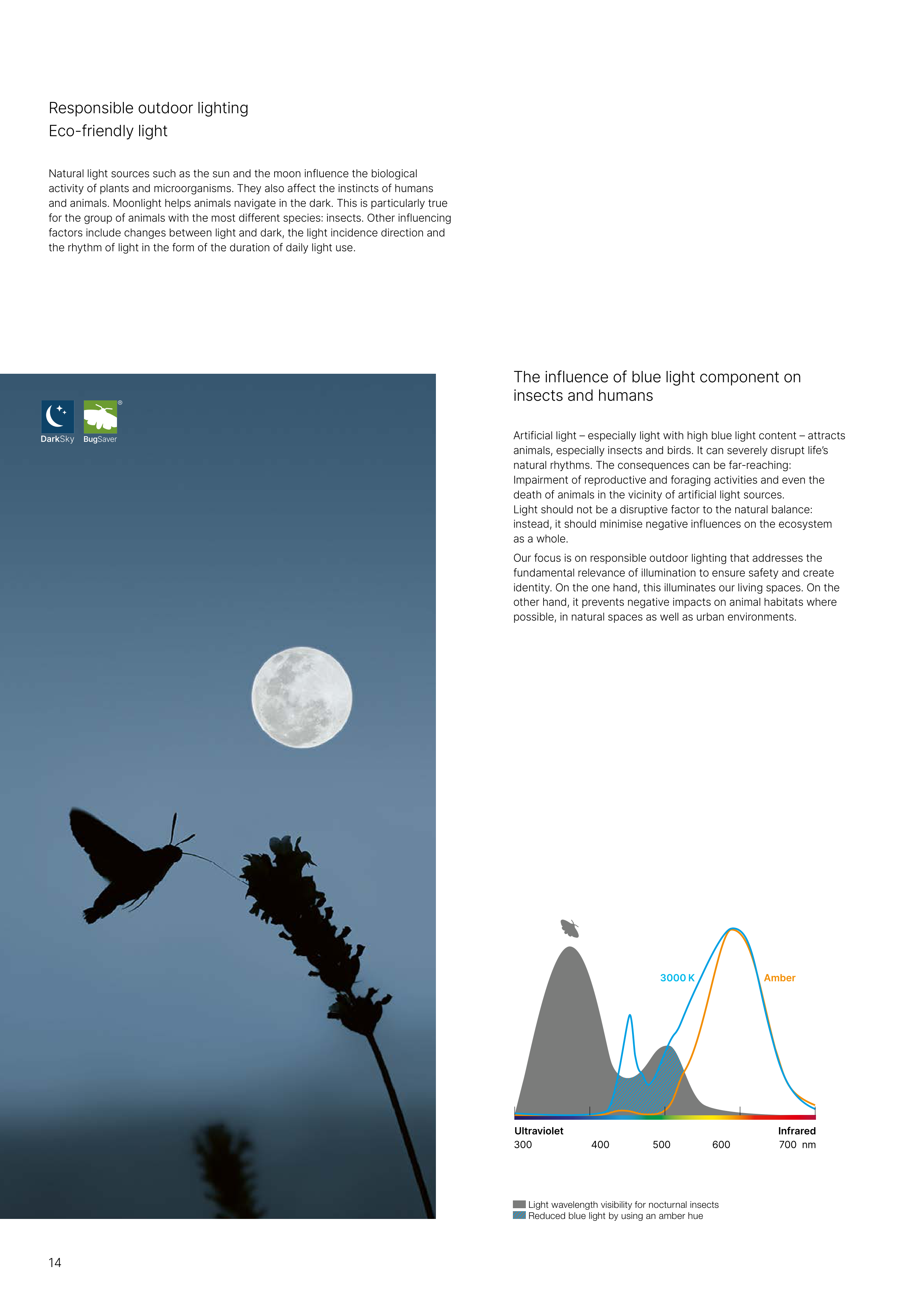
The influence of blue light component on
insects and humans
Artificial light – especially light with high blue light content – attracts
animals, especially insects and birds. It can severely disrupt life’s
natural rhythms. The consequences can be far-reaching:
Impairment of reproductive and foraging activities and even the
death of animals in the vicinity of artificial light sources.
Light should not be a disruptive factor to the natural balance:
instead, it should minimise negative influences on the ecosystem
as a whole.
Our focus is on responsible outdoor lighting that addresses the
fundamental relevance of illumination to ensure safety and create
identity. On the one hand, this illuminates our living spaces. On the
other hand, it prevents negative impacts on animal habitats where
possible, in natural spaces as well as urban environments.
Responsible outdoor lighting
Eco-friendly light
Natural light sources such as the sun and the moon influence the biological
activity of plants and microorganisms. They also affect the instincts of humans
and animals. Moonlight helps animals navigate in the dark. This is particularly true
for the group of animals with the most different species: insects. Other influencing
factors include changes between light and dark, the light incidence direction and
the rhythm of light in the form of the duration of daily light use.
Light wavelength visibility for nocturnal insects
Reduced blue light by using an amber hue
14