Material
We here at BEGA choose the materials for each product with care
to maximise light quality and aesthetics. The use of opal glass and
innovative synthetic materials reflects our dedication to perfection and
sustainability. We consistently combine traditional craftsmanship and
modern technology to create durable, eco-friendly and functional lighting
solutions.
Glass
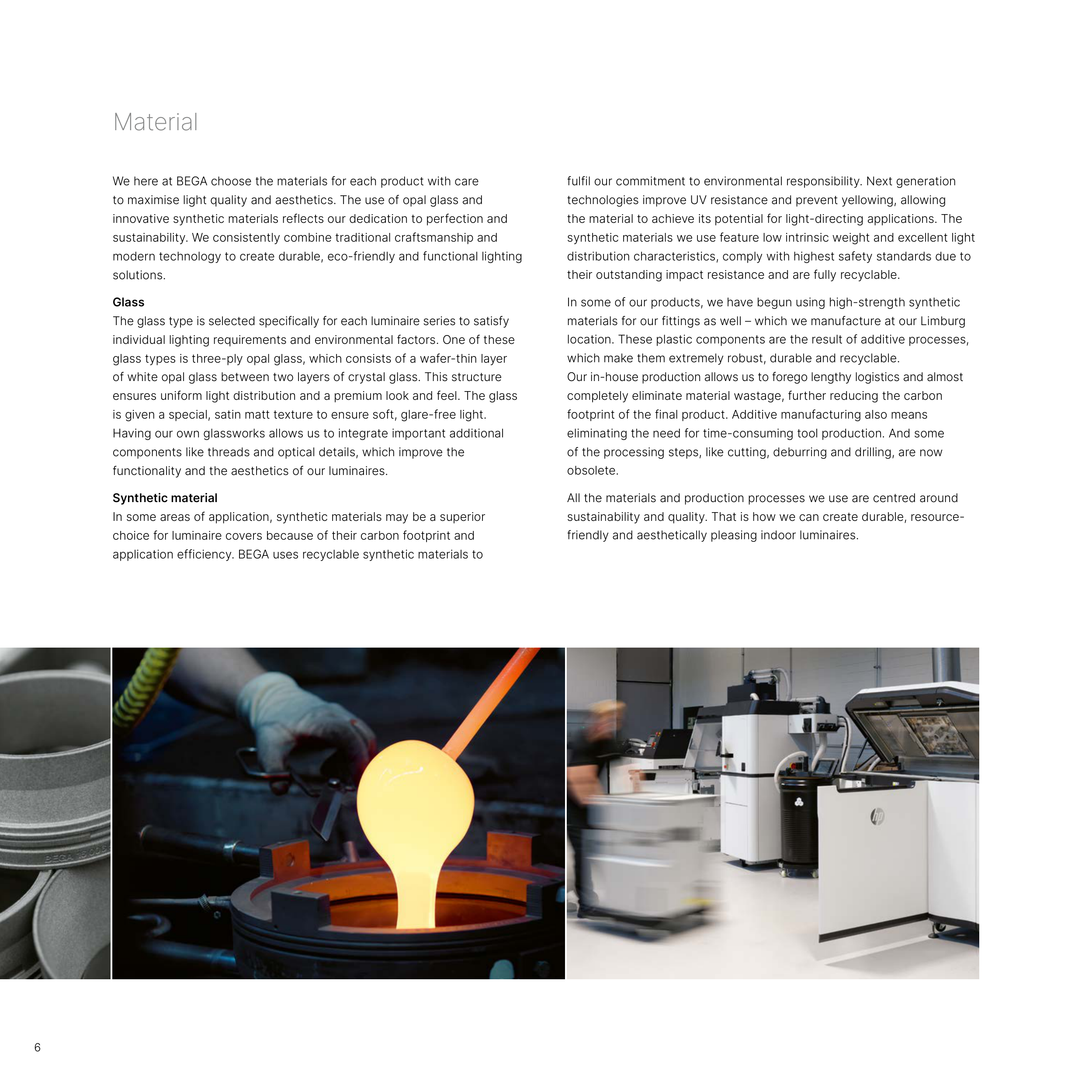
The glass type is selected specifically for each luminaire series to satisfy
individual lighting requirements and environmental factors. One of these
glass types is three-ply opal glass, which consists of a wafer-thin layer
of white opal glass between two layers of crystal glass. This structure
ensures uniform light distribution and a premium look and feel. The glass
is given a special, satin matt texture to ensure soft, glare-free light.
Having our own glassworks allows us to integrate important additional
components like threads and optical details, which improve the
functionality and the aesthetics of our luminaires.
Synthetic material
In some areas of application, synthetic materials may be a superior
choice for luminaire covers because of their carbon footprint and
application efficiency. BEGA uses recyclable synthetic materials to
fulfil our commitment to environmental responsibility. Next generation
technologies improve UV resistance and prevent yellowing, allowing
the material to achieve its potential for light-directing applications. The
synthetic materials we use feature low intrinsic weight and excellent light
distribution characteristics, comply with highest safety standards due to
their outstanding impact resistance and are fully recyclable.
In some of our products, we have begun using high-strength synthetic
materials for our fittings as well – which we manufacture at our Limburg
location. These plastic components are the result of additive processes,
which make them extremely robust, durable and recyclable.
Our in-house production allows us to forego lengthy logistics and almost
completely eliminate material wastage, further reducing the carbon
footprint of the final product. Additive manufacturing also means
eliminating the need for time-consuming tool production. And some
of the processing steps, like cutting, deburring and drilling, are now
obsolete.
All the materials and production processes we use are centred around
sustainability and quality. That is how we can create durable, resource-
friendly and aesthetically pleasing indoor luminaires.
6